Tokenization in Digital Payments: Securing Card-Not-Present Transactions by 2025

Tokenization in digital payments is a critical security measure poised to protect 100% of card-not-present transactions by 2025, transforming how sensitive card data is handled and significantly reducing fraud risks for consumers and businesses alike.
The landscape of digital commerce is constantly evolving, and with it, the methods for securing financial transactions. By 2025, the goal of achieving 100% security for card-not-present (CNP) transactions through tokenization in digital payments is not merely an aspiration but a rapidly approaching reality, fundamentally reshaping how we perceive and manage online security.
Understanding tokenization in digital payments
Tokenization is a security technology that replaces sensitive data, such as a 16-digit primary account number (PAN) from a credit or debit card, with a unique, randomly generated string of characters called a token. This token holds no intrinsic value and is meaningless if intercepted by unauthorized parties, making it a cornerstone of modern payment security. The push towards securing all card-not-present transactions by 2025 underscores the industry’s commitment to mitigating fraud and building consumer trust.
Unlike encryption, which transforms data mathematically and can theoretically be reversed, tokenization permanently replaces the sensitive data with a surrogate. This distinction is crucial because if a tokenized database is breached, the attackers gain access only to tokens, not actual card numbers, rendering the stolen data useless. This robust protection is particularly vital for CNP transactions, where the physical card is not present for verification, making them more susceptible to fraud.
The mechanics of tokenization
At its core, tokenization involves a secure vault where actual card data is stored. When a transaction occurs, the card number is sent to this vault, which then issues a token back to the merchant. This token is what the merchant uses for all subsequent transactions, never directly handling the sensitive card data again.
- Data replacement: Sensitive card data is substituted with a non-sensitive token.
- Irreversibility: Tokens cannot be reverse-engineered to reveal the original card number.
- Limited utility: Each token is typically tied to a specific transaction, merchant, or device, limiting its use if compromised.
- Enhanced security: Reduces the scope of PCI DSS compliance for merchants, as they no longer store actual card data.
The adoption of tokenization has been steadily increasing, driven by regulatory pressures, rising fraud rates, and the growing demand for seamless online experiences. As we move closer to 2025, its omnipresence in digital payments will be a testament to its effectiveness and necessity.
In conclusion, tokenization represents a paradigm shift in payment security, offering an unparalleled level of protection for sensitive cardholder data. Its fundamental principle of data replacement significantly reduces the risk of data breaches, making it an indispensable technology for securing the future of digital commerce.
The growing threat of card-not-present fraud
Card-not-present (CNP) fraud continues to be a significant challenge for merchants and financial institutions. As e-commerce expands, so does the sophistication of fraudsters targeting these transactions. CNP fraud occurs when a fraudulent transaction takes place without the physical card being present, typically online, over the phone, or via mail order. The absence of physical card verification methods, such as EMV chip readers, makes these transactions inherently riskier.
The financial impact of CNP fraud is substantial, leading to chargebacks, lost revenue, and damage to merchant reputations. Consumers also bear the brunt, experiencing inconvenience and potential identity theft. This escalating threat is a primary driver behind the urgent need for more robust security measures like tokenization.
Why CNP transactions are vulnerable
Traditional security measures often fall short in CNP environments. While technologies like Address Verification Service (AVS) and Card Verification Value (CVV) help, they are not foolproof. Fraudsters continuously develop new techniques, from phishing scams to sophisticated malware, to trick consumers into revealing their card details. Once obtained, these details can be used for illicit purchases anywhere online.
- Lack of physical verification: No chip or PIN to authenticate the cardholder.
- Data breaches: Stolen card numbers from compromised databases are frequently used for CNP fraud.
- Phishing and social engineering: Tricking individuals into divulging sensitive information.
- Bot attacks: Automated systems attempting to validate stolen card numbers through small purchases.
The complexity of the digital ecosystem, with its myriad of interconnected systems and third-party providers, further complicates security efforts. Each point where card data is stored or transmitted represents a potential vulnerability. This intricate web necessitates a solution that can protect data throughout its lifecycle, from initial capture to final processing.
Ultimately, the persistent threat of CNP fraud underscores the critical importance of proactive and adaptive security strategies. Tokenization offers a powerful defense mechanism, rendering stolen card data useless and significantly reducing the attack surface for fraudsters in the dynamic world of online commerce.
How tokenization secures card-not-present transactions
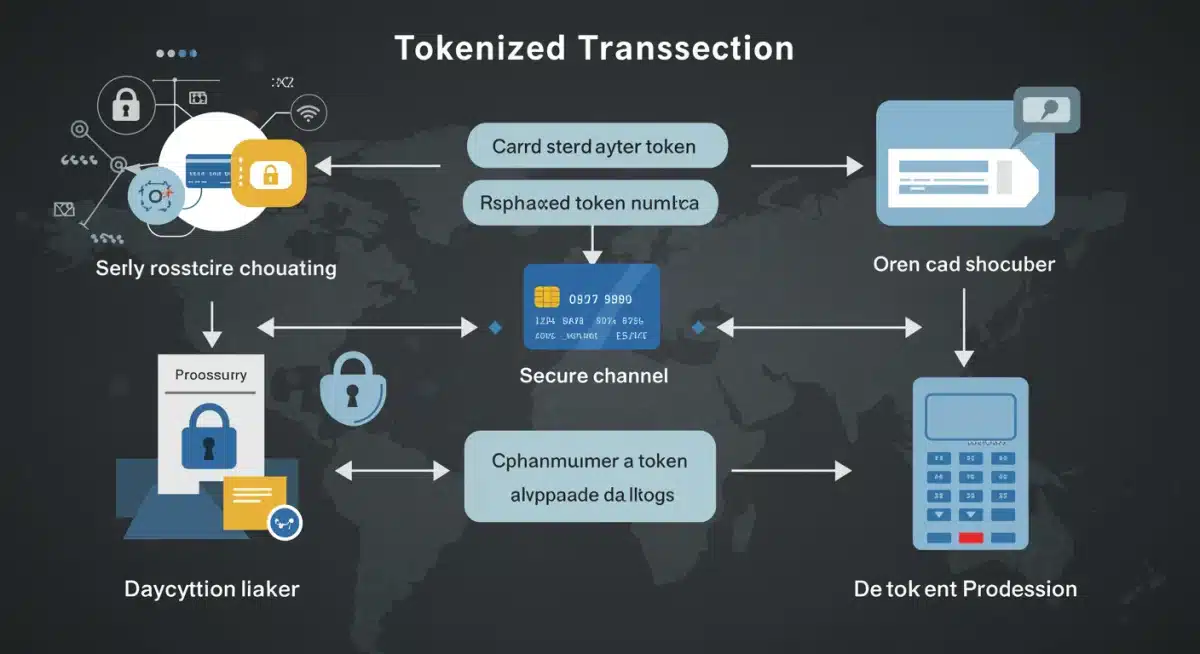
Tokenization fundamentally alters the security posture of card-not-present transactions by removing sensitive card data from the merchant’s environment and replacing it with a non-sensitive token. This process significantly reduces the risk of data breaches and subsequent fraud. When a customer initiates an online purchase, their card details are captured, but instead of being stored by the merchant, they are immediately sent to a secure tokenization service.
This service replaces the actual card number with a unique token, which is then returned to the merchant. For all future transactions, including recurring billing or subsequent purchases, the merchant uses this token instead of the original card number. If a merchant’s system is compromised, only these meaningless tokens are exposed, not actual cardholder data, thus protecting consumers from widespread financial harm.
The tokenization workflow
The journey of a tokenized transaction involves several key steps, each designed to maximize security:
- Initiation: Customer enters card details on a merchant’s website.
- Token request: Card data is securely transmitted to the token service provider.
- Token generation: The service provider replaces the card data with a unique token and stores the original data in a secure vault.
- Transaction processing: The merchant uses the token to authorize the transaction with the payment processor.
- De-tokenization (if needed): The payment processor, holding the original card data, de-tokenizes the information to complete the transaction with the issuing bank.
This seamless process operates in the background, invisible to the customer, ensuring a smooth user experience while providing robust security. The payment ecosystem, including card networks, issuing banks, and payment gateways, all play a role in supporting and facilitating tokenized transactions, creating a unified front against fraud.
By effectively isolating sensitive card data from the merchant’s systems, tokenization transforms CNP transactions from high-risk vulnerabilities into secure, reliable payment methods. This architectural shift is pivotal in achieving the goal of 100% CNP transaction security by 2025, offering peace of mind to both consumers and businesses.
Benefits for merchants and consumers
The widespread adoption of tokenization in digital payments offers a multitude of benefits for both merchants and consumers, extending beyond just enhanced security. For merchants, it translates into reduced compliance burdens, lower fraud-related costs, and improved customer trust. For consumers, it means greater peace of mind and a more seamless, secure shopping experience.
Merchants, particularly those handling a high volume of online transactions, face stringent PCI DSS (Payment Card Industry Data Security Standard) compliance requirements. By implementing tokenization, they effectively remove sensitive card data from their systems, thereby significantly reducing the scope and complexity of their PCI DSS audits. This not only saves time and resources but also minimizes their exposure to potential data breaches and the hefty fines associated with non-compliance.
Advantages for merchants
- Reduced PCI DSS scope: Less sensitive data handled directly means simpler compliance.
- Lower fraud rates: Eliminates the value of stolen data, leading to fewer chargebacks and fraud losses.
- Enhanced customer trust: Demonstrates a commitment to data security, fostering loyalty.
- Streamlined operations: Simplifies recurring billing and stored card functionality.
Consumers benefit significantly from tokenization as well. Knowing that their sensitive card details are not directly stored by merchants provides a strong sense of security. This increased confidence encourages more frequent online purchases, driving growth in the digital economy. Furthermore, the convenience of stored payment methods, powered by tokens, allows for quicker and easier checkout processes, enhancing the overall user experience.
Advantages for consumers
- Greater data security: Personal card information is not exposed to merchants.
- Reduced risk of identity theft: Stolen tokens are useless to fraudsters.
- Faster checkout: Stored tokens enable one-click purchases without re-entering card details.
- Consistent protection: Security is maintained across various online platforms.
In essence, tokenization creates a win-win scenario. Merchants achieve a more secure and efficient payment environment, while consumers enjoy safer and more convenient online transactions. This dual benefit is a key factor in the rapid adoption of this technology and its projected 100% security coverage for CNP transactions by 2025.
Challenges and considerations for widespread adoption
While the benefits of tokenization are clear, achieving 100% security for card-not-present transactions by 2025 comes with its share of challenges and considerations. The payment ecosystem is vast and complex, involving numerous stakeholders, legacy systems, and varying levels of technological readiness. Overcoming these hurdles requires concerted effort, standardization, and continuous innovation.
One of the primary challenges lies in the integration of tokenization across all platforms and payment channels. Smaller merchants, in particular, may lack the technical expertise or financial resources to fully implement advanced tokenization solutions. Ensuring ubiquitous adoption means providing accessible, cost-effective, and user-friendly solutions that cater to businesses of all sizes. Moreover, the interoperability between different tokenization service providers and payment gateways must be seamless to avoid fragmentation and ensure universal protection.
Key challenges to overcome
- Legacy system integration: Updating older payment infrastructures can be complex and costly.
- Merchant education: Ensuring all merchants understand the benefits and implementation process.
- Standardization: Developing common protocols for token generation and usage across the industry.
- Cost of implementation: Initial investment in new technology may deter some businesses.
Another crucial consideration is consumer awareness and trust. While tokenization operates largely in the background, educating consumers about its role in securing their transactions can further enhance confidence in digital payments. Transparency regarding data handling practices and the security measures in place is vital for building and maintaining this trust.
Furthermore, the evolving threat landscape means that security solutions must be continuously updated and refined. While tokenization provides robust protection against current fraud techniques, future threats may emerge that require complementary security layers. Continuous research and development in payment security are therefore essential to stay ahead of malicious actors.
Despite these challenges, the industry’s commitment to achieving comprehensive CNP security through tokenization remains strong. Collaborative efforts among payment networks, financial institutions, technology providers, and merchants are paving the way for a more secure and resilient digital payment future.
The future of security: beyond 2025
As we approach the ambitious goal of securing 100% of card-not-present transactions through tokenization by 2025, the conversation naturally shifts to what lies beyond this milestone. The payment security landscape is dynamic, and continuous innovation will be paramount to address emerging threats and evolving consumer expectations. Tokenization, while a powerful foundation, is likely to be integrated with other advanced security technologies to form a multi-layered defense.
One significant area of development will be the integration of artificial intelligence (AI) and machine learning (ML) into fraud detection systems. These technologies can analyze vast amounts of transaction data in real-time, identifying anomalous patterns and flagging suspicious activities that might bypass traditional security checks. By combining AI/ML with tokenization, the payment ecosystem can achieve a predictive and adaptive security posture, capable of thwarting new and sophisticated fraud attempts before they occur.
Emerging security trends
- AI and machine learning: For predictive fraud detection and behavioral analytics.
- Biometric authentication: Fingerprint, facial recognition, and voice biometrics for enhanced user verification.
- Distributed ledger technology (DLT): Exploring blockchain for secure, transparent transaction records.
- Quantum-resistant cryptography: Preparing for potential future threats from quantum computing.
Another trend is the increasing adoption of biometric authentication methods. Fingerprint scans, facial recognition, and even voice biometrics offer highly secure and convenient ways to verify a user’s identity, adding an extra layer of protection to tokenized transactions. As these technologies become more commonplace in consumer devices, their integration into payment flows will become more seamless and widespread.
Furthermore, the exploration of distributed ledger technology (DLT), such as blockchain, for payment processing could introduce new paradigms of security and transparency. While still in nascent stages for mainstream payments, DLT has the potential to create tamper-proof transaction records and reduce reliance on centralized databases, complementing tokenization’s data protection capabilities.
In summary, while tokenization sets a crucial benchmark for CNP transaction security by 2025, the journey towards ultimate payment security is continuous. The future will likely see a convergence of tokenization with AI, biometrics, and potentially DLT, creating an even more resilient and intelligent defense against fraud, ensuring the ongoing trust and growth of digital commerce.
Regulatory landscape and industry collaboration
The drive towards 100% secure card-not-present transactions through tokenization by 2025 is significantly influenced by a complex interplay of regulatory mandates and robust industry collaboration. Governments, payment networks, financial institutions, and technology providers are all working in concert to establish standards, enforce compliance, and foster an environment conducive to widespread tokenization adoption. This collaborative approach is critical for addressing the multifaceted challenges of payment security on a global scale.
In the United States, regulations like the Payment Card Industry Data Security Standard (PCI DSS) play a pivotal role. While not a government mandate, PCI DSS is an industry-driven security standard that all entities handling cardholder data must adhere to. Tokenization helps merchants significantly reduce their PCI DSS scope, making compliance easier and less costly. The push towards tokenization is increasingly seen as a best practice, if not a de facto requirement, for robust data protection.
Key regulatory and industry drivers
- PCI DSS: Industry-mandated security standards influencing data handling.
- Payment network initiatives: Visa, Mastercard, and others actively promote and facilitate tokenization.
- Government oversight: Agencies like the CFPB influence consumer data protection.
- Industry consortia: Collaborations to develop common standards and best practices.
Payment networks such as Visa, Mastercard, American Express, and Discover are at the forefront of promoting tokenization. They have developed their own tokenization services, often referred to as network tokens, which are designed to enhance security, improve approval rates, and streamline transaction processing. These initiatives provide a standardized framework for token deployment, making it easier for merchants and payment processors to integrate the technology.
Furthermore, government agencies, while not directly mandating tokenization, often set broader consumer protection and data privacy regulations that indirectly encourage its adoption. For instance, the emphasis on protecting Personally Identifiable Information (PII) and financial data aligns perfectly with tokenization’s core function. The legal and financial consequences of data breaches provide a strong incentive for businesses to implement the most effective security measures available.
The success of achieving comprehensive CNP security by 2025 relies heavily on the continued collaboration between these diverse entities. Sharing threat intelligence, developing interoperable solutions, and educating stakeholders across the payment ecosystem will be essential to overcome remaining hurdles and solidify tokenization as the standard for digital payment security.
| Key Aspect | Description |
|---|---|
| Core Mechanism | Replaces sensitive card data with a unique, meaningless token. |
| Fraud Prevention | Renders stolen data useless; reduces CNP fraud risk significantly. |
| Merchant Benefits | Reduces PCI DSS scope, lowers chargebacks, boosts customer trust. |
| Consumer Experience | Enhanced security, faster checkout, peace of mind for online shoppers. |
Frequently asked questions about tokenization
Tokenization is a security method that replaces sensitive payment card data, like a credit card number, with a unique, non-sensitive string of characters called a token. This token is useless if intercepted, protecting the actual card information from breaches during digital transactions.
While both secure data, encryption mathematically transforms data, which can theoretically be reversed with a key. Tokenization permanently replaces data with a surrogate token that bears no mathematical relationship to the original data, making it irreversible and inherently more secure against data breaches.
CNP transactions, such as online purchases, lack physical card verification, making them prone to fraud. Tokenization secures these transactions by ensuring that merchants never store or transmit actual card numbers, drastically reducing the risk of data compromise if their systems are breached.
Merchants benefit from a reduced PCI DSS compliance scope, lower fraud rates and associated chargebacks, and enhanced customer trust. By not directly handling sensitive card data, they mitigate their risk exposure and improve operational efficiency.
The goal of 100% security by 2025 is an industry-wide objective driven by major payment networks and regulators. While achieving absolute immunity from all fraud is challenging, widespread tokenization adoption will significantly reduce vulnerabilities and make CNP transactions vastly more secure than ever before.
Conclusion
The journey towards securing 100% of card-not-present transactions through tokenization in digital payments by 2025 marks a pivotal moment in the evolution of online commerce. This technology offers a robust defense against ever-increasing fraud, transforming how sensitive payment data is handled. By replacing actual card numbers with meaningless tokens, tokenization provides unparalleled security for both merchants and consumers, fostering greater trust and enabling seamless digital experiences. While challenges remain in universal adoption and integration, the collaborative efforts of the industry, coupled with the inherent benefits of tokenization, paint a clear picture of a more secure and resilient future for digital transactions. As we move forward, tokenization will not only be a foundational security layer but also a catalyst for further innovation in payment protection, ensuring the continued growth and safety of the digital economy.