Smart Shelves & Inventory Robotics: 99% Accuracy by 2025
Smart shelves and inventory robotics are set to redefine retail, enabling US stores to achieve an ambitious 99% inventory accuracy by 2025, fundamentally transforming operational efficiency and customer satisfaction.
The landscape of US retail is experiencing a profound transformation, driven by technological advancements aimed at optimizing every facet of operations. Central to this revolution are smart shelves and inventory robotics, which are rapidly becoming indispensable tools for retailers striving to achieve unprecedented levels of efficiency. The ambitious goal of 99% inventory accuracy by 2025 is no longer a distant dream but a tangible objective, thanks to these innovative solutions. How exactly are these technologies reshaping the retail experience, and what does this mean for both businesses and consumers?
The Imperative of Inventory Accuracy in Modern Retail
In today’s fast-paced retail environment, inventory accuracy is more than just a logistical detail; it’s a critical determinant of success. Inaccurate inventory leads to a cascade of problems, from lost sales due to out-of-stock items to increased operational costs from overstocking and manual reconciliation efforts. The traditional methods of inventory management, often reliant on periodic manual counts, are simply no longer sufficient to meet the demands of omnichannel retail and discerning consumers.
The Hidden Costs of Inaccuracy
The financial ramifications of poor inventory management are substantial. Retailers lose billions annually due to stockouts, overstocking, and markdown losses. Beyond the direct financial impact, there’s the erosion of customer trust and loyalty when shoppers repeatedly encounter empty shelves or incorrect online availability information. This makes the pursuit of near-perfect inventory accuracy not just an aspiration but a strategic imperative for survival and growth.
- Lost Sales: Customers abandon purchases when items are unavailable.
- Excess Inventory: Leads to carrying costs, obsolescence, and markdowns.
- Operational Inefficiencies: Manual checks consume valuable staff time.
- Customer Dissatisfaction: Negative experiences impact brand loyalty.
Achieving 99% inventory accuracy signifies a paradigm shift, enabling retailers to optimize their supply chains, enhance customer satisfaction, and ultimately boost their bottom line. It’s about having the right product, at the right place, at the right time, consistently.
Smart Shelves: The Foundation of Real-Time Inventory Data
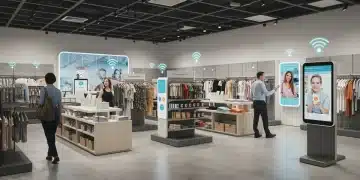
Smart shelves represent a revolutionary leap from static storage units to dynamic data collection points. Equipped with sensors, RFID readers, and sometimes cameras, these intelligent fixtures provide real-time visibility into product levels, placement, and movement. This constant stream of data is the backbone of achieving high inventory accuracy, eliminating the guesswork and manual effort associated with traditional methods.
How Smart Shelves Function
The technology behind smart shelves varies, but the core principle remains the same: continuously monitor inventory. RFID tags on products communicate with readers embedded in the shelves, instantly updating stock levels as items are added or removed. Weight sensors can detect changes in product quantities, while optical sensors can identify misplaced items or gaps on shelves. This granular data allows retailers to know exactly what they have, where it is, and when it needs replenishment.
The integration of smart shelves into a retail ecosystem means that inventory data is no longer siloed. It flows directly into central management systems, providing a holistic view of stock across an entire store or even a chain. This real-time insight empowers managers to make informed decisions, whether it’s about restocking, optimizing planograms, or preventing theft.
- RFID Tracking: Automatic identification and tracking of items.
- Weight Sensors: Monitor product quantity by weight.
- Optical Sensors: Detect presence, absence, and placement of products.
- Instant Alerts: Notifies staff of low stock or misplaced items.
By transforming shelves into active data sources, retailers gain unprecedented control and understanding of their merchandise, laying a crucial groundwork for superior inventory management.
Inventory Robotics: Automating the Audit and Replenishment Cycle
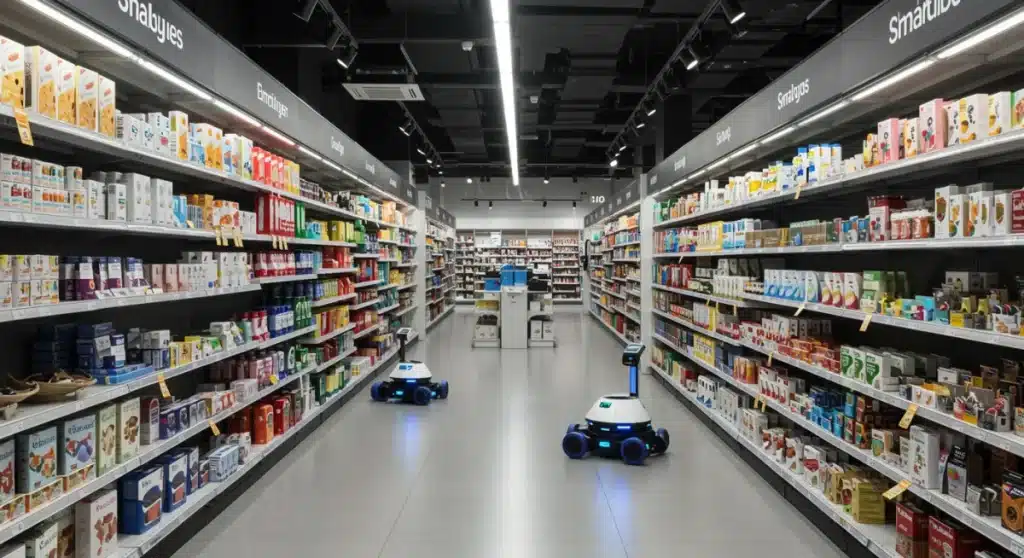
While smart shelves provide the data, inventory robotics take automation a step further by actively scanning, auditing, and even assisting with replenishment tasks. These autonomous machines, ranging from ground-based robots to aerial drones, can navigate store aisles, collect vast amounts of inventory data, and identify discrepancies with remarkable speed and precision, far surpassing human capabilities.
The Role of Robots in Inventory Management
Inventory robots are equipped with advanced computer vision, AI, and navigation systems, allowing them to perform tasks such as scanning barcodes, identifying out-of-stock items, locating misplaced products, and even detecting pricing errors. They can operate during off-hours, minimizing disruption to shoppers, and provide continuous updates to the inventory system. This constant, automated auditing significantly reduces the labor required for inventory checks and virtually eliminates human error.
Beyond data collection, some advanced robots are designed to assist with physical tasks, such as transporting items from back rooms to sales floors or even directly loading shelves. This integration of physical and informational tasks creates a highly efficient inventory management system, freeing human employees to focus on customer service and more complex operational challenges.
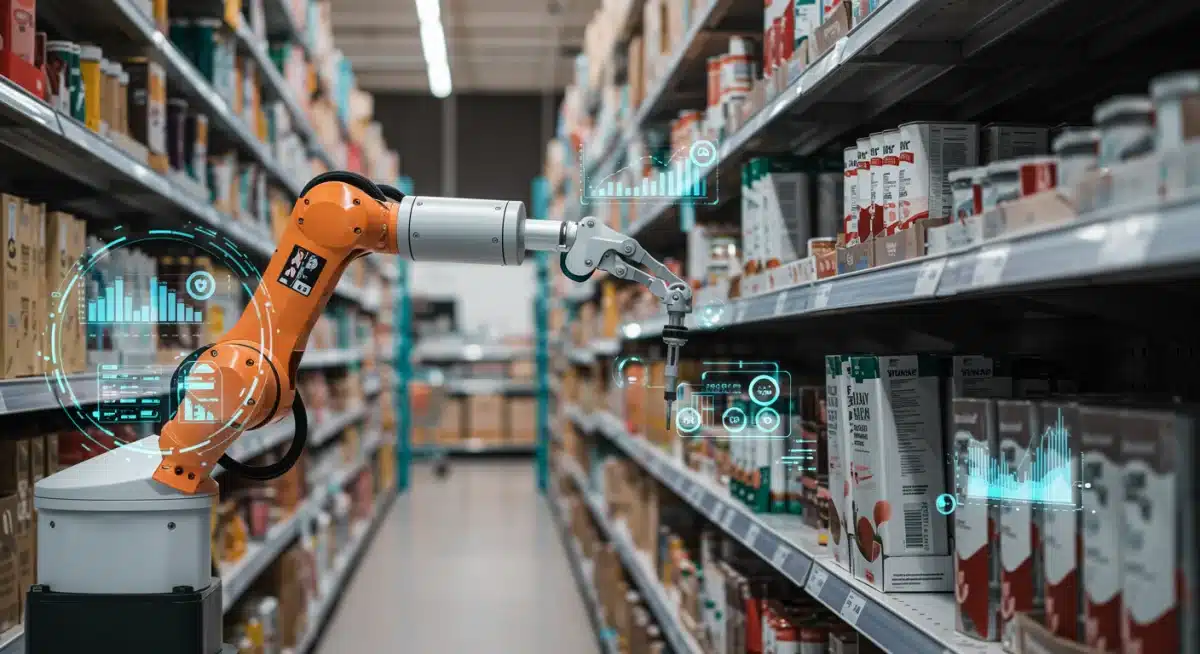
The deployment of inventory robotics is a game-changer, moving retailers closer to a fully autonomous and perfectly accurate inventory system, ensuring products are always where they need to be.
Synergy: How Smart Shelves and Robotics Achieve 99% Accuracy
The true power lies not in smart shelves or inventory robotics alone, but in their synergistic integration. Smart shelves provide the baseline, real-time data, while robotics act as the dynamic auditors and enforcers of accuracy. This combination creates a closed-loop system where data is continuously collected, verified, and acted upon, driving inventory accuracy to unprecedented levels.
Integrated Operations for Optimal Results
Imagine a scenario where smart shelves report low stock on a particular item. An inventory robot, scheduled for an overnight scan, verifies this information, identifies the exact product, and cross-references it with available backroom stock. This data is then fed into the store’s central management system, triggering an automated replenishment order or alerting staff to restock immediately. This seamless flow of information and action minimizes delays and ensures shelves are always optimally stocked.
This integrated approach also dramatically improves demand forecasting. With precise, real-time data on sales and available stock, AI-powered systems can predict future demand with much greater accuracy, reducing both overstocking and stockouts. The result is a lean, agile supply chain that responds dynamically to consumer needs and market fluctuations.
- Continuous Verification: Robots confirm data from smart shelves.
- Automated Alerts: Triggers for replenishment or error correction.
- Enhanced Forecasting: More accurate predictions with real-time data.
- Reduced Human Intervention: Minimizes errors and labor costs.
By working together, smart shelves and inventory robotics create an intelligent infrastructure that makes the 99% inventory accuracy goal not just achievable, but sustainable.
Impact on US Retail Operations and Customer Experience
The widespread adoption of smart shelves and inventory robotics is set to revolutionize US retail, offering tangible benefits across operational efficiency, financial performance, and, crucially, customer experience. This technological shift is not merely about cost savings; it’s about creating a more responsive, efficient, and customer-centric retail environment.
Transforming the Retail Landscape
For retailers, the operational benefits are immense. Reduced manual labor for inventory checks translates into significant cost savings and allows staff to redirect their efforts towards value-added activities like customer service. The elimination of stockouts means fewer lost sales and increased revenue. Improved inventory turnover reduces carrying costs and minimizes waste, contributing to a more sustainable business model.
From a customer perspective, the impact is equally profound. Shoppers will consistently find the products they want, both in-store and online, reducing frustration and enhancing satisfaction. The accuracy of online inventory data means reliable click-and-collect or delivery services, building trust and loyalty. This seamless shopping experience is what modern consumers demand, and smart shelves and robotics deliver it.
Moreover, these technologies facilitate personalized shopping experiences. With better data on product movement and availability, retailers can offer more tailored promotions and recommendations, further enriching the customer journey. The future of retail is one where efficiency and customer delight go hand-in-hand.
Challenges and the Path Forward for Adoption
While the benefits of smart shelves and inventory robotics are compelling, their widespread adoption is not without challenges. Retailers must navigate significant upfront investment costs, integrate complex new technologies with existing legacy systems, and address potential concerns regarding data privacy and job displacement. However, the long-term gains often outweigh these initial hurdles.
Overcoming Implementation Obstacles
The initial capital expenditure for implementing smart shelves and a fleet of inventory robots can be substantial. Retailers need to carefully assess the return on investment (ROI) and secure internal buy-in for such transformative projects. Pilot programs in select stores can help demonstrate value before a full-scale rollout.
Integration with existing point-of-sale (POS) systems, enterprise resource planning (ERP), and e-commerce platforms is another critical challenge. Ensuring seamless data flow and interoperability requires robust IT infrastructure and skilled technical teams. Furthermore, addressing employee concerns about job security through retraining and redeployment into new, value-added roles is essential for a smooth transition.
- High Initial Investment: Requires careful financial planning and ROI analysis.
- System Integration: Compatibility with existing IT infrastructure.
- Data Privacy and Security: Protecting sensitive inventory and customer data.
- Workforce Adaptation: Retraining employees for new roles.
Despite these challenges, the clear competitive advantage offered by superior inventory accuracy and operational efficiency ensures that smart shelves and inventory robotics will continue their march towards becoming standard practice in US retail, solidifying the path to 99% accuracy by 2025.
| Key Aspect | Brief Description |
|---|---|
| Inventory Accuracy Goal | Achieving 99% inventory accuracy in US retail by 2025. |
| Smart Shelves | Real-time monitoring of product levels via sensors and RFID. |
| Inventory Robotics | Autonomous scanning, auditing, and replenishment assistance. |
| Synergistic Impact | Combined technologies drive operational efficiency and customer satisfaction. |
Frequently Asked Questions About Retail Automation
Smart shelves are retail fixtures equipped with technologies like RFID readers, weight sensors, and optical sensors. They continuously monitor product presence, quantity, and placement, providing real-time inventory data to a central system. This automation reduces manual counting errors and ensures accurate stock levels are always known.
Inventory robotics, including autonomous ground robots and drones, use computer vision and AI to scan aisles, identify products, and detect discrepancies like stockouts or misplaced items. They perform rapid, continuous audits, significantly reducing human error and freeing staff for other tasks, thereby enhancing overall accuracy.
The primary benefit is a drastic reduction in lost sales due to stockouts and minimized costs associated with overstocking. It leads to improved operational efficiency, better demand forecasting, and significantly enhances the customer experience by ensuring product availability and reliable online information.
Yes, key challenges include the substantial upfront investment costs for hardware and software, integrating new systems with existing legacy infrastructure, and managing potential workforce concerns. Careful planning, pilot programs, and employee retraining are crucial for successful adoption and maximizing ROI.
By 2025, customers can expect a much more seamless and reliable shopping experience. Products will consistently be in stock, online inventory will be accurate for click-and-collect, and personalized recommendations will be enhanced. This will lead to increased customer satisfaction and loyalty, making shopping more convenient.
Conclusion
The journey towards achieving 99% inventory accuracy in US retail by 2025, powered by smart shelves and inventory robotics, signifies a monumental shift in how businesses operate and serve their customers. These technologies are not just tools for efficiency; they are foundational elements of a future-proof retail strategy. By embracing these innovations, retailers can overcome traditional inventory challenges, unlock new levels of profitability, and deliver an unparalleled shopping experience that meets the evolving demands of the modern consumer. The era of intelligent retail is here, and its impact will be felt across every aisle and every transaction.