Boost Your Profit Margin 10%: Advanced Strategies for SMEs in 2025

Achieving a 10% profit margin boost in 2025 for small to medium enterprises requires a multi-faceted approach, integrating advanced strategies like digital transformation, robust financial management, and targeted market expansion.
In today’s competitive landscape, small to medium enterprises (SMEs) are constantly seeking innovative ways to enhance their financial health. This article delves into advanced business strategies designed for achieving a 10% profit margin boost in 2025, offering practical solutions and highlighting their potential financial impact.
Understanding your current financial landscape
Before embarking on any strategy to boost profit margins, it’s crucial for SMEs to gain a crystal-clear understanding of their current financial position. This involves a meticulous review of income statements, balance sheets, and cash flow projections. Identifying areas of inefficiency and unexpected costs is the first step towards meaningful improvement.
Many businesses overlook the granular details of their operational expenses. A thorough audit can reveal hidden drains on profitability, from outdated software subscriptions to underutilized assets. Understanding these nuances provides the foundation for targeted interventions that truly move the needle.
Key financial metrics to monitor
- Gross profit margin: This metric directly reflects the profitability of your core products or services after accounting for the cost of goods sold.
- Operating profit margin: This shows profitability after deducting operating expenses, offering insight into operational efficiency.
- Net profit margin: The ultimate indicator, representing the percentage of revenue left after all expenses, including taxes, have been deducted.
- Cash conversion cycle: This measures the time it takes for your investment in inventory and accounts receivable to be converted into cash.
Regularly tracking these metrics allows businesses to spot trends, anticipate challenges, and measure the effectiveness of new strategies. Without a clear financial baseline, it’s impossible to accurately assess the impact of any profit-boosting initiative. This foundational analysis is not just about numbers; it’s about understanding the story those numbers tell about your business’s health and potential.
Strategic cost reduction and operational efficiency
One of the most immediate paths to a higher profit margin is through strategic cost reduction and enhanced operational efficiency. This doesn’t mean cutting corners; rather, it involves smart optimization that eliminates waste and streamlines processes. For SMEs, even small adjustments can lead to significant savings over time, directly contributing to a 10% profit margin boost.
Examining every facet of your operations, from procurement to production and delivery, can uncover areas ripe for improvement. Leveraging technology often plays a pivotal role in achieving these efficiencies, automating repetitive tasks and providing valuable data for decision-making.
Implementing lean principles
Lean methodologies focus on maximizing customer value while minimizing waste. This approach can be applied across various business functions, leading to leaner operations and reduced costs.
- Waste identification: Categorize and eliminate non-value-added activities, such as overproduction, waiting, and unnecessary movement.
- Process optimization: Streamline workflows, reduce bottlenecks, and standardize procedures to improve efficiency and consistency.
- Continuous improvement (Kaizen): Foster a culture where employees are encouraged to identify and implement small, incremental improvements constantly.
Beyond lean principles, negotiating better terms with suppliers can also yield substantial savings. Reviewing contracts regularly and seeking competitive bids ensures you’re always getting the best value. Furthermore, investing in employee training can reduce errors and increase productivity, indirectly lowering costs associated with rework or inefficiency. These combined efforts create a more robust and cost-effective operational framework, essential for sustained profitability.
Revenue optimization and pricing strategies
While cost reduction is vital, sustainable profit margin growth also hinges on effective revenue optimization and intelligent pricing strategies. For SMEs, this means not just increasing sales volume but also maximizing the value extracted from each transaction and customer relationship. A 10% profit margin boost often requires a dual focus on both sides of the profit equation.
Understanding customer behavior and market dynamics is paramount. This insight allows businesses to tailor their offerings and pricing to better meet demand and capture higher value. Dynamic pricing, value-based pricing, and bundling strategies are just a few avenues to explore.
Advanced pricing models
Moving beyond simple cost-plus pricing can unlock significant revenue potential. Advanced models consider perceived value, market demand, and competitor pricing.
- Value-based pricing: Set prices primarily on the perceived or estimated value to the customer rather than on the cost of production.
- Tiered pricing: Offer different versions of a product or service at varying price points, appealing to a broader range of customer segments.
- Subscription models: Convert one-time sales into recurring revenue streams, enhancing customer lifetime value and predictability.
Additionally, focusing on upselling and cross-selling to existing customers can be more cost-effective than acquiring new ones. Loyal customers are often willing to pay more for additional features or related products. Implementing robust customer relationship management (CRM) systems can help identify these opportunities and personalize offers. By strategically adjusting pricing and enhancing customer value, SMEs can significantly improve their top-line revenue, directly impacting their profit margins.
Digital transformation and technology adoption
In 2025, digital transformation is no longer an option but a necessity for SMEs aiming for significant profit margin improvements. Embracing technology can automate processes, enhance customer experiences, and provide data-driven insights that were previously inaccessible. This strategic adoption is critical for achieving a 10% profit margin boost by modernizing operations and expanding market reach.
From cloud computing to artificial intelligence (AI) and machine learning (ML), the right technological investments can revolutionize how an SME operates. These tools can reduce manual labor, minimize errors, and free up resources to focus on core business growth and innovation.
Leveraging automation and AI
Automation and AI offer powerful solutions for streamlining operations and improving decision-making across various departments.
- Marketing automation: Automate email campaigns, social media posts, and lead nurturing to improve efficiency and personalized customer engagement.
- Data analytics: Utilize AI-powered tools to analyze vast datasets, revealing market trends, customer preferences, and operational bottlenecks.
- Robotic process automation (RPA): Implement software robots to handle repetitive, rule-based tasks in areas like accounting, HR, and customer service.
Beyond these, adopting e-commerce platforms and digital payment solutions can open new sales channels and improve transaction efficiency. Cloud-based solutions offer scalability and flexibility, reducing the need for expensive on-premise infrastructure. The strategic integration of these technologies not only enhances operational effectiveness but also positions the SME for future growth, making a significant contribution to boosting profit margins.
Optimizing the supply chain and inventory management
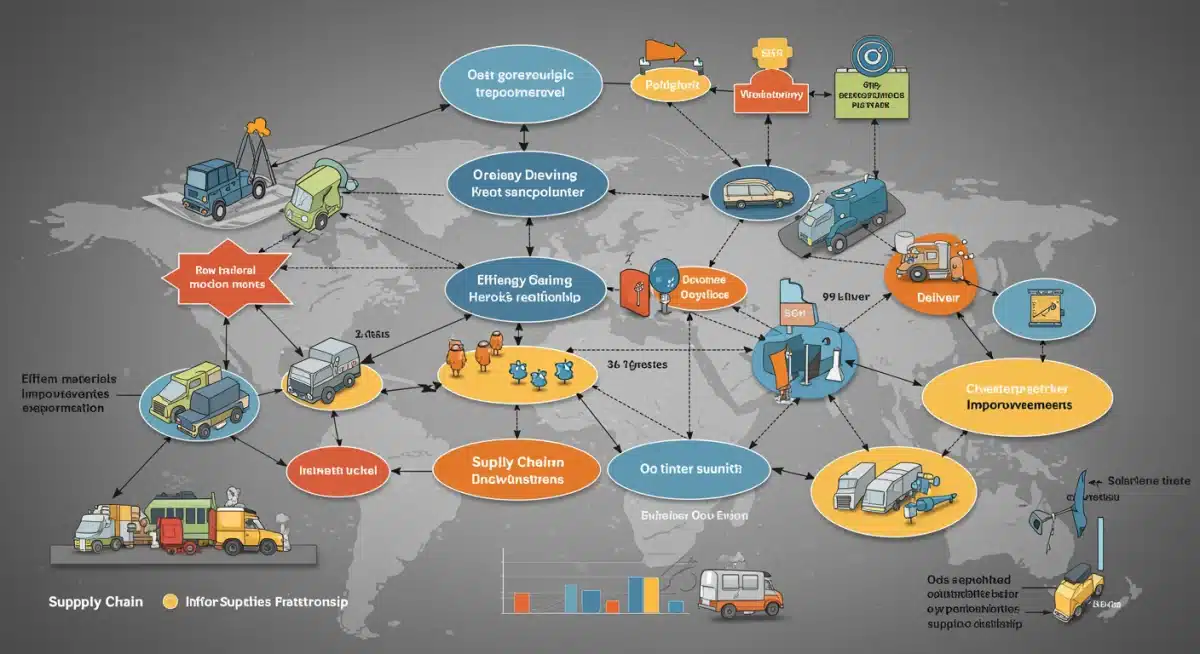
For many SMEs, the supply chain is a complex network that, if not managed efficiently, can significantly erode profit margins. Optimizing the supply chain and implementing robust inventory management practices are crucial steps towards achieving a 10% profit margin boost. This involves scrutinizing every link from sourcing raw materials to delivering the final product to the customer.
Inefficiencies in the supply chain can lead to increased costs, delays, and dissatisfied customers. By applying strategic thinking and leveraging technology, SMEs can transform their supply chain into a competitive advantage, reducing waste and improving responsiveness.
Implementing just-in-time (JIT) inventory
JIT is a management strategy that aligns raw material orders from suppliers directly with production schedules. This approach aims to reduce inventory costs and improve efficiency.
- Reduced carrying costs: Minimize the expense of holding inventory, including storage, insurance, and potential obsolescence.
- Improved cash flow: Less capital is tied up in inventory, freeing up funds for other critical business investments.
- Enhanced responsiveness: Ability to quickly adapt to changes in customer demand and market conditions without being burdened by excess stock.
Furthermore, building strong, collaborative relationships with suppliers can lead to better pricing, more reliable deliveries, and even innovative solutions. Implementing supply chain management (SCM) software can provide real-time visibility into inventory levels, order statuses, and logistics, enabling proactive decision-making. These efforts combined lead to a leaner, more agile supply chain, directly translating into improved cost control and higher profit margins.
Strategic market expansion and customer retention
While internal optimizations are crucial, external growth through strategic market expansion and enhanced customer retention is equally vital for achieving a sustainable 10% profit margin boost. For SMEs, this means identifying new opportunities to grow their customer base and ensuring existing customers remain loyal and engaged. Expanding intelligently and retaining effectively can dramatically increase revenue without a proportional increase in costs.
Market expansion isn’t just about entering new geographical areas; it can also involve targeting new customer segments, developing new product lines, or exploring new distribution channels. Customer retention, on the other hand, focuses on nurturing existing relationships to maximize their lifetime value.
Strategies for market penetration
Entering new markets or expanding within existing ones requires a well-defined strategy to minimize risk and maximize returns.
- Niche market identification: Pinpoint underserved segments where your products or services can offer unique value and command premium pricing.
- Digital marketing campaigns: Utilize targeted online advertising, SEO, and social media to reach new audiences efficiently and cost-effectively.
- Partnerships and alliances: Collaborate with other businesses to access new customer bases or complementary services, expanding your reach without significant capital outlay.
Simultaneously, investing in customer service and loyalty programs can significantly improve retention rates. Satisfied customers are more likely to make repeat purchases, refer new business, and are less price-sensitive. Personalizing customer interactions and actively soliciting feedback can strengthen these relationships. By strategically growing your market presence and fostering strong customer loyalty, SMEs can build a robust foundation for increased revenue and a healthier profit margin.
Financial planning and risk management
To truly secure a 10% profit margin boost and ensure its sustainability, robust financial planning and proactive risk management are indispensable for SMEs. This goes beyond day-to-day accounting and involves forecasting, budgeting, and identifying potential threats to financial stability. A well-structured financial plan provides a roadmap, while risk management acts as a safeguard against unforeseen challenges.
Many SMEs underestimate the importance of detailed financial projections and scenario planning. Understanding how various internal and external factors can impact profitability allows for more informed decision-making and preparedness.
Building a resilient financial framework
A resilient financial framework incorporates both proactive planning and reactive strategies to mitigate risks.
- Detailed budgeting and forecasting: Create comprehensive budgets and financial forecasts that project revenue, expenses, and cash flow under different scenarios.
- Contingency planning: Develop plans for unexpected events such as economic downturns, supply chain disruptions, or significant market shifts.
- Credit and liquidity management: Maintain healthy cash reserves and manage credit lines effectively to ensure continuous operational fluidity.
Moreover, diversifying revenue streams can reduce reliance on a single product, service, or customer segment, thereby spreading risk. Regularly reviewing insurance coverage ensures adequate protection against various operational and financial hazards. Implementing strong internal controls helps prevent fraud and errors, safeguarding assets. By integrating meticulous financial planning and comprehensive risk management, SMEs can protect their hard-earned profit margins and ensure long-term financial health, making their 10% boost a lasting achievement.
| Key Strategy | Brief Description |
|---|---|
| Operational Efficiency | Streamline processes and reduce waste to lower costs and improve productivity. |
| Revenue Optimization | Implement advanced pricing and sales strategies to maximize income per transaction. |
| Digital Transformation | Adopt technology to automate tasks, gain insights, and enhance customer experience. |
| Supply Chain Management | Optimize logistics and inventory to reduce costs and improve responsiveness. |
Frequently asked questions about profit margin boost
The initial step for an SME is to conduct a comprehensive financial analysis. This involves scrutinizing current income statements, balance sheets, and cash flow. Understanding your financial baseline and identifying existing inefficiencies is crucial before implementing any new profit-boosting strategies. This foundational review provides clear insights into areas needing immediate attention.
Digital transformation significantly contributes by automating repetitive tasks, improving operational efficiency, and providing data-driven insights. Technologies like AI, cloud computing, and marketing automation reduce manual labor, minimize errors, and optimize resource allocation. This leads to cost savings and enhanced revenue streams, directly impacting the profit margin.
Both pricing strategies and cost reduction are equally vital for sustainable profit growth. While cost reduction offers immediate gains, intelligent pricing leverages market demand and perceived value to maximize revenue per sale. A balanced approach that optimizes both aspects is essential for achieving a significant and lasting profit margin boost.
Supply chain optimization plays a critical role by reducing operational costs, minimizing waste, and improving efficiency from sourcing to delivery. Strategies like Just-In-Time (JIT) inventory management and strong supplier relationships can significantly lower carrying costs and enhance responsiveness, directly improving the bottom line and contributing to higher profit margins.
Long-term sustainability requires robust financial planning and proactive risk management. This includes detailed budgeting, forecasting, and contingency planning for various scenarios. Diversifying revenue streams, maintaining healthy liquidity, and implementing strong internal controls are also crucial for safeguarding improved profit margins against future challenges and ensuring continued growth.
Conclusion
Achieving a 10% profit margin boost for small to medium enterprises in 2025 is an ambitious yet attainable goal, provided a strategic and comprehensive approach is adopted. By meticulously analyzing financial landscapes, implementing strategic cost reduction, optimizing revenue through intelligent pricing, embracing digital transformation, streamlining supply chains, and focusing on market expansion and customer retention, SMEs can build a resilient and highly profitable business model. The integration of robust financial planning and proactive risk management will ensure these gains are not only realized but also sustained, positioning businesses for enduring success in an evolving market.