Predictive Analytics in Retail: US Trend Forecasting 2025
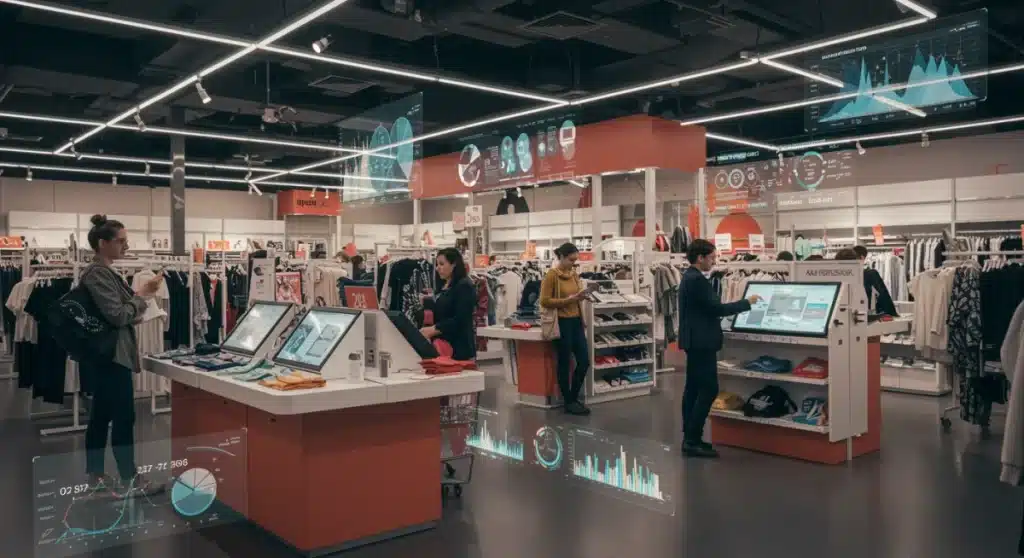
Predictive analytics offers US retailers a critical advantage by accurately forecasting consumer trends three months ahead, allowing for strategic decision-making in inventory, marketing, and customer engagement for the 2025 market.
The retail landscape in the United States is constantly evolving, driven by dynamic consumer preferences and rapid technological advancements. In this fiercely competitive environment, the ability to anticipate what customers will want, when they will want it, and how much they are willing to pay for it, is no longer a luxury but a necessity. This is precisely where predictive analytics in retail: forecasting consumer trends 3 months ahead for US market advantage in 2025 emerges as a game-changer. By harnessing the power of data, retailers can move beyond reactive strategies, transforming their operations and securing a significant edge in the coming year.
Understanding the Core of Predictive Analytics in Retail
Predictive analytics in retail involves using historical data, statistical algorithms, and machine learning techniques to identify the likelihood of future outcomes based on past events. For US retailers, this translates into foresight regarding consumer behavior, demand fluctuations, and market shifts. It’s about transforming raw data into actionable insights that inform strategic decisions across the entire retail value chain.
The core principle lies in recognizing patterns that are not immediately obvious to the human eye. These patterns, once identified, can then be projected into the future to predict, with a high degree of accuracy, what consumers will do next. This capability is particularly vital in a market as diverse and fast-paced as the United States, where regional variations and cultural nuances significantly impact purchasing decisions.
The Data Foundation for Accurate Forecasts
Effective predictive analytics relies on a robust foundation of diverse data sources. This isn’t just about sales figures; it encompasses a much broader spectrum of information.
- Historical Sales Data: Analyzing past transaction records to identify seasonal trends, popular products, and customer purchasing frequencies.
- Customer Demographics and Psychographics: Understanding who your customers are, their lifestyles, values, and buying motivations.
- Web and Social Media Activity: Tracking online behavior, search queries, social sentiment, and emerging trends on platforms.
- External Factors: Incorporating economic indicators, weather patterns, competitor activities, and global events that may influence consumer spending.
By integrating these disparate data sets, retailers can build a comprehensive picture that allows predictive models to operate with greater precision. The more data points available, and the cleaner that data is, the more accurate the forecasts become, directly contributing to a stronger US market advantage in 2025.
Ultimately, predictive analytics empowers retailers to make data-driven decisions, moving away from intuition or guesswork. It provides a scientific basis for understanding and influencing consumer behavior, ensuring that businesses are always one step ahead in anticipating and meeting customer needs.
Forecasting Consumer Trends 3 Months Ahead: A Strategic Imperative
The ability to forecast consumer trends with a three-month lead time offers an unparalleled strategic advantage for US retailers. This window allows for proactive adjustments rather than reactive responses, impacting everything from product development to marketing campaigns. In the dynamic US market, where trends can emerge and dissipate rapidly, this foresight is invaluable for maintaining relevance and profitability.
A three-month forecast enables retailers to fine-tune their strategies for upcoming seasons, holidays, or major cultural events. This proactive stance minimizes risks associated with overstocking unpopular items or understocking high-demand products. The result is optimized inventory, reduced waste, and improved cash flow, all critical for thriving in 2025.
Optimizing Inventory and Supply Chain
One of the most immediate and impactful applications of 3-month trend forecasting is in inventory management. Retailers can align their orders more precisely with anticipated demand, avoiding costly carrying charges for slow-moving goods and preventing lost sales due to stockouts.
- Reduced Waste: Minimize markdown losses and the disposal of unsold seasonal merchandise.
- Improved Cash Flow: Free up capital that would otherwise be tied up in excess inventory.
- Enhanced Customer Satisfaction: Ensure popular products are always available, preventing customer frustration and driving loyalty.
- Efficient Supply Chain Planning: Collaborate more effectively with suppliers based on accurate future demand signals.
Beyond just quantity, predictive analytics can also forecast specific product attributes that will be in vogue, such as colors, styles, or functionalities. This allows retailers to influence manufacturing and procurement processes well in advance, ensuring their offerings are perfectly aligned with future consumer desires. Such precision is what separates market leaders from followers in the competitive US retail landscape.
By accurately predicting future demand, retailers can also negotiate better terms with suppliers, streamline logistics, and reduce overall operational costs. This efficiency translates directly into improved profit margins and a stronger competitive position as we head into 2025.
Personalization and Customer Experience in 2025
In the US market, consumers increasingly expect personalized experiences that reflect their individual preferences and past interactions. Predictive analytics is the engine behind delivering this level of personalization, transforming how retailers engage with their target audience. By understanding future behaviors, retailers can tailor everything from product recommendations to marketing messages, creating a more relevant and engaging customer journey.
Forecasting allows retailers to anticipate not just what a customer might buy, but also their preferred communication channels, optimal timing for offers, and even the type of content that will resonate most with them. This deep understanding fosters stronger customer relationships and builds brand loyalty, which is paramount for sustained success in 2025.
Tailoring Marketing Campaigns and Product Recommendations
Predictive models can segment customers into highly specific groups based on anticipated future behavior, enabling hyper-targeted marketing efforts. This moves beyond basic demographic segmentation to behavioral predictions.
- Proactive Product Suggestions: Recommend items a customer is likely to need or desire before they even search for them.
- Personalized Promotions: Deliver discounts and offers that are genuinely relevant to an individual’s predicted purchasing patterns.
- Optimized Communication Channels: Engage customers through their preferred methods, whether it’s email, SMS, or in-app notifications.
- Dynamic Website Content: Present different content and product layouts to various visitors based on their predicted interests.
This level of personalization not only improves conversion rates but also significantly enhances the customer experience, making shopping feel more intuitive and tailored. When customers feel understood and valued, they are more likely to return and become long-term advocates for the brand. This is a crucial element for any US retailer aiming for market advantage in 2025.
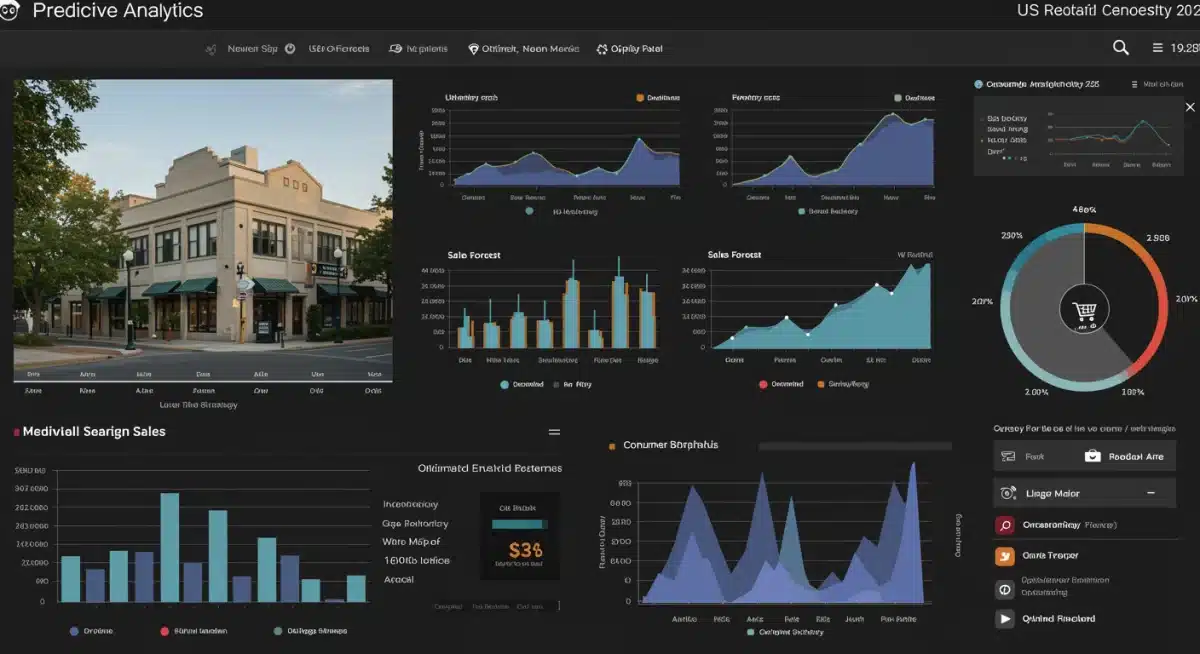
Harnessing predictive insights to create these bespoke experiences directly contributes to higher customer satisfaction scores and a stronger market presence. It shifts the retail interaction from transactional to relational, building lasting connections that drive consistent revenue.
Mitigating Risks and Identifying Opportunities
Beyond forecasting positive trends, predictive analytics also plays a crucial role in identifying potential risks and emerging opportunities within the US retail market. By analyzing various data points, retailers can anticipate economic downturns, shifts in consumer sentiment, or the rise of disruptive competitors. This early warning system allows for the development of contingency plans and agile responses, safeguarding profitability.
Conversely, predictive models can pinpoint nascent trends before they become mainstream, giving retailers the chance to be first-movers. This could involve identifying demand for sustainable products, new payment methods, or shifts in shopping preferences (e.g., increased preference for BOPIS – Buy Online, Pick Up In Store). Recognizing these opportunities early translates into significant market share gains and innovation leadership in 2025.
Proactive Problem Solving and Competitive Edge
The ability to foresee challenges allows retailers to address them head-on, minimizing their impact. This can include anticipating supply chain disruptions or predicting changes in consumer spending habits due to inflation.
- Fraud Detection: Identify suspicious transaction patterns in real-time to prevent financial losses.
- Churn Prediction: Forecast which customers are likely to leave and implement retention strategies before they depart.
- Price Optimization: Determine the optimal pricing strategies for products to maximize revenue and competitiveness.
- Market Entry Strategy: Assess the viability of entering new geographic markets or launching new product categories based on predicted demand.
For US retailers, staying ahead of the curve means not only reacting quickly but also shaping the curve itself. Predictive analytics provides the tools to innovate and adapt, ensuring resilience in an unpredictable market. This proactive approach to risk management and opportunity identification is a cornerstone of achieving a sustainable market advantage in 2025.
By continuously monitoring and analyzing data, retailers can maintain a dynamic understanding of the market, allowing them to pivot strategies as needed and remain competitive even in the face of unforeseen challenges.
Implementing Predictive Analytics: Key Considerations for US Retailers
Successfully integrating predictive analytics into retail operations requires careful planning and execution. It’s not merely about acquiring software; it’s about fostering a data-driven culture, investing in the right technologies, and developing the necessary expertise. For US retailers looking to leverage these capabilities for a 2025 advantage, several key considerations are paramount.
The journey begins with defining clear objectives: what specific problems are you trying to solve, or what opportunities are you aiming to capture? Without clear goals, even the most sophisticated predictive models can fail to deliver tangible value. A phased implementation approach often works best, starting with pilot projects and gradually expanding the scope.
Building a Data-Driven Culture and Technology Stack
The human element is as crucial as the technological one. Employees at all levels need to understand the value of data and how to interpret and act upon predictive insights.
- Data Governance: Establish clear policies for data collection, storage, security, and quality to ensure reliable inputs for models.
- Talent Acquisition/Training: Invest in data scientists, analysts, and business intelligence professionals, or upskill existing staff.
- Scalable Infrastructure: Choose platforms that can handle large volumes of data and complex computations, integrating seamlessly with existing systems.
- Ethical AI Use: Address concerns around data privacy, bias in algorithms, and transparency in how predictions are made.
Selecting the right technology stack involves choosing tools that are not only powerful but also user-friendly enough for business users to interact with the insights. Cloud-based solutions often offer the scalability and flexibility required for modern retail environments. The integration of predictive analytics tools with existing ERP, CRM, and POS systems is vital for a unified data view.
Ultimately, a successful implementation hinges on a commitment to continuous learning and adaptation. As market conditions change and new data sources emerge, predictive models must be regularly refined and updated to maintain their accuracy and relevance for the US market in 2025.
The Future Landscape: Predictive Analytics and AI in 2025
As we look towards 2025, the synergy between predictive analytics and artificial intelligence (AI) will redefine the retail landscape in the US. AI enhances predictive capabilities by automating data analysis, identifying complex patterns, and generating more nuanced forecasts. This integration allows for real-time adjustments and a level of operational efficiency previously unattainable, pushing the boundaries of what’s possible in consumer trend forecasting.
The evolution will see predictive models becoming more sophisticated, incorporating unstructured data such as customer reviews, voice search queries, and even biometric data (with appropriate consent) to paint an even more precise picture of future demand. This will enable retailers to anticipate not just product trends, but also shifts in consumer values and societal preferences.
Emerging Technologies and Enhanced Forecasting
The advancements in AI, particularly in areas like natural language processing (NLP) and computer vision, will unlock new dimensions for predictive analytics.
- Generative AI for Product Design: Predicting future aesthetic trends to inform new product lines.
- Hyper-Personalized Shopping Assistants: AI-powered virtual assistants that anticipate customer needs and offer tailored advice.
- Autonomous Inventory Management: Systems that automatically reorder and optimize stock levels based on real-time predictive demand.
- Dynamic Pricing Models: AI-driven algorithms that adjust prices in real-time based on predicted demand and competitor actions.
The integration of IoT devices within retail environments will also provide a richer stream of real-time data, feeding into predictive models to offer even more granular insights. Imagine sensors tracking foot traffic patterns, or smart shelves monitoring product interactions, all contributing to a more accurate forecast of demand and consumer behavior. This level of interconnectedness will enable US retailers to operate with unprecedented agility and responsiveness.
The future of retail in 2025 will be characterized by a seamless blend of human intuition and AI-powered foresight. Retailers who embrace this evolution will not only survive but thrive, setting new benchmarks for customer experience and operational excellence.
| Key Aspect | Description for US Retail in 2025 |
|---|---|
| Trend Forecasting | Anticipating consumer preferences and market shifts 3 months ahead for strategic planning. |
| Inventory Optimization | Aligning stock levels with predicted demand to reduce waste and improve cash flow. |
| Personalized Experience | Tailoring marketing and product recommendations to individual customer needs. |
| Risk & Opportunity | Proactively identifying threats and capitalizing on emerging market opportunities. |
Frequently Asked Questions About Predictive Analytics in US Retail
Predictive analytics in US retail uses historical data, statistical models, and machine learning to forecast future consumer behaviors and market trends. It enables retailers to anticipate demand, optimize inventory, personalize customer experiences, and gain a competitive edge in the highly dynamic American market.
A 3-month forecast provides US retailers with crucial lead time for strategic planning. This allows for proactive adjustments in inventory, supply chain management, and marketing campaigns, reducing waste, improving cash flow, and ensuring products align with anticipated consumer demand for upcoming seasons and events.
Accurate retail predictions rely on diverse data sources including historical sales, customer demographics, web and social media activity, and external factors like economic indicators or weather. Integrating these diverse datasets provides a comprehensive view for robust and precise forecasting models relevant to the US market.
Absolutely. Predictive analytics enables hyper-personalization by forecasting individual customer preferences, buying patterns, and communication channels. This allows US retailers to deliver tailored product recommendations, personalized promotions, and dynamic content, significantly enhancing the customer experience and fostering loyalty.
Key challenges include ensuring data quality, integrating disparate systems, acquiring or training skilled data professionals, and fostering a data-driven organizational culture. Addressing data privacy and ethical AI use are also critical for successful and sustainable implementation in the competitive US retail environment.
Conclusion
The journey toward achieving a sustainable US market advantage in 2025 is inextricably linked to the strategic adoption of predictive analytics. By enabling retailers to accurately forecast consumer trends three months ahead, this powerful technology transforms uncertainty into foresight. From optimizing inventory and refining supply chains to delivering hyper-personalized customer experiences and proactively mitigating risks, predictive analytics offers a comprehensive toolkit for navigating the complexities of modern retail. As AI continues to evolve, its integration with predictive models will only deepen, promising an even more intelligent and responsive retail future. For US retailers, embracing this data-driven revolution is not just about staying competitive; it’s about defining the future of commerce.