Open Banking & Digital Payments: Financial Opportunities by 2025

Open Banking and Digital Payments are poised to redefine the financial services landscape by 2025, fostering a new era of innovation, personalized services, and increased competition across the industry.
The financial industry is on the cusp of an unprecedented transformation, driven by the convergence of Open Banking and Digital Payments: Unlocking New Opportunities for Financial Services by 2025. This shift promises to reshape how consumers interact with their money and how institutions deliver services. It’s a journey into a future where convenience, personalization, and efficiency are paramount.
The Dawn of Open Banking: A Paradigm Shift
Open Banking represents a fundamental change in how financial data is accessed and utilized. It mandates that banks securely share customer data with third-party providers (TPPs) with explicit customer consent. This data-sharing capability forms the bedrock for a wave of innovative financial products and services, moving beyond traditional banking silos.
The implications of this shift are profound, extending from improved financial management tools to more competitive lending and payment solutions. Consumers gain greater control over their financial data, enabling them to make more informed decisions and access services tailored to their specific needs. For financial institutions, it’s an imperative to adapt or risk obsolescence.
Understanding the Core Principles
At its heart, Open Banking is built on several key principles designed to foster innovation and consumer empowerment. These principles guide the development of new services and ensure a secure, transparent environment for data sharing.
- Customer Consent: Data sharing only occurs with explicit and informed consent from the customer.
- API-Driven: Application Programming Interfaces (APIs) are the technical backbone, enabling seamless and secure data exchange.
- Enhanced Security: Robust security protocols are mandated to protect sensitive financial information.
- Increased Competition: New entrants can leverage data to offer competitive and specialized services.
This framework encourages a collaborative ecosystem where FinTechs, established banks, and other financial players can innovate together. The ultimate goal is to create a more dynamic and responsive financial sector that better serves the needs of a diverse customer base.
In conclusion, Open Banking is not merely a regulatory requirement; it’s a strategic catalyst for change. It paves the way for a more integrated and customer-centric financial landscape, setting the stage for significant advancements in how financial services are delivered and consumed.
Digital Payments: The Engine of Modern Commerce
Digital payments have rapidly transitioned from a niche convenience to an indispensable component of daily life and global commerce. Their ubiquity is driven by increasing smartphone penetration, e-commerce growth, and the demand for instant, frictionless transactions. By 2025, the digital payments ecosystem is expected to be even more sophisticated, integrating various technologies to offer unparalleled speed and security.
This evolution encompasses everything from mobile wallets and contactless payments to real-time payment networks and blockchain-based solutions. The shift away from cash and traditional card systems is accelerating, pushing financial institutions and merchants to embrace digital alternatives as a core part of their strategy.
Innovations Driving Digital Payment Adoption
The rapid adoption of digital payments is fueled by continuous innovation in technology and user experience. These advancements are making digital transactions more accessible, secure, and appealing to a broader demographic.
- Mobile Wallets: Platforms like Apple Pay and Google Pay offer convenient, secure transactions directly from smartphones.
- Contactless Payments: NFC technology enables quick tap-and-go payments, reducing friction at the point of sale.
- Real-Time Payments: Initiatives like RTP and FedNow in the US are enabling instant fund transfers, 24/7.
- Biometric Authentication: Fingerprint and facial recognition enhance security and streamline authorization processes.
These innovations are not just about speed; they are about building trust and offering a seamless experience that traditional payment methods often cannot match. The convenience factor, coupled with robust security features, is a powerful driver for widespread adoption.
Ultimately, digital payments are transforming the entire retail and service landscape. They are enabling new business models, facilitating cross-border trade, and providing consumers with unprecedented flexibility in how they manage their money. This ongoing revolution is a testament to the power of technology in meeting evolving consumer demands.
Synergy Between Open Banking and Digital Payments
The true potential for unlocking new opportunities in financial services by 2025 lies in the powerful synergy between Open Banking and Digital Payments. When combined, these two forces create a financial ecosystem that is more intelligent, efficient, and customer-centric than ever before. Open Banking provides the data, and digital payments provide the transaction rails, creating a virtuous cycle of innovation.
Imagine a scenario where a personal finance app, powered by Open Banking, analyzes your spending habits and automatically suggests the most cost-effective digital payment method for a particular purchase, or even helps you manage subscriptions more effectively. This level of integration moves beyond simple convenience to proactive financial management.
Transformative Use Cases
The integration of Open Banking and digital payments gives rise to a multitude of transformative use cases that benefit both consumers and businesses. These applications are set to redefine how financial interactions occur.
- Personalized Financial Advice: Aggregated data allows for highly tailored budgeting, saving, and investment recommendations.
- Streamlined Lending: Lenders can access real-time financial data (with consent) for faster, more accurate credit assessments.
- Embedded Finance: Financial services become seamlessly integrated into non-financial platforms, like e-commerce sites.
- Enhanced Fraud Detection: Access to a broader range of transaction data improves the ability to identify and prevent fraudulent activities.
These examples highlight how the combination of data accessibility and efficient transaction execution can lead to superior financial products. The future of finance is not just about making payments, but about making payments smarter and more integrated into our digital lives.
In essence, Open Banking acts as the brain, providing the insights, while digital payments serve as the circulatory system, enabling the flow of value. Together, they are building a more responsive and intelligent financial infrastructure.
Challenges and Regulatory Landscape
While the opportunities presented by Open Banking and Digital Payments are immense, their widespread adoption and successful implementation are not without significant challenges. Navigating these hurdles, particularly within the complex regulatory landscape, is crucial for realizing the full potential of these innovations by 2025. Addressing concerns around data privacy, security, and market fragmentation will define the trajectory of this evolving ecosystem.
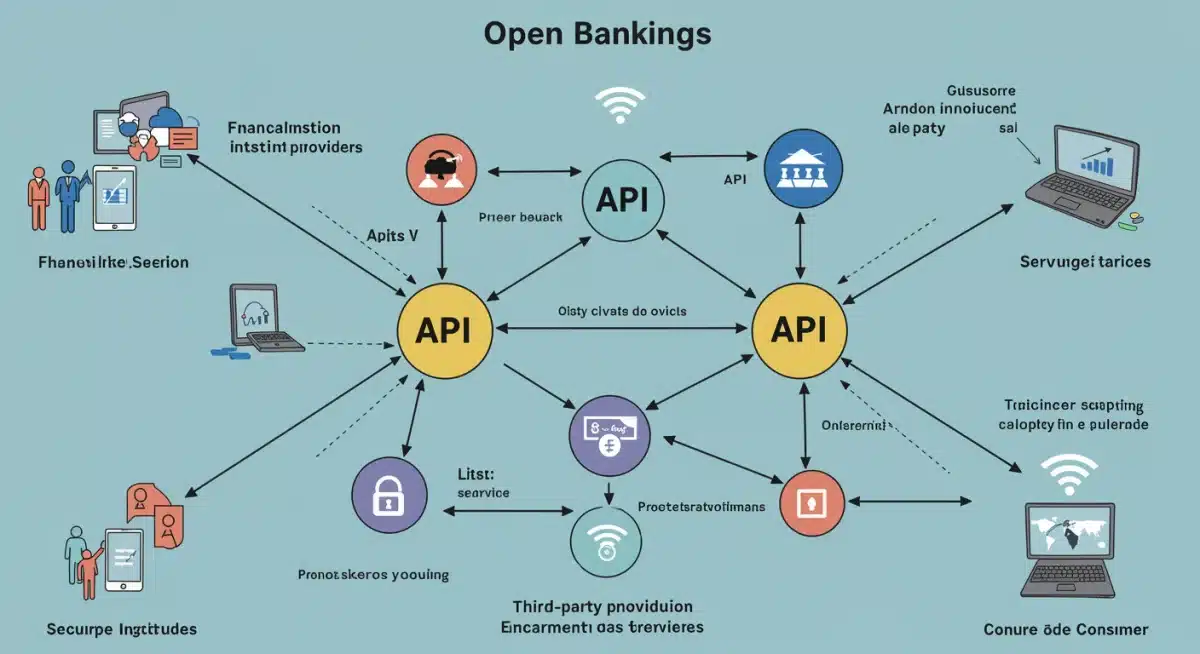
One of the primary concerns revolves around data security and privacy. As more financial data is shared across different platforms, the risk of data breaches and misuse increases. Robust cybersecurity measures and clear data governance frameworks are paramount to building and maintaining consumer trust. Without trust, adoption will inevitably falter, regardless of the innovation offered.
Key Regulatory and Implementation Hurdles
The path to a fully integrated Open Banking and Digital Payments ecosystem is paved with various regulatory and practical challenges. These require careful consideration and collaborative efforts from all stakeholders.
- Data Privacy and Consent Management: Ensuring transparent and easily manageable consent mechanisms for consumers.
- Standardization of APIs: Developing universal standards for APIs to ensure interoperability across diverse financial institutions.
- Fraud Prevention: Implementing advanced security protocols to combat new forms of financial fraud in a digital environment.
- Consumer Education: Informing consumers about the benefits and risks associated with sharing their financial data.
- Legacy System Integration: Modernizing existing banking infrastructure to seamlessly integrate with new Open Banking APIs.
Regulators play a critical role in striking a balance between fostering innovation and safeguarding consumer interests. The development of clear, adaptable regulations that can keep pace with technological advancements is essential. Without a coherent regulatory framework, the ecosystem risks becoming fragmented and less secure, hindering its growth.
In summary, while the technological capabilities for Open Banking and Digital Payments are advancing rapidly, successful implementation hinges on overcoming significant regulatory and operational challenges. A concerted effort from industry participants and regulators will be necessary to unlock these opportunities responsibly.
Impact on Traditional Financial Institutions
The rise of Open Banking and Digital Payments presents both an existential threat and a golden opportunity for traditional financial institutions. For decades, banks have held a near-monopoly on financial data and services. Now, with data accessibility and instant payments becoming the norm, their business models are being fundamentally challenged. This necessitates a strategic re-evaluation and a willingness to embrace change, rather than resist it.
Those banks that adapt proactively, viewing FinTechs not just as competitors but as potential collaborators, stand to gain significantly. By leveraging new technologies and forming strategic partnerships, traditional institutions can enhance their offerings, improve customer engagement, and even discover new revenue streams. The alternative is a gradual loss of market share to more agile, digitally native players.
Strategies for Adaptation and Growth
Traditional financial institutions must adopt specific strategies to thrive in this new landscape. These approaches focus on leveraging their existing strengths while incorporating the advantages of Open Banking and digital payment technologies.
- API Adoption: Investing in robust API infrastructure to enable secure and efficient data sharing.
- Strategic Partnerships: Collaborating with FinTechs to integrate innovative services and expand their product offerings.
- Customer-Centric Innovation: Focusing on developing personalized customer experiences through data analytics.
- Digital Transformation: Modernizing core banking systems and processes to support digital payment flows and data exchange.
By embracing these strategies, banks can evolve from being mere custodians of money to becoming orchestrators of financial ecosystems. They have the advantage of established trust and vast customer bases, which, when combined with innovative technology, can be a powerful differentiator.
Ultimately, the impact on traditional financial institutions will be determined by their willingness to innovate and collaborate. Those that successfully navigate this transformation will emerge stronger and more relevant in the financial landscape of 2025 and beyond.
Future Outlook: Beyond 2025
Looking beyond 2025, the trajectory of Open Banking and Digital Payments points towards an even more integrated, intelligent, and autonomous financial future. The foundations being laid today will enable a seamless flow of financial information and value, fundamentally altering how individuals and businesses manage their economic lives. We can anticipate further convergence with emerging technologies like artificial intelligence (AI), machine learning (ML), and blockchain, creating financial services that are predictive, personalized, and hyper-efficient.
The concept of embedded finance, where financial services are seamlessly integrated into non-financial platforms, will become even more pervasive. Imagine buying a car and instantly getting financing options, insurance, and payment plans all within the dealership’s digital platform, tailored to your real-time financial health. This level of contextual banking will be a hallmark of the post-2025 era.
Emerging Trends and Technologies
Several key trends and technological advancements are expected to shape the evolution of Open Banking and Digital Payments in the years following 2025. These will push the boundaries of what is currently possible.
- AI-Driven Personalization: AI will analyze Open Banking data to offer hyper-personalized financial products and advice, often before the customer even realizes they need it.
- Blockchain for Payments: Distributed Ledger Technology (DLT) could further enhance the speed, security, and transparency of cross-border payments.
- Voice and Gesture Payments: More intuitive and hands-free payment methods will become mainstream, integrating with smart homes and IoT devices.
- Decentralized Finance (DeFi) Integration: Elements of DeFi, particularly in lending and asset management, may find pathways to integrate with regulated Open Banking frameworks.
These trends suggest a future where financial services are not just digital, but truly intelligent and ubiquitous. The lines between banking, commerce, and daily life will continue to blur, creating a highly interconnected and responsive financial ecosystem. The focus will shift from transactional interactions to holistic financial well-being and proactive support.
In conclusion, the journey of Open Banking and Digital Payments is far from over. Beyond 2025, we can expect a continuous evolution towards a financial world that is more open, more intelligent, and more integrated into the fabric of our digital existence, offering unprecedented levels of convenience and personalization.
| Key Aspect | Brief Description |
|---|---|
| Open Banking | Securely sharing financial data with third parties, enabling new services with customer consent. |
| Digital Payments | Electronic transactions, including mobile wallets, contactless, and real-time payments. |
| Synergy & Opportunities | Combination drives personalized financial advice, streamlined lending, and embedded finance. |
| Challenges | Data privacy, security, regulatory complexity, and legacy system integration. |
Frequently Asked Questions About Open Banking and Digital Payments
▼
Open Banking allows consumers to securely share their financial data with third-party providers via APIs. It’s crucial because it fosters innovation, increases competition, and enables personalized financial products, giving consumers more control and better options for managing their money.
▼
Digital payments are moving beyond cards to include mobile wallets, contactless payments, and real-time transfers. Innovations like biometric authentication and embedded finance are making transactions faster, more secure, and seamlessly integrated into daily activities, reducing reliance on physical cash.
▼
The synergy between Open Banking and digital payments enables highly personalized financial advice, more efficient lending processes, and seamless embedded finance experiences. This integration creates a more intelligent and responsive financial ecosystem that benefits both consumers and businesses through enhanced services.
▼
Key challenges include ensuring robust data security and privacy, establishing common API standards, preventing fraud in new digital environments, and educating consumers. Overcoming these requires strong regulatory frameworks and collaborative efforts from financial institutions and technology providers.
▼
Traditional banks must embrace digital transformation by investing in API infrastructure, forming strategic partnerships with FinTechs, and focusing on customer-centric innovation. By adapting, they can leverage their existing trust and customer base to offer cutting-edge services and remain competitive in the evolving financial sector.
Conclusion
The dual forces of Open Banking and Digital Payments are not merely trends but foundational shifts reshaping the financial services industry. By 2025, we anticipate a financial landscape characterized by unprecedented connectivity, personalization, and efficiency. While challenges in regulation and data security remain, the opportunities for innovation, enhanced customer experience, and new business models are profound. Forward-thinking institutions and FinTechs that strategically embrace these changes will be at the forefront of this new era, delivering a more responsive and intelligent financial future for all.