Boost Digital Payment Security with MFA: Reduce Fraud 20%

Implementing Multi-Factor Authentication (MFA) is a critical strategy to enhance digital payment security, offering a robust defense against evolving cyber threats and aiming to reduce fraud by 20% this year.
In today’s interconnected world, the landscape of digital payments is constantly evolving, bringing unparalleled convenience but also heightened risks. Businesses and consumers alike face an increasing threat from sophisticated cybercriminals. This is why enhancing digital payment security has become paramount, with a clear objective: implementing Multi-Factor Authentication (MFA) to significantly reduce fraud, aiming for a 20% decrease this year. The stakes are high, and the need for robust protective measures is more urgent than ever.
Understanding the Evolving Threat Landscape in Digital Payments
The rapid adoption of digital payment methods has brought immense benefits, but it has also opened new avenues for fraudulent activities. From phishing scams to sophisticated malware, cybercriminals are constantly innovating their tactics, making it crucial for businesses to stay ahead. Understanding these threats is the first step toward building a resilient security infrastructure.
The sheer volume of digital transactions processed daily creates a vast target area for attackers. Data breaches, identity theft, and account takeovers are common occurrences, leading to significant financial losses and reputational damage for affected entities. These incidents underscore the urgent need for more robust authentication protocols beyond traditional username and password combinations.
Common Fraud Vectors
- Phishing and Social Engineering: Attackers trick users into revealing credentials through deceptive emails or websites.
- Malware and Spyware: Malicious software installed on devices captures personal and financial information.
- Account Takeovers (ATO): Criminals gain unauthorized access to legitimate user accounts, exploiting stolen credentials.
- Card-Not-Present (CNP) Fraud: Unauthorized transactions made using stolen card details without the physical card present.
The challenge lies not only in identifying these vectors but also in implementing proactive measures that can effectively neutralize them before they cause harm. Traditional security layers are often insufficient against these evolving threats, necessitating a more dynamic and multi-layered approach to authentication.
In conclusion, the digital payment ecosystem is a battleground where security must constantly adapt. Recognizing the diversity and sophistication of current fraud vectors is essential for any strategy aimed at significantly reducing fraud and protecting both businesses and consumers.
The Imperative of Multi-Factor Authentication (MFA)
Multi-Factor Authentication (MFA) stands as a cornerstone of modern cybersecurity, moving beyond simple passwords to verify user identity through multiple distinct methods. This layered approach dramatically increases the difficulty for unauthorized individuals to gain access, even if one factor is compromised. It’s a critical component in the strategy to enhance digital payment security.
MFA requires users to provide two or more verification factors from independent categories. These categories typically include something the user knows (like a password), something the user has (like a phone or hardware token), and something the user is (like a fingerprint or facial scan). By combining these elements, MFA creates a much stronger barrier against unauthorized access.
How MFA Elevates Security
The strength of MFA lies in its multi-layered defense. If a cybercriminal manages to steal a password, they would still need to compromise a second, independent factor to gain access. This significantly reduces the success rate of common attacks like phishing and credential stuffing, which often rely on stealing a single authentication factor.
- Reduces Account Takeovers: Makes it exponentially harder for fraudsters to access accounts, even with stolen passwords.
- Protects Sensitive Data: Safeguards financial information and personal data from unauthorized breaches.
- Enhances Regulatory Compliance: Many industry standards and regulations now mandate or strongly recommend MFA for financial transactions.
- Increases User Trust: Demonstrates a commitment to security, fostering greater confidence among customers in digital payment platforms.
The imperative for MFA is clear: it is no longer an optional security feature but a fundamental requirement for any entity serious about protecting digital transactions. Its implementation is a direct response to the escalating sophistication of cyber threats and a proactive step towards achieving a significant reduction in fraud this year.
Strategic Implementation of MFA for Fraud Reduction
Implementing Multi-Factor Authentication effectively requires more than just enabling a feature; it demands a strategic approach tailored to the specific needs and risks of a digital payment ecosystem. The goal is to integrate MFA seamlessly, ensuring maximum security without hindering the user experience, thereby contributing to the targeted 20% reduction in fraud.
A successful MFA strategy begins with a thorough assessment of existing vulnerabilities and user behavior patterns. It involves selecting the right types of authentication factors, deploying them at critical junctures, and continuously monitoring their effectiveness. Consideration must be given to both the technical infrastructure and the human element.
Key Steps for Effective MFA Deployment
- Risk Assessment: Identify high-risk transactions and user groups that require stronger authentication.
- Factor Selection: Choose MFA methods that are appropriate for the target audience and technology infrastructure, such as biometric, SMS OTP, or authenticator apps.
- Phased Rollout: Implement MFA incrementally to allow for testing, feedback, and user adaptation.
- User Education: Provide clear instructions and support to users on how to set up and use MFA, emphasizing its benefits.
Beyond initial deployment, continuous monitoring and adaptation are crucial. The threat landscape evolves, and so too must the MFA strategy. Regular audits, performance reviews, and updates to authentication methods ensure that the system remains robust against emerging threats.
Ultimately, strategic MFA implementation is about striking a balance between security and usability. When done correctly, it becomes an invisible yet formidable shield, protecting digital payments and helping businesses achieve their fraud reduction goals without alienating their customer base.
Choosing the Right MFA Methods for Your Platform
Selecting the appropriate Multi-Factor Authentication methods is a pivotal decision that directly impacts both security efficacy and user experience. Not all MFA types are created equal, and the ‘best’ option often depends on the specific context of the digital payment platform, its user base, and the level of risk involved.
The spectrum of MFA factors ranges from simple knowledge-based challenges to advanced biometric verifications. Each method comes with its own set of advantages and disadvantages regarding security strength, implementation complexity, and user convenience. A thoughtful selection process is essential to optimize both protection and adoption rates.
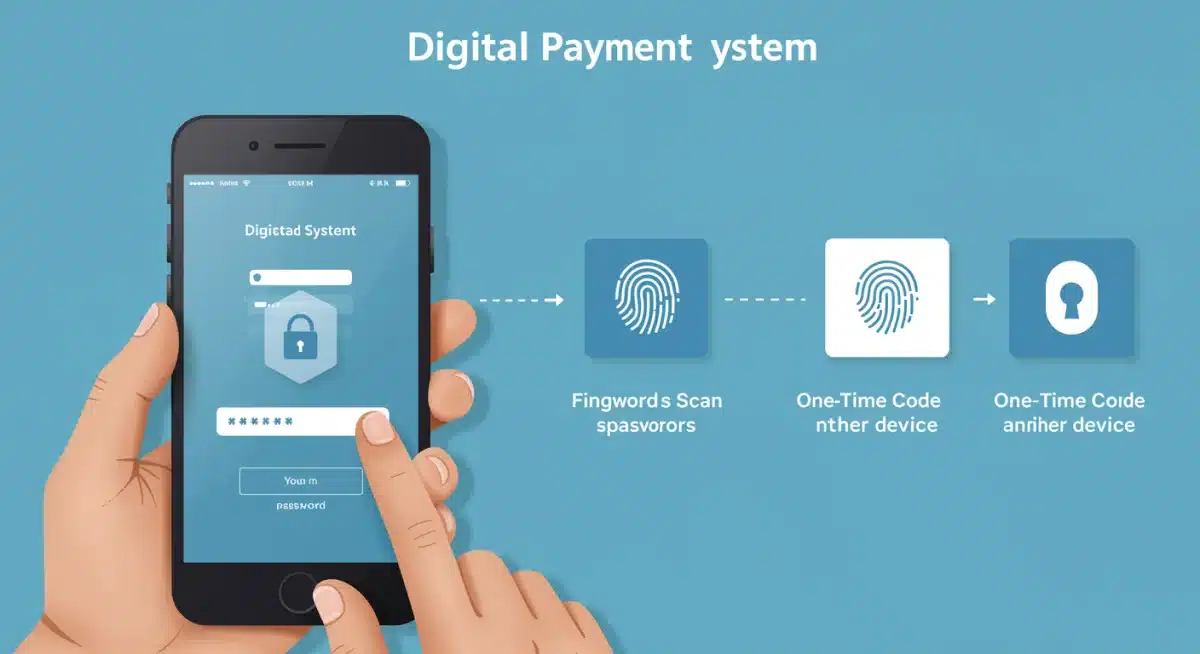
Popular MFA Options and Considerations
- SMS One-Time Passwords (OTPs): Convenient and widely adopted, but can be vulnerable to SIM swap attacks.
- Authenticator Apps (e.g., Google Authenticator, Authy): Offer stronger security than SMS by generating time-based OTPs, independent of cellular networks.
- Biometrics (Fingerprint, Facial Recognition): Highly convenient and generally secure, leveraging unique biological characteristics. Requires compatible hardware.
- Hardware Security Keys (e.g., YubiKey): Provide the highest level of security, often used for high-value transactions or sensitive accounts.
When evaluating options, consider the balance between security and user friction. For instance, while hardware keys offer superior protection, they might introduce too much friction for everyday consumers. Conversely, SMS OTPs, while convenient, may not be robust enough for high-value transactions.
Furthermore, platforms should consider offering multiple MFA options, allowing users to choose the method that best suits their preferences and devices. This flexibility can significantly increase adoption rates and overall security posture. The right combination of MFA methods is key to a robust digital payment security strategy.
Measuring the Impact: Achieving a 20% Fraud Reduction
The ultimate goal of implementing Multi-Factor Authentication is to enhance digital payment security and achieve a tangible reduction in fraud. Setting a specific target, such as a 20% reduction this year, provides a clear benchmark for success and necessitates a robust framework for measurement and analysis.
Measuring the impact of MFA requires careful tracking of key metrics both before and after its implementation. This includes analyzing fraud rates, the types of fraud incidents, and the financial losses associated with them. A comprehensive approach to data collection and analysis is crucial for demonstrating the return on investment of security measures.
Key Metrics for Tracking Fraud Reduction
- Fraud Incident Rate: The number of successful fraud attempts per a given volume of transactions.
- Financial Loss Due to Fraud: Total monetary value lost to fraudulent activities.
- Account Takeover Attempts: Tracking attempts to gain unauthorized access to user accounts.
- Customer Churn Related to Security Incidents: Measuring how security breaches impact customer retention.
Beyond raw numbers, it’s important to attribute changes in these metrics specifically to MFA implementation. This might involve A/B testing or comparing data from periods before and after MFA rollout. Furthermore, qualitative data from customer feedback and internal security reports can provide valuable insights into the effectiveness and user perception of the new security measures.
Achieving a 20% fraud reduction is an ambitious yet attainable goal with strategic MFA deployment. Continuous monitoring, data-driven adjustments, and a commitment to evolving security practices are vital to not only meet but potentially exceed this target, solidifying trust in digital payment systems.
Overcoming Challenges and Ensuring User Adoption of MFA
While the benefits of Multi-Factor Authentication are clear, its successful implementation is not without challenges. One of the primary hurdles is ensuring widespread user adoption. Security measures, no matter how robust, are only effective if users embrace and consistently utilize them.
Resistance to change, perceived inconvenience, and a lack of understanding about the importance of MFA can all contribute to low adoption rates. Addressing these issues requires a proactive and empathetic approach, focusing on communication, education, and user-friendly design.
Strategies for Boosting MFA Adoption
- Simplify the Onboarding Process: Make it easy and intuitive for users to set up MFA for the first time.
- Educate Users on Benefits: Clearly explain how MFA protects their accounts and personal information, using relatable examples.
- Provide Multiple Options: Offer a choice of MFA methods, allowing users to select the one they find most convenient and secure.
- Offer Excellent Support: Ensure that help is readily available for users encountering issues with MFA setup or usage.
Another significant challenge can be integrating MFA seamlessly into existing systems without causing disruptions. This requires careful planning, thorough testing, and potentially phased rollouts to minimize impact on operations and user experience. Technical compatibility and scalability are also crucial considerations.
Overcoming these challenges is essential for realizing the full potential of MFA in enhancing digital payment security. By prioritizing user experience and providing comprehensive support, businesses can foster a culture of security that encourages adoption and contributes to a significant reduction in fraud, moving closer to the 20% target.
| Key Point | Brief Description |
|---|---|
| MFA Imperative | MFA is crucial for modern digital payment security, moving beyond passwords to protect against evolving cyber threats. |
| Strategic Implementation | Effective MFA deployment requires risk assessment, careful factor selection, and continuous monitoring to balance security and user experience. |
| Fraud Reduction Goal | Targeting a 20% reduction in fraud this year through MFA implementation, measuring impact with key metrics like incident rates and financial losses. |
| User Adoption | Overcoming challenges like user resistance through education, simplified onboarding, and offering diverse MFA options is vital for success. |
Frequently Asked Questions About Digital Payment Security and MFA
MFA adds essential layers of security beyond just a password, making it significantly harder for fraudsters to gain unauthorized access to digital payment accounts. It protects against evolving threats like phishing and account takeovers, which are prevalent in the current digital landscape, safeguarding both funds and personal data.
Effective MFA types include authenticator apps (e.g., Google Authenticator), biometric authentication (fingerprints, facial recognition), and hardware security keys. While SMS OTPs are common, they are less secure due to vulnerabilities like SIM swap attacks. The best approach often involves offering a combination of these methods to users.
To ensure high MFA adoption, businesses should simplify the setup process, clearly communicate the security benefits to users, offer a variety of authentication methods, and provide excellent customer support. Making MFA mandatory for high-risk transactions can also drive adoption without overly inconveniencing users.
Key metrics include the fraud incident rate (number of successful attacks), the total financial losses due to fraud, the frequency of account takeover attempts, and customer feedback regarding security. Regularly comparing these metrics before and after MFA implementation helps quantify its impact and validate its effectiveness in fraud reduction.
Yes, a 20% reduction in digital payment fraud is a realistic and achievable goal with a well-planned and executed MFA strategy. By significantly hardening authentication processes, MFA acts as a strong deterrent against many common fraud tactics, directly contributing to a measurable decrease in successful fraudulent activities.
Conclusion
The journey towards a more secure digital payment ecosystem is continuous, and Multi-Factor Authentication stands as a powerful, indispensable tool in this endeavor. By strategically implementing MFA, businesses can not only bolster their defenses against an ever-evolving array of cyber threats but also confidently work towards ambitious goals like a 20% reduction in fraud this year. The benefits extend beyond mere financial protection, fostering greater trust among users and reinforcing the reliability of digital transactions in an increasingly interconnected world. Embracing MFA is not just a security upgrade; it’s a commitment to a safer, more resilient future for digital commerce.