Biometric Payments: 2025 Projections & Integration Challenges
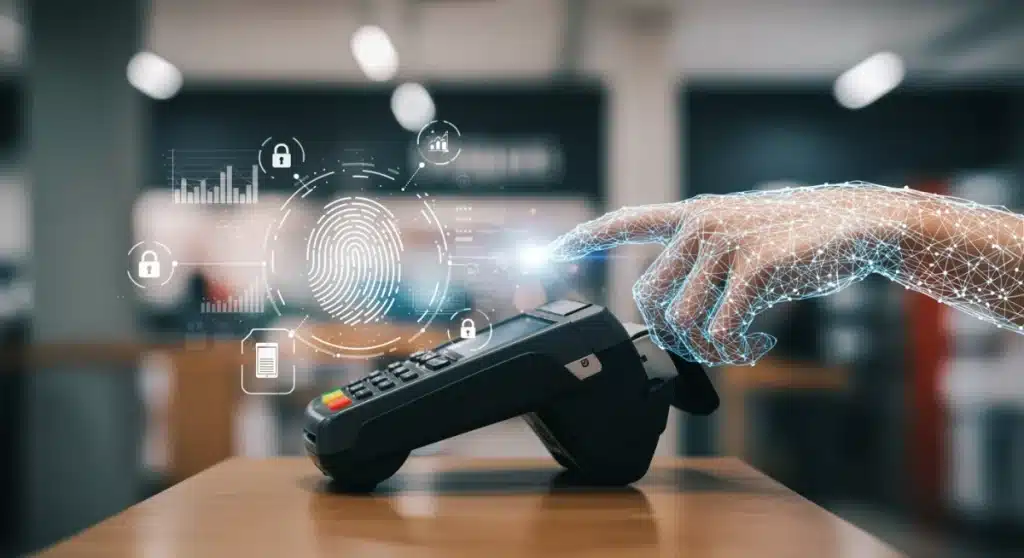
Biometric payments are poised for significant growth by 2025, driven by enhanced security and convenience, though successful integration hinges on addressing technological and privacy hurdles.
The landscape of financial transactions is undergoing a profound transformation, with biometric payments 2025 emerging as a pivotal force. This innovative method, leveraging unique biological characteristics for authentication, promises a future where wallets become obsolete and transactions are seamless, secure, and instantaneous. As we approach mid-decade, understanding the trajectory and hurdles of this technology is paramount for both consumers and businesses navigating the evolving digital economy.
Understanding the biometric payment revolution
Biometric payments represent a significant leap forward from traditional authentication methods, moving beyond passwords and PINs to inherent biological traits. This shift is not merely about convenience; it fundamentally redefines security and user experience in the digital payments realm. The underlying technology, ranging from fingerprint and facial recognition to iris and voice biometrics, is becoming increasingly sophisticated and accessible.
The revolution is fueled by several factors, including the ubiquity of smartphones equipped with biometric sensors, growing consumer trust in digital transactions, and the continuous push for enhanced security against fraud. Businesses are recognizing the competitive advantage of offering such advanced payment options, leading to accelerated adoption and innovation across various sectors.
The core technologies driving adoption
Several key biometric technologies are at the forefront of this payment revolution, each offering distinct advantages and application scenarios. The choice of technology often depends on the required level of security, user convenience, and environmental factors.
- Fingerprint recognition: Widely adopted in smartphones and payment terminals, offering a balance of security and convenience.
- Facial recognition: Gaining traction with advanced 3D scanning, allowing for hands-free and swift authentication.
- Iris and retina scans: Providing extremely high levels of security, often used in high-value transactions or restricted access.
- Voice recognition: Emerging for contactless authentication, particularly in smart home and mobile banking environments.
The continuous evolution of these technologies, coupled with advancements in artificial intelligence and machine learning, is making biometric authentication more robust and less susceptible to spoofing. This technological progress is critical for building consumer confidence and driving wider acceptance of biometric payment systems.
In essence, the biometric payment revolution is an amalgamation of technological innovation, shifting consumer expectations, and an increasing demand for more secure and efficient transaction methods. This foundational understanding is crucial for appreciating the projections and challenges that lie ahead.
2025 projections: market growth and adoption trends
By 2025, the biometric payments market is projected to witness exponential growth, driven by a confluence of technological readiness, consumer demand, and strategic investments from financial institutions and technology providers. Analysts predict a significant surge in transaction volumes and user adoption across various industries.
This growth isn’t uniform; certain regions and sectors are expected to lead the charge. Asia-Pacific, for instance, with its tech-savvy population and robust digital infrastructure, is anticipated to be a major growth engine. Similarly, sectors like retail, e-commerce, and public transport are likely to see rapid integration of biometric payment solutions due to their high transaction frequency and need for efficiency.
Key market drivers for biometric payments
Several factors are contributing to the optimistic outlook for biometric payments 2025. Understanding these drivers is essential for businesses looking to capitalize on this emerging trend.
- Enhanced security: Biometrics offer a superior level of security compared to traditional methods, significantly reducing fraud rates and increasing consumer trust.
- Improved convenience: Eliminating the need for physical cards or remembering passwords streamlines the payment process, making transactions faster and more user-friendly.
- Government initiatives: Many governments are promoting digital payments and identity verification, creating a fertile ground for biometric solutions.
- Smartphone penetration: The widespread availability of smartphones with integrated biometric sensors makes the technology accessible to a vast user base.
These drivers collectively create a compelling case for the accelerated adoption of biometric payment systems. The convenience factor, in particular, resonates strongly with modern consumers who prioritize speed and simplicity in their daily transactions.
Furthermore, the COVID-19 pandemic has inadvertently accelerated the shift towards contactless payments, including biometrics, as consumers sought safer and more hygienic transaction methods. This unexpected catalyst has likely pushed forward adoption timelines, making the 2025 projections even more attainable.
Technological advancements fueling biometric payment evolution
The rapid evolution of biometric payments is inextricably linked to continuous technological advancements. Innovations in sensor technology, artificial intelligence, and data encryption are making these systems more accurate, secure, and scalable. These breakthroughs are crucial for overcoming previous limitations and expanding the applicability of biometric authentication.
Miniaturization of sensors, for instance, allows for seamless integration into a wider range of devices, from wearables to everyday objects. Simultaneously, advancements in AI and machine learning are enhancing the accuracy of biometric recognition, reducing false positives and negatives, which are critical for reliability in payment systems.
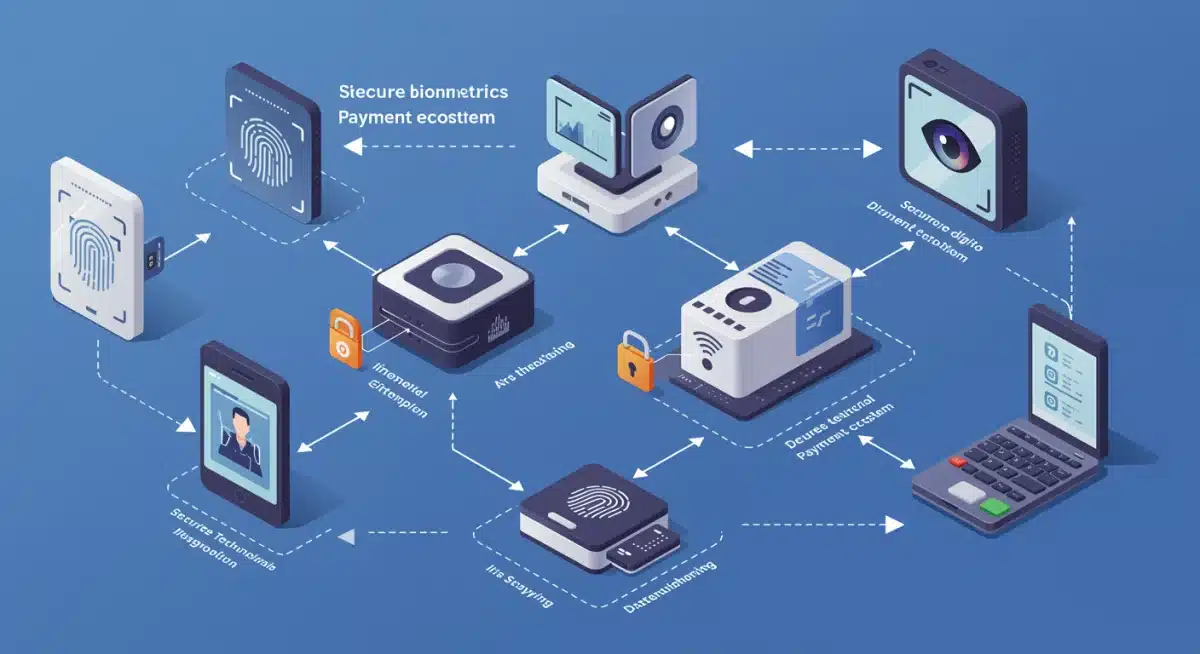
Moreover, the development of multi-modal biometric systems, combining two or more biometric identifiers, is setting new benchmarks for security. This layered approach significantly reduces the risk of spoofing and unauthorized access, bolstering consumer and institutional confidence.
Innovations in sensor technology and AI
The core of biometric payment systems relies on sophisticated sensor technology capable of capturing unique biological data. Recent innovations have dramatically improved the performance and cost-effectiveness of these sensors.
- Under-display fingerprint sensors: Integrating sensors directly into smartphone screens, offering a larger, more convenient scanning area.
- 3D facial recognition: Utilizing structured light or time-of-flight cameras to create a detailed depth map of the face, making it harder to fool with photos or masks.
- Behavioral biometrics: Analyzing unique patterns in user behavior, such as typing rhythm or gait, to provide continuous authentication without explicit user action.
Parallel to sensor advancements, artificial intelligence plays a crucial role in processing and validating biometric data. Machine learning algorithms are trained on vast datasets to recognize patterns, detect anomalies, and adapt to changes in a user’s biometric profile over time, enhancing both accuracy and user experience. AI also powers liveness detection, a critical feature that differentiates real biometric data from fakes.
These technological strides are not only making biometric payments more reliable but also more adaptable to diverse environments and user needs. The ongoing research and development in these areas promise even more secure and convenient solutions in the near future.
Integration challenges for widespread adoption
Despite the promising projections and technological advancements, the widespread adoption of biometric payments 2025 faces several significant integration challenges. These hurdles span technical complexities, regulatory requirements, and consumer perception, each demanding careful consideration and strategic solutions.
One primary concern revolves around interoperability. Ensuring that biometric payment systems can seamlessly communicate and function across different platforms, devices, and payment networks is a monumental task. A fragmented ecosystem would hinder adoption and create user friction, undermining the very convenience biometrics aim to provide.
Overcoming privacy and security concerns
Perhaps the most critical challenge lies in addressing privacy and security concerns associated with sensitive biometric data. Unlike passwords, biometric data cannot be easily changed if compromised, making its protection paramount. Consumers are rightfully wary of how their unique biological identifiers are collected, stored, and used.
- Data encryption and tokenization: Implementing robust encryption and tokenization techniques to protect biometric templates, ensuring that raw biometric data is never stored directly.
- Decentralized storage: Exploring decentralized storage solutions, such as blockchain, to distribute biometric data and reduce the risk of single-point-of-failure breaches.
- Clear consent and data policies: Establishing transparent policies for data collection and usage, providing users with clear control over their biometric information.
Beyond privacy, the potential for algorithmic bias in facial recognition systems, for example, raises ethical concerns that must be addressed to ensure fairness and inclusivity. Developers and implementers must work to mitigate these biases through diverse training datasets and rigorous testing.
Furthermore, regulatory frameworks, such as GDPR and CCPA, impose strict requirements on how personal data, including biometrics, is handled. Compliance with these diverse and evolving regulations adds another layer of complexity for businesses operating across different jurisdictions.
Successfully navigating these integration challenges will require a collaborative effort from technology providers, financial institutions, regulators, and consumers to build a secure, private, and universally accepted biometric payment ecosystem.
Regulatory landscape and data privacy concerns
The regulatory landscape surrounding biometric payments is evolving rapidly, reflecting the complex interplay between innovation, consumer protection, and national security. Governments worldwide are grappling with how to effectively govern the collection, storage, and use of highly sensitive biometric data, which, if compromised, could have far-reaching implications for individuals.
In the United States, regulations are often a patchwork of state and federal laws, with varying degrees of stringency. This creates a challenging environment for businesses seeking to deploy biometric payment solutions on a national scale, as they must navigate a complex web of compliance requirements. The absence of a single, comprehensive federal law specifically addressing biometric data privacy in payments adds to the uncertainty.
Navigating compliance and building trust
For businesses, navigating this regulatory maze means adopting a proactive and comprehensive approach to data governance. This includes not only adhering to existing laws but also anticipating future regulations and implementing best practices that prioritize consumer privacy.
- Privacy by design: Integrating privacy considerations into the design and architecture of biometric payment systems from the outset.
- Regular security audits: Conducting frequent and thorough security audits to identify and address vulnerabilities in biometric data storage and processing.
- User education: Educating consumers about how their biometric data is protected and providing them with clear options for consent and data management.
Building and maintaining consumer trust is paramount. Any significant data breach involving biometric information could severely undermine public confidence and set back the adoption of these technologies. Therefore, transparency, accountability, and robust security measures are not just regulatory requirements but essential business imperatives.
The ongoing dialogue between industry stakeholders, privacy advocates, and policymakers will be crucial in shaping a regulatory environment that fosters innovation while safeguarding individual rights. Harmonizing these efforts will be key to unlocking the full potential of biometric payments.
The future beyond 2025: what’s next for biometric payments?
Looking beyond 2025, the trajectory of biometric payments suggests an even more integrated and pervasive role in our daily lives. The foundational work in security, interoperability, and consumer trust established in the coming years will pave the way for even more sophisticated and seamless authentication methods. We can anticipate a future where biometric identity becomes a universal key for various aspects of our digital and physical existence, extending far beyond simple payment transactions.
The convergence of biometric technology with other emerging innovations, such as the Internet of Things (IoT) and artificial intelligence, will unlock new possibilities. Imagine a scenario where your car recognizes you, authenticates your identity, and automatically processes payments for tolls or fuel without any explicit action on your part. This level of embedded, invisible authentication is the ultimate promise of biometric evolution.
Emerging trends and innovations
- Behavioral biometrics for continuous authentication: Moving from one-time authentication to continuous, passive verification based on unique behavioral patterns.
- Wearable biometrics: Integrating biometric sensors into smartwatches, rings, and other wearables for even more convenient and seamless payments.
- Biometric ATMs and physical access: Expanding biometric authentication to ATMs, physical access control, and other real-world applications, blurring the lines between digital and physical security.
- Quantum-resistant cryptography for biometric data: Developing new encryption methods to protect biometric data against future quantum computing threats.
The concept of a ‘digital identity wallet’ secured by biometrics is also gaining traction, offering a centralized and secure way to manage various aspects of one’s digital persona. This could encompass not only payment credentials but also health records, travel documents, and other sensitive information.
While the journey towards a fully biometric-driven payment ecosystem is complex and fraught with challenges, the underlying technological momentum and the clear benefits in terms of security and convenience suggest an inevitable progression. The future beyond 2025 promises a world where our unique biological attributes will be our most powerful and secure form of identification.
| Key Aspect | Brief Description |
|---|---|
| 2025 Market Growth | Significant market expansion projected, driven by security, convenience, and smartphone integration. |
| Technological Drivers | Advancements in sensors, AI, and multi-modal biometrics enhance accuracy and security. |
| Integration Challenges | Interoperability, data privacy, and regulatory compliance are key hurdles for widespread adoption. |
| Future Outlook | Beyond 2025, biometrics will integrate further into IoT and serve as a universal digital identity. |
Frequently asked questions about biometric payments
Biometric payments offer enhanced security by using unique biological traits, significantly reducing fraud. They also provide unparalleled convenience, eliminating the need for physical cards or remembering PINs, leading to faster and smoother transactions for consumers.
Biometric data in payment systems is typically secured through advanced encryption and tokenization. Raw biometric data is rarely stored directly; instead, a hashed or tokenized version is used. This makes it extremely difficult for unauthorized parties to reconstruct or misuse your unique biometric identifiers.
Key challenges include ensuring interoperability across diverse systems, addressing consumer privacy concerns over sensitive data, and navigating complex and evolving regulatory frameworks. Building universal trust and standardizing technologies are crucial for broad acceptance.
Currently, fingerprint recognition and facial recognition are the most prevalent biometric technologies for payments due to their integration into smartphones and ease of use. Iris and voice recognition are also emerging, particularly for higher security applications or contactless scenarios.
While biometric payments will see significant growth and increased adoption by 2025, it’s unlikely they will completely replace traditional methods. Instead, they will likely coexist, offering consumers a wider range of secure and convenient payment options depending on their preferences and situational needs.
Conclusion
The journey towards a future dominated by biometric payments 2025 is well underway, marked by significant technological advancements and an undeniable shift in consumer preference towards convenience and enhanced security. While the projections for market growth are robust, the path to widespread, seamless integration is paved with complex challenges related to interoperability, data privacy, and the evolving regulatory landscape. Overcoming these hurdles will require concerted efforts from innovators, policymakers, and financial institutions to build systems that are not only efficient and secure but also trustworthy and inclusive. As we look beyond 2025, biometrics are set to redefine our interaction with the digital economy, promising a future where our unique identity is the ultimate key to commerce.