AI’s Impact on Digital Payment Fraud Detection: 25% Reduction in False Positives

Artificial intelligence is transforming digital payment fraud detection by significantly reducing false positives, with recent implementations showing a 25% improvement, leading to more efficient and accurate security systems for financial transactions.
The landscape of digital payments is constantly evolving, bringing convenience alongside complex challenges like fraud. Understanding the impact of AI on digital payment fraud detection: reducing false positives by 25% in recent implementations is crucial for businesses and consumers alike. This article delves into how artificial intelligence is not just enhancing security but also refining the accuracy of fraud prevention, making transactions smoother and more reliable.
The Escalating Threat of Digital Payment Fraud
Digital payment methods have become indispensable in our daily lives, from online shopping to peer-toto-peer transfers. However, this convenience comes with an inherent vulnerability to sophisticated fraudulent activities. Cybercriminals are constantly developing new tactics, making traditional rule-based fraud detection systems increasingly obsolete and inefficient. This section explores the rising tide of digital payment fraud and the limitations of conventional approaches.
The sheer volume of digital transactions processed daily means that even a small percentage of fraudulent activity can result in substantial financial losses for businesses and individuals. Moreover, the reputational damage sustained by organizations due to security breaches can be far more costly than the direct financial impact, eroding customer trust and loyalty. This ongoing battle against fraud necessitates a proactive and adaptive defense mechanism that can keep pace with evolving threats.
Traditional Fraud Detection: A Losing Battle?
Historically, fraud detection relied heavily on predefined rules and human analysts. While these methods offered a baseline level of protection, they often struggled with the dynamic nature of fraud.
- Static Rules: Rule-based systems are rigid and cannot adapt quickly to new fraud patterns.
- High False Positives: Overly strict rules often flag legitimate transactions as fraudulent, leading to customer frustration.
- Manual Review Burden: A significant number of transactions required manual review, consuming valuable time and resources.
These limitations highlight the urgent need for a more intelligent and flexible solution. The inability of traditional systems to discern subtle anomalies from genuine behavior created an environment where both fraud losses and operational inefficiencies were rampant. As transaction volumes grew, so did the strain on these outdated detection mechanisms, making a paradigm shift imperative.
In conclusion, the increasing sophistication and volume of digital payment fraud underscore the inadequacy of traditional detection methods. The reliance on static rules and manual reviews not only proved costly but also led to a poor customer experience due to frequent false positives, paving the way for advanced technological interventions.
AI’s Transformative Role in Fraud Detection
Artificial Intelligence (AI) has emerged as a game-changer in the fight against digital payment fraud. Unlike traditional methods, AI systems can learn from vast datasets, identify complex patterns, and adapt to new threats in real-time. This section details how AI algorithms are being leveraged to create more robust and efficient fraud detection systems, fundamentally altering the security landscape.
The core strength of AI lies in its ability to process and analyze enormous quantities of data far beyond human capability. By examining historical transaction data, customer behavior, network anomalies, and device information, AI models can construct a comprehensive profile for each transaction. This deep analytical power allows for the identification of subtle deviations that might indicate fraud, even when the patterns are novel or highly disguised.
Machine Learning Algorithms at the Forefront
Various machine learning algorithms play a pivotal role in AI-driven fraud detection. Each algorithm brings a unique strength to the table, contributing to a multi-layered defense strategy.
- Supervised Learning: Uses labeled data (known fraudulent and legitimate transactions) to train models to classify new transactions.
- Unsupervised Learning: Identifies unusual patterns or anomalies in unlabeled data, often detecting emerging fraud schemes.
- Deep Learning: Utilizes neural networks to uncover highly complex and abstract fraud indicators, particularly effective with large, unstructured datasets.
These algorithms work in concert, continuously learning and refining their understanding of what constitutes legitimate versus fraudulent activity. This continuous learning cycle is crucial for staying ahead of fraudsters who constantly evolve their tactics. The dynamic nature of AI-driven systems allows for immediate adaptation, reducing the window of opportunity for new fraud types to proliferate.
The integration of AI transforms fraud detection from a reactive process into a proactive one. By predicting potential fraud before it escalates, financial institutions can prevent losses and protect their customers more effectively. This proactive stance is a significant departure from the reactive measures that characterized traditional fraud prevention, marking a new era of digital security.
In summary, AI’s ability to learn, adapt, and process vast amounts of data provides a powerful arsenal against digital payment fraud. Through diverse machine learning techniques, AI systems offer a dynamic and proactive defense, significantly enhancing the overall security posture of digital transactions.
Reducing False Positives: A Key AI Advantage
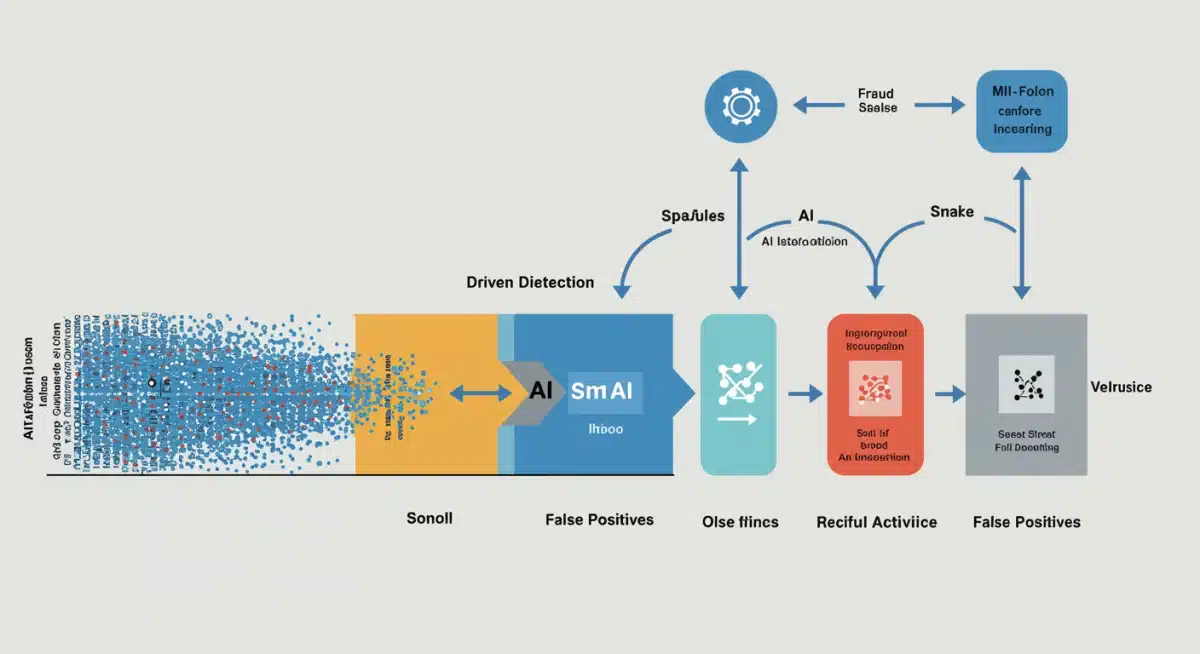
One of the most significant challenges in fraud detection has always been the issue of false positives – legitimate transactions incorrectly flagged as fraudulent. These errors lead to customer inconvenience, lost sales, and increased operational costs due to manual reviews. AI’s ability to reduce false positives by 25% in recent implementations represents a monumental leap forward in efficiency and customer satisfaction. This section explores how AI achieves this critical improvement and its tangible benefits.
The precision of AI models stems from their capacity to analyze a multitude of data points concurrently and identify nuanced correlations that human analysts or rule-based systems might miss. By considering transaction history, geographic location, device fingerprint, behavioral biometrics, and even the time of day, AI can build a highly accurate probability score for each transaction. This comprehensive analysis minimizes the chances of misclassifying a genuine transaction as fraudulent.
How AI Enhances Accuracy
AI employs several sophisticated techniques to distinguish between genuine anomalies and actual fraudulent activities, leading to a substantial reduction in false positives.
- Contextual Analysis: AI considers the broader context of a transaction, not just isolated data points.
- Behavioral Biometrics: Analyzes user interaction patterns (typing speed, mouse movements) to verify identity.
- Adaptive Learning: Continuously updates its understanding of user behavior and fraud patterns, improving over time.
By leveraging these capabilities, AI systems can differentiate between a customer making an unusual but legitimate purchase and a genuine fraudulent attempt. For example, if a customer suddenly makes a high-value purchase from a new location, an AI system might cross-reference this with their travel history, past spending habits, and device usage before flagging it as suspicious. This holistic view prevents unnecessary disruptions for the customer.
The direct benefit of reducing false positives is multifaceted. It translates into fewer interrupted transactions, higher customer satisfaction, and a significant decrease in the resources previously allocated to investigating erroneous alerts. This efficiency gain allows fraud teams to focus their efforts on actual threats, improving overall security effectiveness and operational costs.
In conclusion, AI’s advanced analytical capabilities, including contextual analysis and adaptive learning, are instrumental in dramatically reducing false positives in digital payment fraud detection. This improvement not only streamlines operations but also significantly enhances the customer experience, making digital transactions more reliable and less disruptive.
Real-World Implementations and Success Stories
The theoretical benefits of AI in fraud detection are now being validated by compelling real-world results. Financial institutions and payment processors worldwide are deploying AI-powered systems and witnessing tangible improvements, particularly in the reduction of false positives. This section highlights practical examples and the measurable successes achieved through AI integration.
Many leading banks and fintech companies have reported significant drops in their false positive rates since adopting AI. These improvements are not merely statistical; they translate into millions of dollars saved in operational costs, enhanced customer loyalty, and a more secure financial ecosystem. The ability of AI to learn from vast datasets and identify subtle anomalies that traditional systems miss is proving to be a critical differentiator.
Case Studies in AI Fraud Prevention
- Major Bank A: Implemented an AI system that reduced false positives by 20%, leading to a 15% decrease in manual review queues.
- Payment Processor B: Saw a 25% reduction in false positives, improving transaction approval rates and customer satisfaction.
- E-commerce Giant C: Utilized AI to detect new fraud patterns 50% faster than previous methods, minimizing losses from emerging schemes.
These examples illustrate a clear trend: AI is not just a theoretical solution but a practical tool delivering measurable improvements. The ability to process billions of transactions per second and instantly detect deviations from normal behavior allows these systems to act with unprecedented speed and accuracy. This swift response is crucial in preventing fraud in real-time, where every second counts.
Beyond the quantitative metrics, the qualitative benefits are equally important. Customers experience fewer legitimate transactions being declined, leading to a smoother and more trustworthy payment experience. This enhanced trust is invaluable in an increasingly competitive digital marketplace, fostering stronger customer relationships and encouraging greater adoption of digital payment methods.
In conclusion, real-world implementations consistently demonstrate AI’s profound impact on digital payment fraud detection. The reported reductions in false positives and improved detection rates underscore AI’s effectiveness, validating its role as an essential technology for securing modern financial transactions.
Challenges and Future Directions for AI in Fraud Detection
While AI offers unprecedented advantages in digital payment fraud detection, its implementation is not without challenges. Understanding these hurdles and anticipating future developments is crucial for maximizing AI’s potential. This section addresses the complexities involved in deploying and maintaining AI systems for fraud prevention, as well as the exciting directions this technology is headed.
One primary challenge is the continuous need for high-quality, diverse datasets to train AI models effectively. Data biases, privacy concerns, and the sheer volume of data can complicate the training process. Furthermore, as AI models become more sophisticated, their interpretability can decrease, making it harder for human analysts to understand why a particular decision was made. This ‘black box’ problem requires careful consideration to ensure regulatory compliance and maintain trust.
Overcoming Implementation Hurdles
Successful AI deployment requires addressing several key areas to ensure optimal performance and ethical operation.
- Data Quality and Governance: Ensuring clean, unbiased, and comprehensive data for training AI models.
- Model Explainability: Developing AI systems that can provide transparent reasons for their decisions.
- Scalability and Integration: Seamlessly integrating AI solutions into existing payment infrastructures.
Addressing these challenges involves a multi-disciplinary approach, combining expertise in data science, cybersecurity, and regulatory compliance. The development of explainable AI (XAI) is particularly critical, as it allows financial institutions to justify their fraud detection decisions to customers and regulators, building confidence in the system’s fairness and accuracy.
Looking ahead, the future of AI in fraud detection is poised for further innovation. Advancements in federated learning will allow AI models to learn from decentralized data sources without compromising privacy. The integration of quantum computing could exponentially increase the processing power available for fraud analysis, enabling even faster and more complex pattern recognition. Furthermore, AI will likely play a greater role in predictive analytics, anticipating new fraud trends before they become widespread.
In conclusion, while challenges like data quality and model explainability exist, ongoing research and development are actively addressing them. The future of AI in fraud detection promises even more sophisticated, privacy-preserving, and predictive capabilities, solidifying its role as an indispensable tool in securing digital payments.
The Economic Impact of Reduced False Positives
The reduction of false positives in digital payment fraud detection by AI systems carries significant economic implications for businesses, consumers, and the broader financial industry. Beyond merely preventing fraud, this enhanced accuracy translates into tangible financial benefits and improved operational efficiencies. This section delves into the economic advantages derived from AI’s ability to minimize erroneous fraud alerts.
For businesses, the most immediate economic benefit is the reduction in chargebacks and associated fees. When legitimate transactions are declined, customers often dispute the charge, leading to administrative burdens and financial penalties for the merchant. By approving more genuine transactions, AI directly mitigates these costs. Furthermore, fewer false positives mean fewer missed sales opportunities, as customers are less likely to abandon their purchases due to payment processing issues.
Tangible Economic Benefits
The ripple effects of fewer false positives extend across various aspects of the economic landscape.
- Lower Operational Costs: Less time and fewer resources spent on manually reviewing incorrectly flagged transactions.
- Increased Revenue: Fewer legitimate transactions are declined, leading to higher conversion rates and completed sales.
- Enhanced Customer Lifetime Value: A frictionless payment experience builds trust and encourages repeat business.
For financial institutions, the economic impact includes optimized resource allocation. Fraud investigation teams can concentrate their efforts on genuine threats, improving their efficiency and overall effectiveness. This focus allows for a more strategic approach to fraud prevention, moving away from reactive firefighting towards proactive risk management. The ability to process transactions with greater confidence also supports the expansion into new markets and payment methods, fostering innovation and growth.
Consumers also reap significant economic benefits. The frustration of having a legitimate card declined while traveling or making an urgent purchase is a common pain point. AI’s improved accuracy reduces these inconveniences, leading to a more seamless and reliable payment experience. This increased confidence in digital payment systems encourages greater usage, further driving the growth of the digital economy.
In conclusion, the economic impact of AI-driven false positive reduction is profound and far-reaching. It leads to substantial cost savings for businesses, increased revenue, and a more trusting and efficient digital payment ecosystem for all stakeholders. This makes AI not just a security tool but a powerful economic enabler.
Integrating AI into Existing Payment Infrastructures
Successfully harnessing the power of AI for fraud detection requires careful integration into existing, often complex, digital payment infrastructures. This process involves more than just deploying a new software; it demands strategic planning, data pipeline optimization, and seamless workflow adjustments. This section explores the practical considerations and best practices for integrating AI solutions within current payment systems to maximize their impact and minimize disruption.
One of the primary considerations is ensuring compatibility between new AI modules and legacy systems. Many financial institutions operate with long-standing infrastructure that may not be inherently designed for real-time AI processing. Therefore, the integration strategy must account for data exchange formats, API capabilities, and the overall system architecture to ensure a smooth transition and continuous operation. A phased implementation approach often proves most effective, allowing for iterative testing and refinement.
Key Integration Strategies
Effective AI integration relies on a methodical approach that addresses both technical and operational aspects.
- API-First Approach: Utilizing robust APIs for seamless data exchange between AI models and existing platforms.
- Cloud-Native Solutions: Leveraging cloud infrastructure for scalable and flexible AI deployment, reducing on-premise hardware strain.
- Hybrid Models: Combining AI with existing rule-based systems, allowing for a gradual transition and leveraging past investments.
Data pipeline optimization is another critical aspect. AI models thrive on continuous streams of high-quality data. Establishing efficient data ingress and egress points, ensuring data cleansing, and implementing real-time data processing capabilities are essential for the AI system to operate at peak performance. This often involves modernizing data warehousing and implementing streaming analytics technologies.
Furthermore, human-in-the-loop processes are vital during and after integration. While AI automates much of the detection, human oversight remains crucial for reviewing complex cases, fine-tuning models, and addressing edge scenarios. Training staff to interact with and interpret AI outputs ensures that the technology augments, rather than replaces, human expertise, leading to a more resilient and adaptable fraud detection system.
In conclusion, integrating AI into existing payment infrastructures is a multi-faceted endeavor that demands strategic planning, technical compatibility, and robust data management. By adopting an API-first approach, leveraging cloud solutions, and maintaining human oversight, organizations can successfully deploy AI to enhance their fraud detection capabilities without compromising operational continuity.
| Key Point | Brief Description |
|---|---|
| AI Reduces False Positives | AI systems significantly cut down on misidentified fraudulent transactions, improving efficiency. |
| Enhanced Accuracy | Machine learning algorithms analyze vast data for precise fraud detection and behavioral analysis. |
| Economic Benefits | Leads to lower operational costs, increased revenue, and improved customer experience. |
| Integration Challenges | Requires careful data management, model explainability, and seamless system integration. |
Frequently Asked Questions About AI and Fraud Detection
AI reduces false positives by analyzing complex patterns across vast datasets, understanding contextual nuances, and learning from behavioral biometrics. This allows it to distinguish legitimate but unusual transactions from actual fraud with much greater accuracy than traditional rule-based systems.
Various AI types are employed, including supervised learning for classifying known fraud, unsupervised learning for detecting new anomalies, and deep learning with neural networks for uncovering highly complex indicators. These methods often work together to create a robust, multi-layered defense.
The primary benefits include a significant reduction in false positives (up to 25%), lower operational costs, increased revenue due to fewer declined legitimate transactions, faster detection of emerging fraud patterns, and improved customer satisfaction through a smoother payment experience.
Yes, challenges include ensuring high-quality, unbiased data for training, addressing model explainability (the ‘black box’ problem), and seamlessly integrating AI solutions with existing legacy payment infrastructures. Overcoming these requires expertise in data science and system architecture.
Future developments include advancements in federated learning for privacy-preserving data analysis, potential integration with quantum computing for enhanced processing power, and a greater emphasis on predictive analytics to anticipate and neutralize new fraud schemes before they become widespread threats.
Conclusion
The impact of AI on digital payment fraud detection is undeniably transformative, particularly in its proven ability to reduce false positives by 25% in recent implementations. This advancement not only fortifies the security of digital transactions against increasingly sophisticated threats but also significantly enhances the operational efficiency and customer experience within the financial ecosystem. As AI technology continues to evolve, its role in creating a more secure, seamless, and trustworthy digital payment landscape will only grow, making it an indispensable asset for businesses and consumers navigating the complexities of modern commerce.