Brand Strategy 2025: Loyalty & Financial Impact

Building a robust brand strategy for 2025 is essential for businesses to achieve a 15% increase in customer loyalty through targeted initiatives, directly impacting financial performance.
In today’s dynamic marketplace, a brand is far more than just a logo or a product; it’s an experience, a promise, and a relationship. For 2025, companies must transcend traditional marketing to forge deeper connections. This article explores how to implement a robust brand strategy that not only captivates customers but also measurably boosts loyalty and financial outcomes.
Understanding the evolving customer landscape
The modern consumer is informed, discerning, and increasingly values authenticity and purpose. They expect personalized experiences and seamless interactions across multiple touchpoints. Brands that fail to adapt to these shifting expectations risk irrelevance.
Understanding these evolving dynamics is the first step toward crafting a brand strategy that resonates. It requires deep dives into demographic shifts, technological advancements, and changing societal values. Empathy for the customer’s journey and pain points becomes paramount.
The digital-first imperative
Digital channels are no longer just an add-on; they are often the primary interaction point for customers. From social media to e-commerce platforms, brands must ensure a consistent and engaging presence.
- Unified online presence: Maintain consistent messaging and visual identity across all digital platforms.
- Data-driven insights: Utilize analytics to understand customer behavior and preferences online.
- Seamless user experience: Optimize websites and apps for intuitive navigation and quick load times.
The digital realm offers unprecedented opportunities for direct engagement and feedback. Brands can leverage these interactions to refine their offerings and strengthen customer relationships. A proactive approach to digital engagement builds trust and fosters a sense of community around the brand.
Crafting a compelling brand narrative
A strong brand narrative tells your story, communicates your values, and differentiates you from competitors. It’s the emotional core that connects with customers on a deeper level, transforming transactions into relationships. This narrative must be authentic and consistently woven into every aspect of your brand’s communication.
Developing this narrative involves identifying your brand’s unique selling proposition, understanding your target audience’s aspirations, and articulating a clear mission. It’s not about making claims, but about demonstrating genuine commitment to your audience and your purpose.
Elements of an effective brand story
An impactful brand story goes beyond product features. It encompasses your origins, your challenges, and your vision for the future. This human element makes your brand relatable and memorable.
- Authenticity: Be true to your brand’s core values and communicate them transparently.
- Relatability: Create a story that resonates with your audience’s experiences and desires.
- Consistency: Ensure your narrative is consistently applied across all marketing channels and customer interactions.
A compelling narrative acts as a magnet, drawing in customers who share your values and believe in your mission. It fosters a sense of belonging and encourages advocacy, turning customers into loyal brand ambassadors.
Implementing targeted customer loyalty initiatives
Increasing customer loyalty by 15% requires more than just good products; it demands strategic, targeted initiatives designed to reward and retain. These initiatives should be personalized, valuable, and easy for customers to engage with. The goal is to make customers feel appreciated and understood, reinforcing their connection to your brand.
From loyalty programs to exclusive content, each initiative should be carefully crafted to align with customer needs and preferences. Measuring the effectiveness of these programs is key to continuous improvement and maximizing their impact on loyalty and financial returns.
Personalization at scale
Leveraging data to offer personalized experiences is no longer a luxury but a necessity. Customers expect brands to anticipate their needs and offer relevant solutions. This involves segmenting your audience and tailoring communications and offers accordingly.
- Tailored communications: Send personalized emails, recommendations, and offers based on past behavior.
- Exclusive access: Provide loyalty program members with early access to sales, new products, or special events.
- Dedicated support: Offer priority customer service or a dedicated account manager for high-value customers.
Personalization fosters a deeper connection, making customers feel valued and understood. This individualized attention strengthens their bond with the brand, making them less likely to switch to competitors.
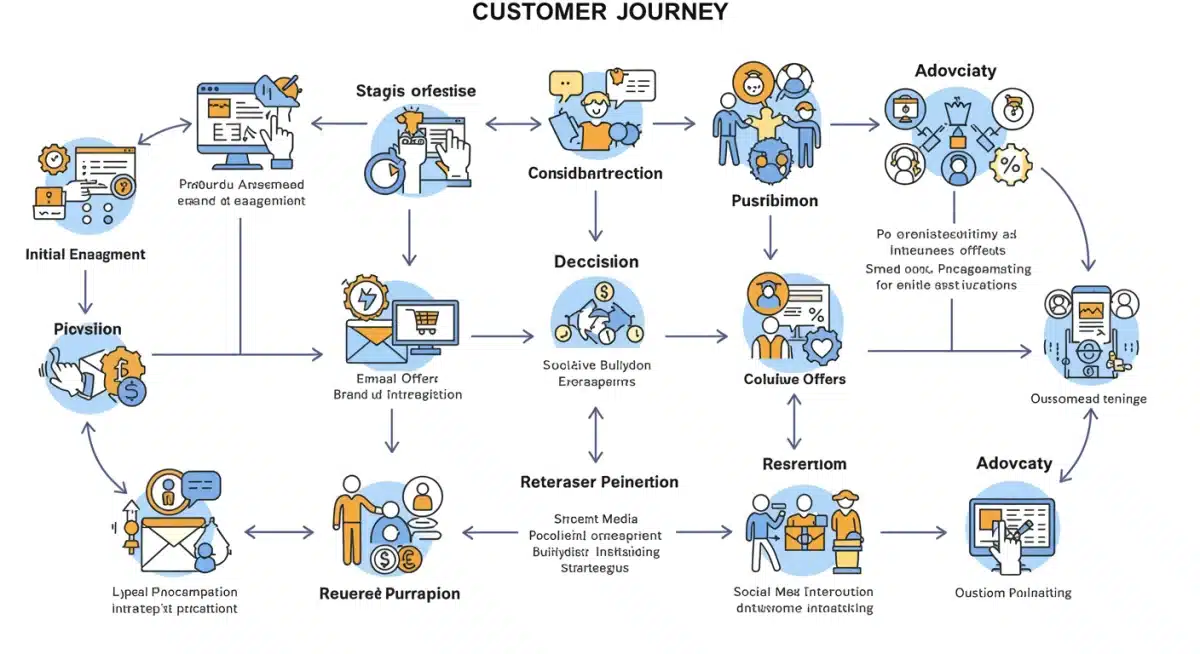
Measuring financial impact and ROI
Any brand strategy, no matter how creative, must demonstrate a clear return on investment. Quantifying the financial impact of increased customer loyalty is crucial for proving the value of your initiatives and securing future budget allocations. This involves tracking key performance indicators (KPIs) that directly link loyalty to revenue and profitability.
Understanding the lifetime value of a customer (CLTV) and the cost of customer acquisition (CAC) becomes paramount. A higher CLTV combined with a lower CAC indicates a successful loyalty strategy. These metrics provide a clear picture of how brand initiatives translate into tangible financial benefits.
Key metrics for success
To accurately measure financial impact, businesses need to establish a robust framework for tracking and analyzing relevant data. This includes both direct revenue impacts and indirect benefits like reduced marketing costs due to word-of-mouth referrals.
- Customer lifetime value (CLTV): Calculate the total revenue a customer is expected to generate over their relationship with your brand.
- Customer retention rate: Track the percentage of customers who continue to purchase from your brand over time.
- Referral revenue: Measure sales generated through customer referrals, indicating strong brand advocacy.
By consistently monitoring these metrics, organizations can identify which loyalty initiatives are most effective and where adjustments need to be made. This data-driven approach ensures that brand strategy investments are optimized for maximum financial return.
Leveraging technology for enhanced brand experience
Technology plays a pivotal role in creating seamless, engaging, and personalized brand experiences. From AI-powered chatbots to advanced analytics platforms, digital tools enable brands to connect with customers in innovative ways, streamline operations, and gather valuable insights. Integrating these technologies strategically can significantly elevate your brand’s presence and operational efficiency.
The right technological infrastructure supports a consistent brand message across all channels and allows for real-time responsiveness to customer needs. It also facilitates the collection and analysis of data, which is essential for understanding customer behavior and optimizing loyalty initiatives.
AI and automation for personalization
Artificial intelligence and automation can revolutionize how brands interact with customers, offering hyper-personalized experiences at scale. These technologies can predict customer needs, automate routine tasks, and provide instant support.
- AI-driven recommendations: Use AI to suggest products or content based on individual customer preferences and browsing history.
- Chatbots for instant support: Deploy AI chatbots to provide 24/7 customer service, resolving queries quickly and efficiently.
- Automated marketing campaigns: Implement marketing automation to deliver personalized messages and offers at optimal times.
By harnessing AI and automation, brands can deliver a highly responsive and tailored experience that strengthens customer loyalty and satisfaction. These tools free up human agents to focus on more complex issues, further enhancing service quality.
Building a culture of brand advocacy
True brand loyalty extends beyond repeat purchases; it evolves into advocacy, where customers actively promote your brand to others. Cultivating a culture of brand advocacy within your customer base is a powerful, cost-effective way to expand your reach and build trust. This involves empowering satisfied customers to share their positive experiences and providing them with the tools to do so effectively.
Advocacy is a testament to a genuinely strong brand strategy, reflecting deep satisfaction and emotional connection. It’s built on consistent positive experiences, exceptional customer service, and a brand narrative that resonates deeply with individuals.
Empowering brand ambassadors
Identifying and nurturing your most enthusiastic customers can turn them into invaluable brand ambassadors. These individuals are often eager to share their experiences and can influence their networks more effectively than traditional advertising.
- Referral programs: Reward customers for bringing in new business, incentivizing advocacy.
- User-generated content: Encourage customers to share their experiences and content related to your brand on social media.
- Review platforms: Actively solicit and respond to customer reviews, building trust and showcasing positive feedback.
By fostering a community of advocates, brands can tap into authentic word-of-mouth marketing, which is highly credible and influential. This organic growth contributes significantly to both brand reputation and customer acquisition, proving the long-term value of a robust brand strategy.
| Key Aspect | Brief Description |
|---|---|
| Customer Understanding | Adapting to evolving consumer expectations for authenticity and personalization. |
| Brand Narrative | Developing an authentic story that connects emotionally and differentiates the brand. |
| Loyalty Initiatives | Implementing targeted, personalized programs to reward and retain customers effectively. |
| Financial Measurement | Tracking CLTV, retention, and referral revenue to prove ROI of brand investments. |
Frequently asked questions
A robust brand strategy for 2025 involves a comprehensive plan that integrates authentic narrative, data-driven personalization, and technological leverage to enhance customer experience, foster loyalty, and deliver measurable financial growth in a competitive, digital-first market.
Increasing customer loyalty by 15% requires targeted initiatives such as personalized loyalty programs, exceptional customer service, consistent brand messaging, and actively engaging with customer feedback. Leveraging data analytics to tailor experiences is also crucial for achieving this goal effectively.
Practical solutions include conducting thorough customer research, developing a compelling brand story, implementing AI-powered personalization, optimizing digital touchpoints, and establishing clear metrics for measuring success. These actions create a cohesive and impactful brand presence.
A strong brand strategy directly impacts financial results by increasing customer lifetime value, improving retention rates, reducing customer acquisition costs through advocacy, and allowing for premium pricing. These factors collectively contribute to higher revenue and greater profitability for the business.
Brand advocacy is vital for 2025 because it provides highly credible, organic marketing through word-of-mouth. Satisfied customers become powerful promoters, influencing new customers and building trust more effectively than traditional advertising, leading to sustainable growth and enhanced reputation.
Conclusion
Building a robust brand strategy for 2025 is not merely an option but a strategic imperative for businesses aiming for sustainable growth and increased profitability. By prioritizing an understanding of the evolving customer landscape, crafting a compelling narrative, implementing targeted loyalty initiatives, and meticulously measuring financial impact, companies can achieve significant improvements in customer loyalty and market position. Embracing technology and fostering a culture of brand advocacy will further amplify these efforts, ensuring a resilient and thriving brand in the years to come.