2025 E-commerce Growth: 12% US Market Increase Projected

The US e-commerce market is projected to experience a significant 12% growth in 2025, fueled by ongoing digital transformation, shifting consumer preferences, and strategic technological integrations across various retail sectors.
The digital marketplace continues its relentless expansion, reshaping how consumers shop and businesses operate. Understanding the trajectory of 2025 e-commerce growth is crucial for anyone navigating the retail landscape. This analysis delves into the factors driving an anticipated 12% increase in the US market, offering insights into what lies ahead.
Understanding the Current E-commerce Landscape
The e-commerce sector has demonstrated remarkable resilience and adaptability, particularly in recent years. What was once a niche shopping channel has evolved into a dominant force, fundamentally altering consumer expectations and business models. This continuous evolution sets the stage for future growth, with innovations emerging at an unprecedented pace.
Consumer behavior has dramatically shifted, with digital convenience becoming a primary driver for purchasing decisions. The ease of access, wider product selection, and competitive pricing offered by online platforms have cemented their place in daily life. Businesses that fail to recognize and adapt to these changes risk falling behind in an increasingly competitive market.
The Digital Shift in Consumer Habits
The acceleration of digital adoption is not merely a temporary trend but a permanent fixture in modern commerce. Consumers now expect seamless online experiences from discovery to delivery. This expectation fuels the need for businesses to invest in robust e-commerce infrastructures and user-friendly interfaces.
- Increased mobile shopping prevalence.
- Higher demand for personalized shopping experiences.
- Growing reliance on online reviews and social proof.
- Expectation of fast, reliable, and often free shipping.
These evolving habits demand a proactive approach from retailers. Understanding the nuances of digital consumer psychology is paramount to capturing market share and fostering brand loyalty within the online realm.
Key Drivers of the Projected 12% Growth
Several interconnected factors are poised to propel the US e-commerce market towards its projected 12% growth in 2025. These drivers encompass technological advancements, strategic business adaptations, and an ever-expanding digital consumer base. Identifying these catalysts is essential for anticipating market shifts and preparing for future opportunities.
Technological innovation, particularly in areas like artificial intelligence and augmented reality, promises to redefine the online shopping experience. Furthermore, improvements in logistics and supply chain management are making online purchasing more efficient and reliable, further encouraging consumer adoption.
Technological Advancements and AI Integration
Artificial intelligence is no longer a futuristic concept but a practical tool transforming e-commerce operations. From predictive analytics that personalize recommendations to AI-powered chatbots that enhance customer service, these technologies streamline processes and enrich the user journey. The integration of AI allows businesses to understand their customers better and respond to their needs more effectively.
- Personalized product recommendations.
- Optimized inventory management and demand forecasting.
- Enhanced fraud detection and security measures.
- Automated customer support and virtual assistants.
Beyond AI, advancements in augmented reality (AR) are enabling immersive shopping experiences, allowing customers to virtually try on clothes or place furniture in their homes before purchasing. These innovations bridge the gap between online and offline shopping, offering a more tactile and confident buying experience.
Evolving Consumer Behavior and Digital Adoption
The sustained growth of e-commerce is inextricably linked to the continuous evolution of consumer behavior. Digital native generations are entering the market with inherent expectations for online convenience, while older demographics have increasingly embraced digital channels, particularly after recent global events. This broad adoption fuels the overall expansion of the online retail footprint.
Consumers are not just shopping online; they are living online. Social media platforms, streaming services, and online communities all influence purchasing decisions. This interconnected digital lifestyle means that businesses must engage with consumers across multiple touchpoints, offering a consistent and compelling brand experience.
The Rise of Social Commerce and Live Shopping
Social media platforms are rapidly becoming powerful sales channels, transforming casual browsing into direct purchasing opportunities. Social commerce leverages the influence of peers and content creators, making shopping an integrated part of the social experience. Live shopping events, in particular, are gaining traction, blending entertainment with instant purchasing power.
This trend capitalizes on the human desire for connection and entertainment, turning the often solitary act of online shopping into a communal event. Brands are increasingly partnering with influencers and leveraging interactive features to create engaging live shopping experiences that drive immediate sales and build brand loyalty.
Infrastructure and Logistics Enhancements
Behind every successful e-commerce transaction lies a complex web of logistics and infrastructure. The projected 12% growth in the US market for 2025 is heavily reliant on continuous improvements in these areas. Faster delivery times, more efficient returns processes, and sustainable shipping options are becoming standard expectations rather than mere differentiators.
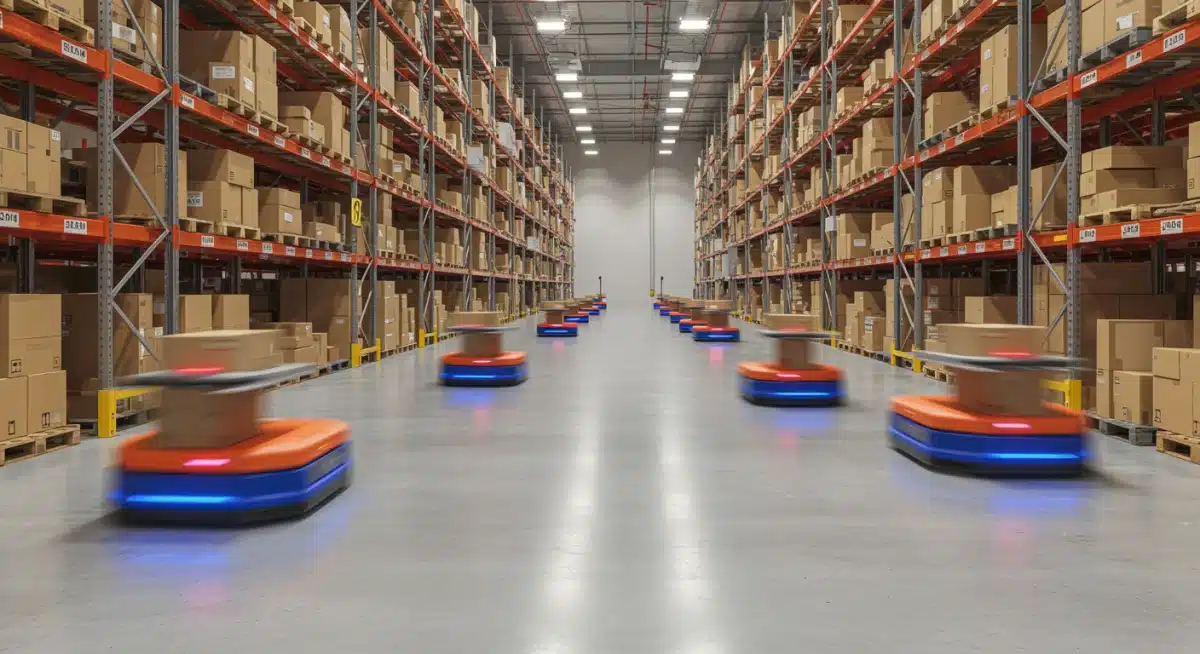
Investments in last-mile delivery solutions, automated warehouses, and advanced inventory management systems are critical. These enhancements not only improve customer satisfaction but also reduce operational costs and environmental impact, creating a more sustainable and robust e-commerce ecosystem.
Optimizing the Supply Chain for Speed and Sustainability
The modern consumer demands speed. Same-day and next-day delivery options are no longer luxuries but competitive necessities. To meet these demands, businesses are rethinking their entire supply chain, from sourcing and manufacturing to warehousing and final delivery. This often involves adopting new technologies and forging strategic partnerships.
- Expansion of local fulfillment centers.
- Implementation of drone and autonomous vehicle delivery trials.
- Increased focus on eco-friendly packaging and shipping methods.
- Advanced analytics for route optimization and inventory forecasting.
Sustainability is also emerging as a key factor. Consumers are increasingly conscious of the environmental impact of their purchases, pushing businesses to adopt greener logistics practices. This includes optimizing delivery routes to reduce fuel consumption and using recyclable or biodegradable packaging materials.
Emerging Trends and Niche Markets
While broad market trends drive overall e-commerce growth, the emergence and expansion of niche markets also play a significant role. Specialized online retailers catering to specific interests, demographics, or values are finding success by offering curated products and highly personalized experiences that larger retailers may overlook. This fragmentation of the market creates numerous opportunities for agile businesses.
From sustainable fashion to artisanal crafts and specialized tech gadgets, consumers are seeking unique and tailored offerings. These niche markets thrive on authenticity and community, often leveraging social media to build strong connections with their target audience. Their ability to serve specific needs contributes to the overall diversity and dynamism of the e-commerce landscape.
The Growth of Direct-to-Consumer (DTC) Brands
The direct-to-consumer (DTC) model continues to disrupt traditional retail, allowing brands to connect directly with their customers without intermediaries. This approach offers greater control over branding, customer experience, and data, leading to stronger relationships and higher profit margins. DTC brands often leverage digital marketing and social media to build strong brand identities and loyal customer bases.
By bypassing traditional retail channels, DTC brands can offer more competitive pricing or higher-quality products. They also gain invaluable direct feedback from customers, enabling rapid product development and iteration. This agile approach makes them particularly well-suited to capitalize on emerging trends and niche demands, further contributing to the overall 2025 e-commerce growth.
Challenges and Opportunities in the US E-commerce Market
Despite the optimistic projections for 2025 e-commerce growth, the US market is not without its challenges. Intense competition, evolving regulatory landscapes, and the constant need for technological adaptation present significant hurdles. However, these challenges often mask underlying opportunities for innovation and strategic differentiation. Businesses that can effectively navigate these complexities will be best positioned for long-term success.
Cybersecurity remains a perennial concern, requiring continuous investment and vigilance. Data privacy regulations are also becoming more stringent, necessitating transparent and ethical data handling practices. Addressing these issues not only builds consumer trust but also ensures compliance and prevents costly breaches.
Navigating Data Privacy and Cybersecurity Concerns
As more personal data is exchanged online, the importance of robust cybersecurity measures and transparent data privacy policies cannot be overstated. Consumers are increasingly aware of their digital footprints and expect businesses to protect their information diligently. A single data breach can severely damage a brand’s reputation and lead to significant financial penalties.
- Implementing multi-factor authentication.
- Regular security audits and vulnerability assessments.
- Clear and concise privacy policies.
- Investing in advanced encryption technologies.
Furthermore, compliance with regulations like the California Consumer Privacy Act (CCPA) and potential future federal data privacy laws is crucial. Proactive measures in these areas not only mitigate risks but also build a foundation of trust with customers, which is invaluable in the digital age.
The Future Outlook for US E-commerce
The trajectory for US e-commerce is undeniably upward, with a projected 12% growth in 2025 signaling a dynamic and expanding market. This growth will be fueled by a confluence of factors, including ongoing technological innovation, deeper integration of AI, the evolution of consumer expectations, and continued investment in logistical capabilities. The digital economy is not just growing; it is maturing, becoming more sophisticated and intertwined with every aspect of daily life.
Businesses that embrace agility, prioritize customer experience, and strategically leverage emerging technologies will be the ones to thrive. The future of retail is digital, and understanding these trends is paramount for sustained success in the competitive landscape. The opportunities for innovation and market leadership are vast for those prepared to adapt and evolve.
| Key Aspect | Brief Description |
|---|---|
| Projected Growth | US e-commerce market expected to grow by 12% in 2025. |
| Key Drivers | AI, AR, social commerce, logistics improvements, and evolving consumer habits. |
| Consumer Trends | Increased mobile shopping, demand for personalization, and live shopping adoption. |
| Challenges | Intense competition, cybersecurity threats, and data privacy regulations. |
Frequently Asked Questions About 2025 E-commerce Growth
The US e-commerce market is projected to experience a robust 12% increase in 2025. This forecast reflects ongoing digital transformation, consumer shifts towards online shopping, and strategic investments in infrastructure and technology by businesses across various sectors.
Artificial intelligence (AI) and augmented reality (AR) are key technological drivers. AI will enhance personalization, customer service, and operational efficiency, while AR will provide immersive shopping experiences, helping consumers visualize products more effectively before purchase.
Evolving consumer behavior, including increased mobile shopping, demand for personalized experiences, and the rise of social commerce and live shopping, will significantly impact growth. Consumers expect seamless, engaging, and convenient online purchasing journeys across all digital touchpoints.
Enhanced logistics and supply chain optimization are crucial. Improvements in last-mile delivery, automated warehousing, and sustainable shipping practices will ensure faster, more reliable, and environmentally conscious order fulfillment, directly contributing to customer satisfaction and repeat business.
Challenges include intense market competition, the need for continuous technological adaptation, and growing concerns over cybersecurity and data privacy. Businesses must prioritize robust security measures and adhere to evolving data protection regulations to maintain consumer trust and ensure compliance.
Conclusion
The projected 12% growth in the US e-commerce market for 2025 underscores a dynamic and ever-expanding digital economy. This upward trajectory is a testament to the ongoing innovation within the sector, the adaptability of businesses, and the increasing reliance of consumers on digital channels for their purchasing needs. As technology continues to advance and consumer expectations evolve, the landscape of online retail will only become more sophisticated and integrated into daily life. Success in this environment will hinge on a proactive approach to adopting new technologies, optimizing logistical processes, and, most importantly, prioritizing the customer experience. The opportunities for businesses to capture market share and foster lasting customer relationships in this thriving digital ecosystem are substantial for those prepared to meet the demands of tomorrow.