Subscription Economy Growth: US Market Penetration Soars

The US subscription economy is projected to achieve a significant 15% year-over-year increase in market penetration by 2025, reflecting a profound shift in consumer purchasing habits and business strategies.
The landscape of commerce is undergoing a profound transformation, with the subscription economy growth leading the charge. In the United States, this paradigm shift is particularly evident, as businesses and consumers increasingly embrace recurring revenue models. This article delves into the dynamics driving this surge, anticipating a remarkable 15% year-over-year increase in US market penetration by 2025.
Understanding the rise of the subscription model
The subscription model, once primarily associated with magazines and newspapers, has permeated nearly every sector of the US economy. From streaming entertainment to software services, and from curated product boxes to essential utilities, consumers are opting for convenience, personalization, and ongoing value.
This widespread adoption is not accidental; it’s a direct response to evolving consumer expectations and technological advancements that facilitate seamless recurring transactions. Businesses, in turn, benefit from predictable revenue streams, enhanced customer loyalty, and valuable data insights.
Key drivers of adoption
Several factors contribute to the accelerating pace of subscription adoption. Understanding these elements is crucial for businesses aiming to thrive in this dynamic environment.
- Convenience and accessibility: Subscriptions simplify access to goods and services, often delivering them directly to the consumer or making them available on demand.
- Personalization: Many subscription services offer tailored experiences, adapting to individual preferences and providing a sense of exclusivity.
- Cost-effectiveness: For many consumers, subscriptions offer a more affordable way to access premium content, software, or products compared to one-time purchases.
- Flexibility: The ability to easily start, pause, or cancel subscriptions appeals to modern consumers seeking control over their expenditures.
Technological enablement
The proliferation of digital payment systems, robust CRM platforms, and advanced analytics tools has significantly lowered the barrier to entry for businesses looking to implement subscription models. These technologies enable efficient billing, customer management, and data-driven personalization, which are cornerstones of successful subscription services.
The convenience of managing multiple subscriptions through integrated platforms or even directly on mobile devices further fuels consumer willingness to engage with these models. This technological infrastructure is a silent but powerful engine behind the projected market penetration increase.
In conclusion, the rise of the subscription model is a multifaceted phenomenon driven by a blend of consumer desire for convenience and personalization, coupled with the technological capabilities that make such services feasible and scalable. Businesses that effectively leverage these drivers are poised for significant growth.
Consumer behavioral shifts fueling subscription growth
Consumer behavior in the US has undergone significant transformations, directly contributing to the boom in the subscription economy. Modern consumers prioritize access over ownership, value ongoing experiences, and seek relationships with brands that understand their needs.
This shift isn’t merely about convenience; it’s about a fundamental change in how people interact with products and services, moving towards a more fluid and continuous engagement model. Brands that recognize and adapt to these behavioral patterns are the ones capturing market share.
The preference for access over ownership
For a growing segment of the US population, particularly younger demographics, the traditional notion of ownership is less appealing than the flexibility and lower upfront cost of access. This is evident across various sectors, from music and movies to transportation and even fashion.
Services like Spotify, Netflix, and Zipcar exemplify this trend, offering extensive libraries or fleets without the burden of individual purchase and maintenance. This preference aligns perfectly with the subscription model’s core offering, making it an attractive proposition.
The value of ongoing experiences and relationships
Beyond mere access, consumers are increasingly seeking continuous value and personalized experiences. A subscription is not just a transaction; it’s an ongoing relationship with a brand that promises consistent delivery, updates, and tailored content.
This fosters a sense of loyalty and community, especially when brands actively engage with their subscribers, solicit feedback, and evolve their offerings based on consumer input. The perceived value extends beyond the tangible product or service to include the entire customer journey.
Impact of generational differences
Generational differences play a significant role in shaping subscription adoption. Younger generations, having grown up in a digital-first world, are inherently more comfortable with recurring digital services. They are early adopters of new technologies and readily embrace models that offer flexibility and personalization.
However, the appeal of subscriptions is not limited to younger demographics. As services become more diverse and cater to a wider array of needs, older generations are also increasingly participating, recognizing the convenience and value they offer.
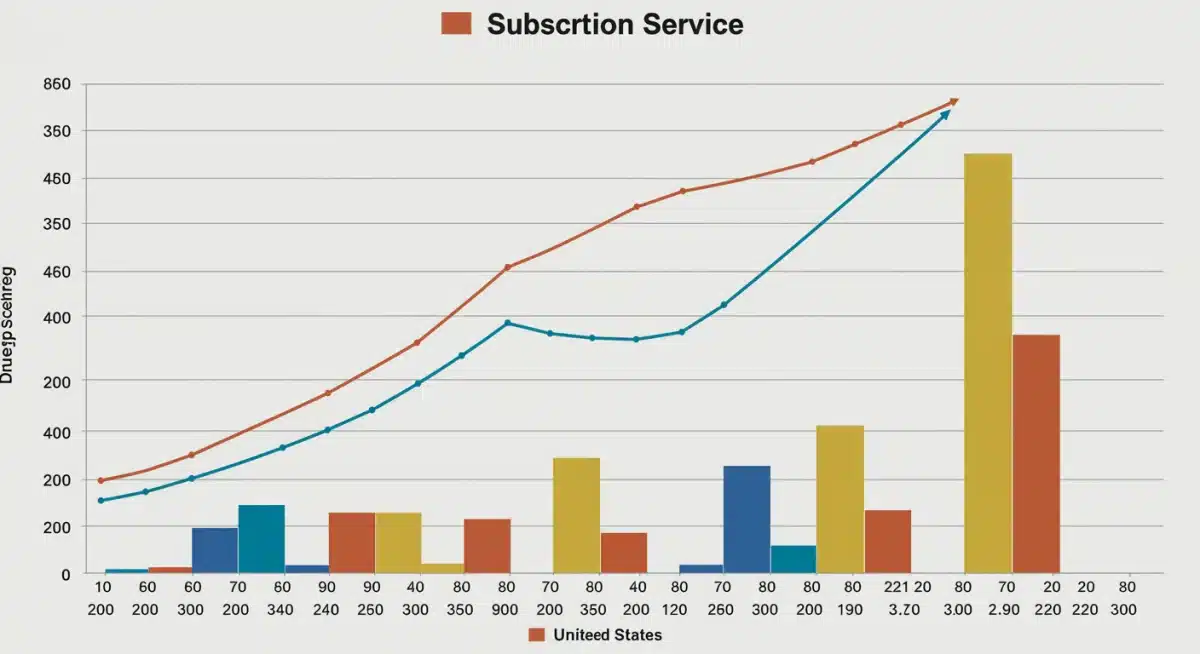
In summary, the substantial growth in the subscription economy is deeply rooted in evolving consumer behaviors. The shift from ownership to access, the desire for continuous engagement, and the influence of generational preferences all converge to create a fertile ground for subscription services to flourish.
Key sectors driving the 15% year-over-year increase
While the subscription economy is pervasive, certain sectors are acting as particularly strong catalysts for the projected 15% year-over-year increase in US market penetration. These industries have successfully adapted their offerings to the subscription model, meeting specific consumer demands and creating robust recurring revenue streams.
Understanding these leading sectors provides insights into the broader trends and opportunities within this expanding market. Their innovative approaches often set benchmarks for other industries considering a shift towards subscriptions.
Entertainment and media subscriptions
The entertainment and media sector remains a powerhouse within the subscription economy. Streaming services for movies, TV shows, music, and gaming continue to attract vast numbers of subscribers. The convenience, vast content libraries, and often ad-free experiences are compelling.
- Video streaming: Platforms like Netflix, Disney+, and Hulu dominate, offering diverse content at competitive prices.
- Music streaming: Spotify and Apple Music have revolutionized how people consume music, providing unlimited access to millions of tracks.
- Gaming subscriptions: Services like Xbox Game Pass and PlayStation Plus offer access to a rotating library of games, appealing to avid gamers.
Software as a service (SaaS)
The business-to-business (B2B) segment, particularly Software as a Service (SaaS), is another significant driver. Companies increasingly rely on subscription-based software for everything from customer relationship management (CRM) and enterprise resource planning (ERP) to creative design tools.
SaaS models offer businesses scalability, continuous updates, and reduced upfront costs, making them highly attractive compared to traditional perpetual license software. This sector’s ongoing innovation and essential utility ensure its sustained contribution to subscription growth.
Curated box subscriptions
The allure of surprise and personalization has fueled the growth of curated box subscriptions. These services deliver carefully selected products directly to consumers’ homes on a recurring basis, ranging from beauty products and gourmet foods to pet supplies and clothing.
The element of discovery, coupled with the convenience of not having to shop for specific items, resonates with a diverse consumer base. Brands like Stitch Fix, Blue Apron, and BarkBox have carved out significant niches in this segment.
In conclusion, the entertainment, SaaS, and curated box sectors are at the forefront of the subscription economy’s expansion in the US. Their success highlights the versatility of the subscription model and its ability to cater to a wide range of consumer and business needs, propelling the overall market forward.
Challenges and opportunities in a maturing market
As the subscription economy continues its rapid expansion towards a 15% year-over-year increase in US market penetration by 2025, it also faces evolving challenges and presents new opportunities. A maturing market requires businesses to be more strategic, focusing on customer retention, differentiation, and sustainable growth models.
The initial novelty of subscriptions is giving way to a more discerning consumer base, demanding higher value and seamless experiences. Navigating this landscape successfully will determine the long-term winners in this competitive arena.
The challenge of subscription fatigue
One of the primary challenges is the phenomenon of ‘subscription fatigue.’ As consumers accumulate multiple subscriptions, they may feel overwhelmed by the recurring costs and the sheer number of services to manage. This can lead to increased churn rates as users selectively cancel services they perceive as less valuable.
Businesses must actively combat this by consistently demonstrating value, offering flexible plans, and providing exceptional customer service. Simply offering a subscription is no longer enough; maintaining engagement is paramount.
Retention strategies are key
In a saturated market, customer acquisition costs can be high. Therefore, focusing on retention becomes critical for profitability. Effective retention strategies include:
- Personalized communication: Tailoring messages and offers based on user behavior and preferences.
- Exclusive content/features: Regularly adding new value that keeps subscribers engaged and justifies the ongoing cost.
- Seamless user experience: Ensuring the service is easy to use, reliable, and integrates well into the customer’s daily life.
- Transparent pricing: Clearly communicating costs and any changes to avoid surprises and build trust.
New opportunities for niche markets
Despite the competition, significant opportunities exist for businesses targeting niche markets. Consumers are increasingly willing to pay for highly specialized services that cater to their unique interests or solve specific problems. This allows smaller players to compete effectively by focusing on depth rather than breadth.
The ability to deliver exceptional value to a specific segment can lead to highly loyal customer bases and sustainable growth, demonstrating that the subscription economy is not just for large corporations.
In conclusion, while the subscription economy’s growth trajectory is strong, businesses must proactively address challenges like subscription fatigue and prioritize retention. Simultaneously, the market offers ample opportunities for innovation, particularly in catering to niche consumer needs, ensuring continued dynamism and expansion.
The role of data and AI in personalized subscription offerings
The accelerating subscription economy growth, particularly the projected 15% year-over-year increase in US market penetration by 2025, is inextricably linked to advancements in data analytics and artificial intelligence (AI). These technologies are not merely tools; they are foundational to creating the personalized, relevant, and engaging experiences that modern subscribers demand.
By leveraging data and AI, businesses can move beyond generic offerings, creating highly tailored services that resonate deeply with individual consumers, thereby enhancing satisfaction and bolstering retention.
Enhancing personalization through data analytics
Data analytics allows subscription services to collect and interpret vast amounts of user behavior data. This includes everything from viewing habits and purchase history to engagement patterns and demographic information. The insights derived from this data are invaluable.
For instance, streaming services use viewing data to recommend new content, while curated box services analyze past preferences to select products. This level of personalization makes the service feel more relevant and valuable to the individual subscriber.
AI-driven recommendations and dynamic pricing
Artificial intelligence takes personalization a step further by automating and optimizing decision-making processes. AI algorithms can:
- Improve recommendation engines: Providing highly accurate suggestions that keep users engaged and discovering new content or products.
- Optimize content delivery: Ensuring that the most relevant information or features are presented at the right time.
- Enable dynamic pricing: Adjusting subscription tiers or offers based on individual usage patterns, perceived value, or market conditions, though this must be handled carefully to maintain trust.
- Predict churn risk: Identifying subscribers who are likely to cancel, allowing for proactive intervention with targeted offers or support.
Operational efficiencies and customer support
Beyond personalization, data and AI also contribute significantly to operational efficiencies. AI-powered chatbots and virtual assistants can handle routine customer inquiries, freeing up human agents for more complex issues. This improves customer support response times and overall satisfaction.
Furthermore, predictive analytics can help businesses anticipate demand, optimize inventory (for physical subscription boxes), and streamline logistics, leading to a more seamless and cost-effective operation.
In conclusion, data and AI are pivotal in fueling the next phase of subscription economy growth. Their ability to deliver hyper-personalization, optimize operations, and enhance customer experiences will be key differentiators for businesses aiming to capture and retain subscribers in an increasingly competitive market.
Future outlook and long-term sustainability
Looking ahead, the trajectory for subscription economy growth in the US remains robust, with the projected 15% year-over-year increase in market penetration by 2025 serving as a strong indicator. However, long-term sustainability will depend on businesses’ ability to innovate continuously, adapt to changing consumer preferences, and uphold ethical practices.
The market will likely become more sophisticated, demanding greater transparency, flexibility, and a relentless focus on delivering tangible value to subscribers. Stagnation is not an option in this dynamic environment.
Emerging trends and diversification
The subscription model is constantly evolving, with new trends emerging that will shape its future. We can anticipate:
- Health and wellness subscriptions: Personalized fitness plans, nutrition guidance, and mental wellness apps.
- Sustainable consumption models: Subscriptions for refurbished electronics, clothing rentals, or zero-waste product deliveries.
- B2B services expansion: More businesses will adopt subscription models for specialized tools, consulting, and managed services.
- Hybrid models: Combining subscription benefits with pay-per-use options to offer ultimate flexibility.
Focus on ethical practices and data privacy
As more personal data is collected to power personalized experiences, the importance of ethical data handling and robust privacy protections will only grow. Consumers are increasingly aware of their data rights and will gravitate towards brands that demonstrate transparency and trustworthiness.
Companies that prioritize data privacy, offer clear opt-out options, and communicate their data usage policies effectively will build stronger, more loyal customer relationships, contributing to long-term sustainability.
The importance of value proposition evolution
To ensure long-term sustainability, subscription businesses must continuously re-evaluate and evolve their value proposition. This means:
- Regularly soliciting and acting on customer feedback.
- Innovating product or service offerings to stay ahead of competitors.
- Communicating the unique benefits clearly and consistently.
- Ensuring that the perceived value always outweighs the cost in the subscriber’s mind.
Ultimately, the future of the subscription economy in the US looks bright, provided businesses remain agile, customer-centric, and committed to ethical and sustainable growth practices. The market will reward those who can consistently deliver superior value and adapt to the ever-changing landscape of consumer expectations.
| Key Point | Brief Description |
|---|---|
| Market Growth | US subscription economy projected for 15% YoY increase in market penetration by 2025. |
| Consumer Shift | Preference for access over ownership, demand for personalization, and continuous value drive adoption. |
| Key Drivers | Convenience, personalization, cost-effectiveness, flexibility, and technological advancements are crucial. |
| Future Challenges | Subscription fatigue and retention are major concerns; innovation and ethical practices are key. |
Frequently asked questions about the subscription economy
The growth is primarily driven by evolving consumer preferences for convenience, personalization, and access over ownership. Technological advancements enabling seamless digital transactions and robust customer management also play a significant role in this expansion.
Key sectors leading the market penetration include entertainment and media (e.g., streaming services), Software as a Service (SaaS) for businesses, and curated product box subscriptions. These areas effectively leverage the model to meet specific consumer and business needs.
Subscription fatigue refers to consumers feeling overwhelmed by too many subscriptions and their recurring costs, leading to cancellations. Businesses combat this by consistently demonstrating value, offering flexible plans, providing exceptional customer service, and personalizing offerings.
Data analytics and AI are crucial for hyper-personalization, enabling businesses to offer tailored recommendations, dynamic pricing, and optimized content delivery. They also enhance operational efficiencies and improve customer support, driving engagement and retention.
Long-term sustainability hinges on continuous innovation, adapting to changing consumer preferences, and upholding ethical practices, especially regarding data privacy. Evolving value propositions, focusing on customer retention, and exploring niche markets are also vital for sustained success.
Conclusion
The US subscription economy is not merely expanding; it is fundamentally reshaping how consumers access and engage with products and services. The projected 15% year-over-year increase in market penetration by 2025 underscores a robust trend driven by evolving consumer behaviors, technological advancements, and strategic business models. While challenges such as ‘subscription fatigue’ demand proactive solutions, the opportunities for innovation, particularly in personalized offerings powered by data and AI, are immense. For businesses, understanding these dynamics and committing to continuous value delivery and ethical practices will be paramount for long-term success in this vibrant and ever-evolving market.