2025 Holiday Shopping: Early US Consumer Sentiment Analysis

Early analysis of US consumer sentiment for the 2025 holiday shopping season indicates cautious optimism, with spending intentions influenced by economic stability, inflation concerns, and a strong preference for value and digital convenience.
As businesses begin to strategize for the next major retail event, understanding 2025 Holiday Shopping Sentiment in the US is paramount. This season, more than ever, will be shaped by evolving economic realities and consumer expectations. What factors will truly drive purchasing decisions, and how can retailers best prepare?
Understanding the Economic Landscape Influencing 2025 Holiday Shopping
The economic climate always casts a long shadow over consumer spending, and the lead-up to the 2025 holiday season is no exception. Early indicators suggest a mixed bag of economic signals that will undoubtedly shape how Americans approach their holiday purchases. While employment rates may remain strong, persistent inflationary pressures and interest rate fluctuations could temper consumer enthusiasm for discretionary spending. Businesses need to keenly observe these macroeconomic trends to accurately forecast demand and adjust their strategies accordingly.
Inflationary Pressures and Consumer Budgets
Inflation has been a dominant theme in recent years, directly impacting the purchasing power of consumers. As we look towards 2025, the trajectory of inflation will be a critical determinant of holiday spending. Consumers, having grown accustomed to higher prices, are likely to be more selective and budget-conscious than ever before. This calls for retailers to focus on value propositions and transparent pricing.
- Budget-conscious planning: Shoppers are starting earlier to compare prices and plan purchases.
- Value-driven decisions: Emphasis on deals, discounts, and perceived long-term value.
- Impact on discretionary spending: Non-essential items may see reduced demand.
Interest Rates and Consumer Debt
The Federal Reserve’s actions on interest rates directly influence borrowing costs for consumers, affecting everything from credit card debt to mortgage payments. Higher interest rates can reduce disposable income, pushing consumers to prioritize necessities over holiday splurges. Monitoring these rates will provide crucial insights into the financial flexibility of the average American household.
In conclusion, the economic backdrop for the 2025 holiday season is complex, characterized by ongoing inflation and fluctuating interest rates. These factors will compel consumers to be more strategic with their spending, prioritizing value and necessity. Retailers must adapt by offering competitive pricing and clear value propositions to resonate with a financially savvy consumer base.
Shifting Consumer Preferences: Digital Dominance and Ethical Choices
The way consumers shop has undergone a profound transformation, with digital channels now firmly established as primary touchpoints. For the 2025 holiday shopping season, this digital dominance is expected to solidify further, coupled with a growing emphasis on ethical and sustainable purchasing decisions. Retailers who fail to embrace these shifts risk being left behind in a rapidly evolving market.
The Continued Rise of E-commerce and Mobile Shopping
Online shopping is no longer just an alternative; it’s often the first port of call for many consumers. Mobile devices, in particular, will play an even more significant role, from product research to final purchase. Seamless mobile experiences, intuitive interfaces, and efficient checkout processes will be non-negotiable for retailers.
- Optimized mobile platforms: Websites and apps must be fully responsive and user-friendly.
- Social commerce integration: Shopping directly through social media platforms is gaining traction.
- Personalized recommendations: AI-driven suggestions enhance the online shopping journey.
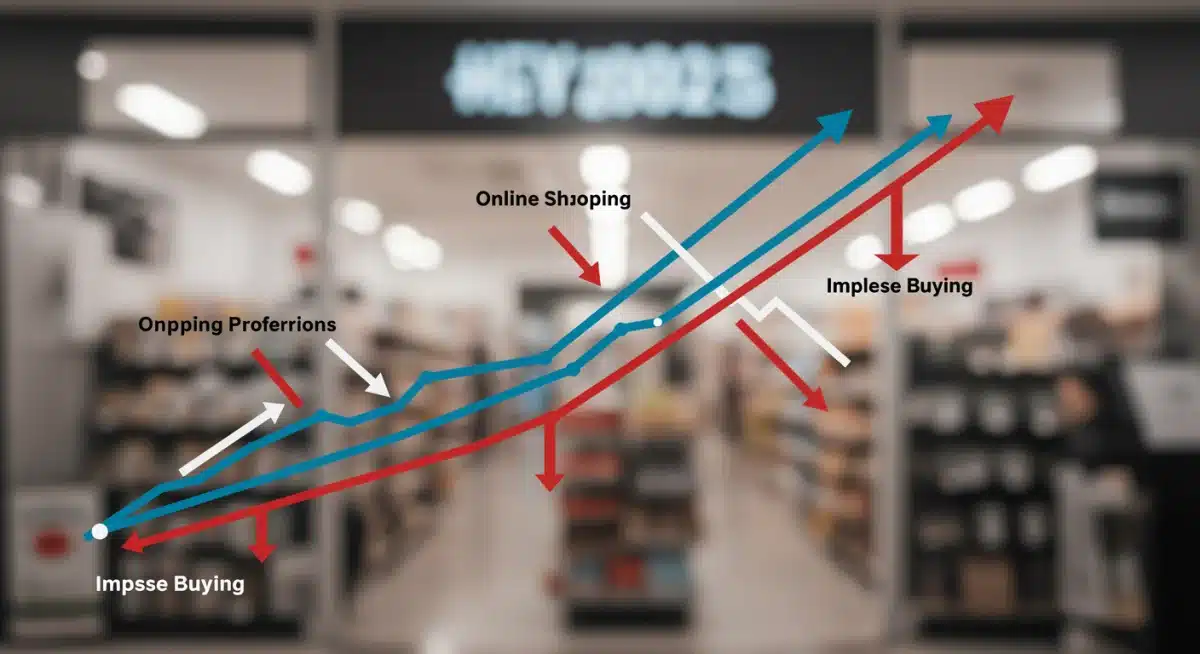
Moreover, the convenience of online shopping, coupled with increasingly sophisticated logistics, means consumers expect fast and reliable delivery options. Free shipping, expedited services, and easy returns are now standard expectations that influence purchasing decisions. Retailers must invest in robust supply chain management to meet these demands effectively.
Ethical Consumption and Brand Values
Modern consumers, particularly younger demographics, are increasingly scrutinizing the ethical practices and values of the brands they support. Sustainability, fair labor practices, and corporate social responsibility are no longer niche concerns but mainstream drivers of purchasing behavior. Brands that authentically embody these values will likely gain a competitive edge.
To summarize, the 2025 holiday shopping season will be characterized by an even greater reliance on digital shopping channels, especially mobile, and a heightened awareness of ethical consumption. Retailers must prioritize seamless online experiences and clearly communicate their brand values to connect with a discerning consumer base.
The Psychology of Holiday Spending: Beyond Just Price
While economic factors and convenience are crucial, the psychology behind holiday spending goes much deeper than just price tags and delivery speeds. Emotional connections, the desire for unique experiences, and the pursuit of quality all play significant roles in shaping consumer behavior during the festive season. Understanding these underlying psychological drivers is key to crafting compelling marketing and product strategies.
Experiences Over Material Goods
A growing trend indicates a shift from acquiring more material possessions to valuing experiences. This means consumers might prioritize gifts that offer memorable moments, such as travel, concert tickets, or workshops, over traditional physical items. Retailers should consider how they can incorporate experiential offerings into their holiday campaigns.
- Curated gift bundles: Combining products with experiential elements.
- Service-based gifts: Subscriptions, classes, or pampering experiences.
- Personalization: Gifts tailored to individual tastes and preferences.
The Quest for Quality and Durability
In an era of conscious consumption, consumers are increasingly seeking quality and durability over fleeting trends. There’s a desire for products that last, reducing waste and offering long-term value. This sentiment aligns with a broader move towards sustainability and a rejection of fast fashion or disposable goods.
Ultimately, the psychology of holiday spending in 2025 will be influenced by a desire for meaningful experiences and durable, high-quality products. Retailers should move beyond simple price competition to highlight the lasting value and emotional resonance of their offerings, tapping into the deeper motivations of consumers.
Impact of Supply Chain Dynamics on Consumer Expectations
The fragility of global supply chains has been a significant concern in recent years, leading to stock shortages, delivery delays, and frustrated consumers. As we approach the 2025 holiday season, the state of supply chain dynamics will heavily influence consumer expectations and purchasing strategies. Businesses must prioritize resilience and transparency to manage these challenges effectively.
Anticipation of Potential Delays
Consumers have become acutely aware of potential supply chain disruptions and are likely to plan their holiday shopping earlier to mitigate risks. This proactive approach means retailers need to communicate stock availability and delivery timelines with utmost clarity to prevent disappointment. Early bird promotions could capitalize on this trend.
Retailers are also investing in diversified sourcing and localized production where possible, aiming to reduce reliance on single points of failure within the global supply network. This strategic shift is not just about avoiding future disruptions but also about building consumer trust through reliability.
Transparency and Communication
In the face of potential challenges, transparent communication about stock levels, shipping estimates, and any unforeseen delays will be critical. Consumers appreciate honesty and proactive updates, which can help manage expectations and maintain satisfaction even when issues arise. Clear messaging builds loyalty.
- Real-time inventory updates: Showing exact stock levels on product pages.
- Estimated delivery windows: Providing precise rather than vague delivery dates.
- Proactive delay notifications: Informing customers immediately of any changes.
In conclusion, robust supply chain management and transparent communication will be pivotal for the 2025 holiday shopping season. Consumers, anticipating potential delays, will appreciate clear information and proactive measures from retailers, highlighting the importance of resilient logistics and honest engagement.
Leveraging Technology for a Seamless Shopping Journey
Technology continues to redefine the retail landscape, offering unprecedented opportunities to enhance the shopping experience. For the 2025 holiday season, businesses that effectively leverage innovations from artificial intelligence to augmented reality will be best positioned to attract and retain customers, making the shopping journey more intuitive and engaging.
Artificial Intelligence for Personalization
AI-driven personalization is moving beyond simple product recommendations to create highly tailored shopping experiences. From customized landing pages to intelligent chatbots offering instant support, AI can make every interaction feel bespoke, significantly improving customer satisfaction and conversion rates.
Moreover, AI can analyze vast amounts of data to predict purchasing patterns, optimize inventory, and even assist in dynamic pricing strategies, ensuring that retailers are always one step ahead in meeting demand. The goal is to make shopping feel effortless and perfectly aligned with individual consumer preferences.
Augmented Reality and Virtual Try-Ons
Augmented Reality (AR) is bridging the gap between online and in-store shopping by allowing consumers to visualize products in their own environment or virtually ‘try on’ items. This technology reduces uncertainty, enhances engagement, and can significantly decrease return rates, particularly for apparel and home goods.
- Virtual product placement: See furniture in your living room before buying.
- AR beauty filters: Experiment with makeup shades virtually.
- Interactive product demos: Explore features of complex products through AR.
To sum up, technology will be a cornerstone of the 2025 holiday shopping experience. By harnessing AI for personalization and AR for immersive product interactions, retailers can create a seamless, engaging, and efficient journey that meets the evolving demands of modern consumers.
The Role of Social Media and Influencer Marketing
Social media platforms have transitioned from mere communication tools to powerful commercial engines, and their influence on holiday shopping decisions for 2025 will be more pronounced than ever. Influencer marketing, in particular, will continue to shape trends and drive purchases, making a strategic social media presence indispensable for retailers.
Building Community and Trust Through Social Platforms
Social media offers brands a unique opportunity to build communities around their products and values. Engaging content, interactive polls, and direct customer interaction can foster a sense of belonging and trust, which are crucial for driving holiday sales. Authenticity in these interactions is key.
Furthermore, platforms are continuously evolving their e-commerce capabilities, allowing for direct shopping within apps. This streamlined path from discovery to purchase removes friction, making it easier for consumers to act on impulse or well-researched decisions alike. Retailers must integrate these features into their social strategy.
The Power of Influencer Recommendations
Consumers often trust recommendations from influencers more than traditional advertising. For the 2025 holiday season, collaborations with relevant influencers can significantly boost brand visibility and sales. The key is to partner with individuals whose audience aligns with the brand’s target demographic and whose recommendations feel genuine.
- Micro-influencers: Often offer higher engagement rates and niche audiences.
- Authentic partnerships: Focus on genuine product integration over overt ads.
- Performance-based campaigns: Tracking ROI from influencer collaborations.
In conclusion, social media and influencer marketing will be critical drivers for the 2025 holiday shopping season. By fostering community and leveraging authentic influencer recommendations, businesses can effectively reach and persuade consumers in a highly competitive market, turning social engagement into tangible sales.
Sustainability and Conscious Consumption Trends
The conversation around sustainability has moved from the periphery to the forefront of consumer consciousness, profoundly impacting purchasing decisions. For the 2025 holiday shopping season, consumers are expected to demonstrate an even stronger preference for brands that champion environmental responsibility and ethical practices. This trend necessitates a fundamental shift in how businesses source, produce, and market their products.
Eco-Friendly Product Choices
Consumers are actively seeking out products that are environmentally friendly, from their raw materials to their end-of-life disposal. This includes items made from recycled content, sustainably sourced materials, or those designed for durability and repairability. Retailers should highlight these attributes clearly.
Beyond the products themselves, the packaging also comes under scrutiny. Minimalist, recyclable, or compostable packaging is increasingly preferred over excessive plastic or non-biodegradable options. Brands that adopt these practices can gain a significant advantage in attracting conscious consumers.
Ethical Sourcing and Fair Labor Practices
The ethical dimension of consumption extends to the entire supply chain, with consumers demanding transparency regarding labor practices and fair wages. Brands that can demonstrate a commitment to ethical sourcing and responsible manufacturing will build greater trust and loyalty. Certifications and clear communication about these efforts are vital.
- Transparent supply chains: Providing clear information about product origins.
- Fair trade certifications: Highlighting adherence to ethical standards.
- Social impact initiatives: Demonstrating commitment to community and worker well-being.
To summarize, sustainability and conscious consumption will be defining characteristics of the 2025 holiday shopping season. Retailers must embrace eco-friendly products, sustainable packaging, and ethical sourcing to meet the demands of a consumer base increasingly driven by environmental and social values.
| Key Aspect | 2025 Holiday Sentiment Insight |
|---|---|
| Economic Outlook | Consumers remain cautious due to inflation and interest rates, prioritizing value. |
| Shopping Channels | Digital dominance, especially mobile, with expectations for seamless online experiences. |
| Value Drivers | Shift towards experiences, quality, durability, and ethical brand alignment. |
| Key Influencers | Social media and authentic influencer recommendations will significantly impact purchasing. |
Frequently asked questions about 2025 holiday shopping
Inflation is expected to make consumers more budget-conscious, leading to earlier planning, increased deal-seeking, and a preference for value-driven purchases. Discretionary spending on non-essential items might see a reduction as shoppers prioritize necessities and quality.
Online shopping, particularly via mobile devices, will continue to dominate. Consumers expect seamless digital experiences, personalized recommendations, and efficient delivery options. Retailers must ensure optimized mobile platforms and robust e-commerce capabilities to meet these demands.
Yes, there is a growing trend towards valuing experiences over material goods. Many consumers may opt for gifts like travel, event tickets, or workshops, seeking memorable moments rather than tangible items. Retailers should consider incorporating experiential offerings into their strategies.
Sustainability and ethical practices are increasingly crucial. Consumers will favor brands with eco-friendly products, sustainable packaging, and transparent supply chains. Demonstrating a commitment to environmental responsibility and fair labor practices can significantly influence purchasing decisions.
Social media will be a powerful driver of holiday shopping, influencing trends and purchases through community building and influencer marketing. Authentic partnerships with influencers and direct shopping features within platforms will be essential for brands to connect with consumers effectively.
Conclusion
The 2025 holiday shopping season in the US is shaping up to be a dynamic period, influenced by a complex interplay of economic realities, evolving consumer preferences, and technological advancements. Retailers must navigate cautious consumer sentiment, driven by inflation and interest rates, by emphasizing value, quality, and transparent communication. The continued dominance of digital channels, particularly mobile, coupled with a strong emphasis on ethical consumption and experiential gifts, underscores the need for agile and customer-centric strategies. By understanding these early trends and leveraging technology, businesses can successfully connect with consumers and thrive in a competitive market.