Blockchain for Supply Chain: Boosting US Retail Trust & Fighting Fraud
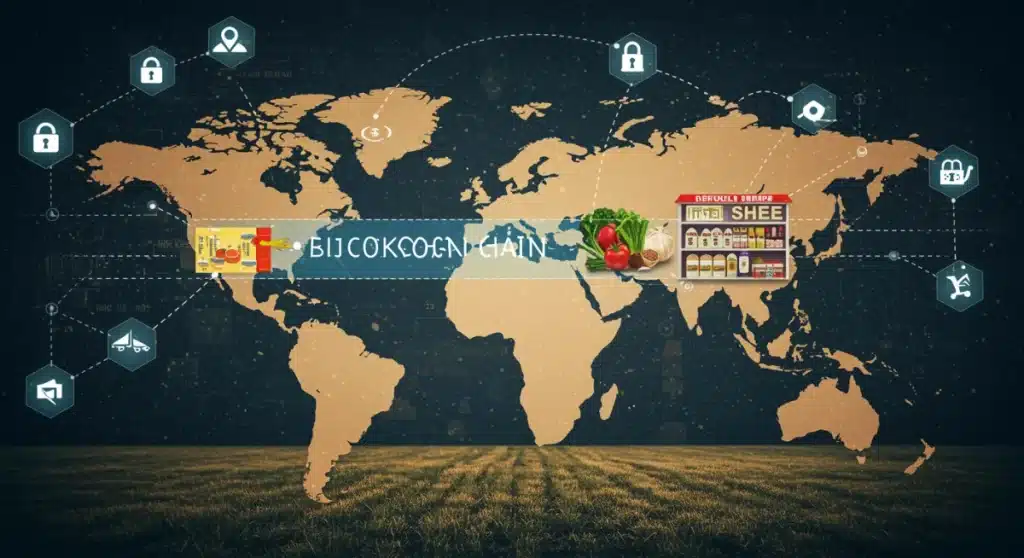
Blockchain for supply chain transparency is set to reduce fraud by 5% and significantly enhance consumer trust in US retail by 2025, offering an immutable and verifiable record of product journeys.
The landscape of US retail is experiencing a profound transformation, driven by consumer demand for authenticity, ethical sourcing, and accountability. In this evolving environment, blockchain for supply chain transparency emerges as a pivotal technology, promising to reshape how products move from origin to consumer.
The imperative for transparency in modern retail
Modern retail faces a myriad of challenges, from counterfeit goods and unethical labor practices to inefficient logistics and a lack of consumer trust. These issues not only erode brand reputation but also lead to significant financial losses. Consumers today are more informed and demand to know the origins and journey of the products they purchase, pushing retailers to adopt more open and verifiable practices.
The traditional supply chain, often a complex web of intermediaries, makes it incredibly difficult to track products with precision. This opacity creates vulnerabilities that fraudsters exploit and leaves consumers questioning the integrity of their purchases. Retailers are actively seeking innovative solutions to bridge this trust gap and streamline their operations for greater efficiency and reliability.
Addressing consumer demands for authenticity
Consumers are increasingly prioritizing sustainable and ethically produced goods. They want assurances that their purchases align with their values, whether it’s fair trade coffee or conflict-free diamonds. Blockchain technology provides an immutable ledger that can document every step of a product’s journey, from raw materials to the store shelf, offering unprecedented levels of transparency.
- Verifiable sourcing: Confirming the origin of ingredients and components.
- Ethical production: Ensuring fair labor practices and environmental standards.
- Product authenticity: Combating counterfeiting with unique digital identifiers.
- Sustainability claims: Providing evidence for eco-friendly or organic certifications.
The drive for authenticity isn’t just a niche concern; it’s becoming a mainstream expectation shaping purchasing decisions across all demographics. Retailers who can effectively communicate and prove their commitment to these values will gain a significant competitive advantage.
Combating fraud and counterfeiting
Fraud and counterfeiting are pervasive issues costing the retail industry billions annually. From luxury goods to pharmaceuticals, fake products undermine legitimate businesses and can pose serious risks to consumers. Blockchain’s distributed and immutable ledger offers a robust defense against these illicit activities by creating a tamper-proof record of ownership and movement.
By assigning unique digital identities to products and recording every transaction on the blockchain, retailers can verify the authenticity of items at any point in the supply chain. This makes it exceedingly difficult for counterfeit goods to enter the legitimate market undetected. The ability to trace a product back to its original manufacturer provides an unparalleled level of security and accountability.
In conclusion, the demand for transparency and the urgent need to combat fraud are compelling retailers to explore transformative technologies. Blockchain offers a powerful solution to these challenges, laying the groundwork for a more trustworthy and efficient retail ecosystem.
How blockchain technology works in supply chains
At its core, blockchain is a decentralized and distributed ledger that records transactions across a network of computers. Each ‘block’ contains a timestamped list of transactions, and once a block is completed, it’s linked to the previous one, forming a ‘chain.’ This linkage is secured using cryptographic principles, making it virtually impossible to alter past records.
In a supply chain context, every significant event—such as a product leaving a factory, arriving at a warehouse, or being inspected for quality—can be recorded as a transaction on the blockchain. This creates an end-to-end, unchangeable history of the product, accessible to authorized participants. This shared, secure record eliminates the need for multiple, often conflicting, individual databases.
Immutable and distributed ledger
The fundamental strength of blockchain lies in its immutability and distributed nature. Once a transaction is recorded on the blockchain, it cannot be changed or deleted. This provides an unprecedented level of data integrity, crucial for verifying product authenticity and tracking. The ledger is also distributed across many nodes, meaning there’s no single point of failure or control, enhancing security and resilience.
This decentralized approach ensures that all participants in the supply chain—from growers and manufacturers to distributors and retailers—can access the same, up-to-date information. This shared truth fosters collaboration and reduces disputes, as everyone operates from a consistent and verified data set. The transparency created by this system builds inherent trust among stakeholders.
Smart contracts for automated processes
Beyond simply recording data, blockchain technology can incorporate smart contracts. These are self-executing contracts with the terms of the agreement directly written into code. Smart contracts automatically execute actions when predefined conditions are met, eliminating manual intervention and potential human error.
- Automated payments: Releasing funds to suppliers once goods are confirmed as delivered.
- Compliance checks: Verifying that products meet specific regulatory standards before proceeding to the next stage.
- Inventory management: Triggering reorders automatically when stock levels fall below a certain threshold.
- Quality assurance: Initiating inspections based on predefined quality metrics.
The automation provided by smart contracts significantly speeds up processes, reduces administrative costs, and minimizes delays. This efficiency translates into faster product delivery and a more responsive supply chain, directly benefiting both businesses and consumers.
In summary, blockchain’s immutable ledger and smart contract capabilities offer a robust framework for creating highly transparent, secure, and efficient supply chains. This technological foundation is essential for meeting the complex demands of modern retail.
Reducing fraud and counterfeiting in US retail
The US retail sector is a prime target for fraudulent activities, ranging from counterfeit luxury goods to diluted food products. These issues not only cost businesses billions but also erode consumer confidence and can even pose public health risks. Blockchain presents a powerful antidote, offering a verifiable and tamper-proof method for product authentication and tracking.
By establishing a digital fingerprint for every product and recording its journey on a shared ledger, blockchain makes it incredibly difficult for fraudulent items to infiltrate the legitimate supply chain. Any attempt to alter product information or introduce fake goods would be immediately detectable, as it would not align with the immutable record.
Enhanced product traceability
One of the most significant benefits of blockchain in combating fraud is its ability to provide granular, end-to-end product traceability. Retailers can pinpoint the exact origin, manufacturing details, and movement history of any item. This level of detail is invaluable in identifying and isolating fraudulent products or batches quickly.
Imagine a scenario where a batch of tainted food products is discovered. With a blockchain-powered supply chain, retailers could instantly trace the affected items back to their source, identify other products from the same batch, and initiate targeted recalls, minimizing harm and mitigating brand damage. This precision significantly improves response times and reduces the scope of potential crises.
Secure authentication mechanisms
Blockchain for supply chain transparency allows for the implementation of secure authentication mechanisms that go beyond traditional barcodes or RFID tags. Products can be assigned unique cryptographic hashes or digital tokens that are recorded on the blockchain. Consumers, using a simple app, can scan a QR code or NFC tag on a product to instantly verify its authenticity against the blockchain record.
- Digital product passports: A unique digital identity for each item, detailing its history.
- Consumer verification: Empowering customers to check authenticity directly.
- Anti-tampering features: Integrating physical security measures with digital records.
- Forensic analysis: Providing irrefutable evidence in fraud investigations.
These mechanisms empower consumers to become active participants in ensuring product integrity, adding an extra layer of defense against counterfeiting. The ability to verify authenticity at the point of sale builds immediate trust and reinforces brand loyalty.
In conclusion, blockchain’s capacity for enhanced traceability and secure authentication is a game-changer for reducing fraud in US retail. It provides the tools necessary to create a truly secure and transparent product ecosystem, protecting both businesses and consumers.
Enhancing consumer trust and brand reputation
In an age where consumers are increasingly skeptical of corporate claims, genuine transparency is the ultimate currency. Blockchain technology offers retailers an unparalleled opportunity to build and solidify consumer trust by providing verifiable proof of their commitments to quality, ethics, and sustainability. This transparency directly translates into a stronger brand reputation and increased loyalty.
When consumers can easily access and verify information about a product’s journey—from its raw materials to its manufacturing process and distribution—they feel more confident in their purchasing decisions. This sense of assurance fosters a deeper connection with brands that are willing to be open and accountable, leading to a more engaged and loyal customer base.
Building confidence through verifiable data
Traditional marketing claims about product quality or ethical sourcing often lack independent verification, leaving consumers to rely on faith. Blockchain changes this paradigm by providing verifiable, immutable data that supports these claims. Every step of the supply chain, every certification, and every quality check can be recorded on the blockchain, making it accessible and auditable.
For instance, a coffee brand can use blockchain to show customers the exact farm their beans came from, the fair wages paid to farmers, and the sustainable farming practices employed. This level of detail moves beyond mere storytelling; it offers concrete evidence that builds genuine confidence and reinforces the brand’s integrity.
Positive impact on brand loyalty and sales
Brands that embrace blockchain for supply chain transparency are likely to see a significant positive impact on brand loyalty and, consequently, sales. Consumers are willing to pay a premium for products they trust and that align with their values. Transparency fosters a sense of shared purpose between the brand and its customers.
- Increased customer engagement: Consumers interact more with transparent brands.
- Premium pricing justification: Verifiable quality supports higher price points.
- Reduced customer service inquiries: Fewer questions about product origins or ethics.
- Competitive differentiation: Standing out in a crowded market through honesty.
The long-term benefits of enhanced trust and reputation far outweigh the initial investment in blockchain technology. Loyal customers become brand advocates, further amplifying positive sentiment and driving organic growth. This virtuous cycle strengthens a brand’s position in the market.
Ultimately, by leveraging blockchain to provide verifiable transparency, US retailers can cultivate deeper trust with their consumers, solidify their brand reputation, and drive sustainable business growth in an increasingly conscious marketplace.
Implementation challenges and considerations
While the benefits of blockchain for supply chain transparency are clear, its implementation is not without challenges. Adopting such a transformative technology requires careful planning, significant investment, and overcoming various operational and technical hurdles. Retailers must approach blockchain integration strategically to maximize its potential and ensure a smooth transition.
One primary concern is the initial cost and complexity of setting up a blockchain network, especially for large, multi-party supply chains. Interoperability with existing legacy systems also poses a significant hurdle, as seamless data exchange is crucial for the technology’s success. Addressing these challenges effectively is key to unlocking blockchain’s full value.
Integration with existing systems
Most retail supply chains rely on a patchwork of legacy systems, including ERPs, WMS, and CRM platforms. Integrating blockchain into this existing infrastructure can be complex and resource-intensive. Ensuring that data flows smoothly and accurately between these disparate systems and the blockchain ledger is paramount.
This often requires developing custom APIs and middleware, which can add to the development time and cost. Retailers need to assess their current IT landscape thoroughly and plan for a phased integration approach, starting with pilot projects before scaling up across the entire supply chain. Collaboration with technology providers specializing in blockchain integration will be crucial.
Data privacy and scalability concerns
While blockchain offers transparency, it also raises questions about data privacy, especially concerning sensitive business information or personal consumer data. Public blockchains, by nature, are transparent, but many enterprise solutions use private or permissioned blockchains where access is restricted to authorized participants. This balance between transparency and privacy needs careful consideration.
- Permissioned ledgers: Controlling who can view specific data.
- Data anonymization: Masking sensitive information while maintaining traceability.
- Compliance with regulations: Adhering to GDPR, CCPA, and other data protection laws.
- Scalability of transactions: Ensuring the network can handle high volumes of data as it grows.
Scalability is another critical factor. As the volume of transactions and participating entities grows, the blockchain network must be able to process this data efficiently without compromising speed or performance. Emerging solutions like layer-2 protocols and sharding are being developed to address these scalability challenges.
In conclusion, successful blockchain implementation in retail supply chains requires navigating complex integration issues and addressing concerns related to data privacy and scalability. A strategic, collaborative approach is essential for overcoming these hurdles and realizing the technology’s full value.
Future outlook: blockchain’s impact on US retail by 2025
By 2025, the integration of blockchain technology is expected to have a transformative impact on the US retail sector. The projected 5% reduction in fraud and the significant enhancement of consumer trust are just the beginning. We anticipate a future where supply chains are not only more transparent and secure but also more efficient, sustainable, and responsive to market demands.
The widespread adoption of blockchain for supply chain transparency will likely set new industry standards, making verifiable product journeys a competitive necessity rather than a luxury. Early adopters will gain a substantial advantage, solidifying their market position and fostering deeper connections with a new generation of conscious consumers.
Industry-wide adoption and standardization
As more retailers and brands recognize the tangible benefits, blockchain adoption is expected to accelerate, leading to industry-wide standardization. Collaborative efforts among industry players, technology providers, and regulatory bodies will be crucial in developing common protocols and interoperable platforms. This standardization will simplify integration and foster a more connected ecosystem.
We may see the emergence of consortium blockchains, where multiple retail entities share a common ledger to track goods, further enhancing transparency and reducing the cost of individual implementations. Such collaboration will create a more unified and resilient retail supply chain infrastructure, benefiting all participants.
Economic benefits and competitive advantage
The economic benefits of blockchain in retail extend beyond fraud reduction. Increased efficiency through automated processes, reduced administrative overhead, and fewer product recalls will lead to significant cost savings. Furthermore, the enhanced trust and brand reputation will drive increased sales and market share for transparent retailers.
- Cost reduction: Lower operational costs due to automation and reduced fraud.
- Market differentiation: Standing out as a trustworthy and ethical brand.
- Improved inventory management: Real-time tracking reduces waste and stockouts.
- New business models: Enabling circular economy initiatives and product-as-a-service.
Ultimately, blockchain will empower US retailers to build more resilient, agile, and customer-centric supply chains. This strategic advantage will not only future-proof their operations but also position them as leaders in a rapidly evolving global marketplace, meeting the demands of consumers for greater accountability and transparency.
By 2025, blockchain will be an indispensable tool for US retail, driving transparency, fostering trust, and delivering substantial economic and reputational benefits across the industry.
The role of data analytics and AI with blockchain
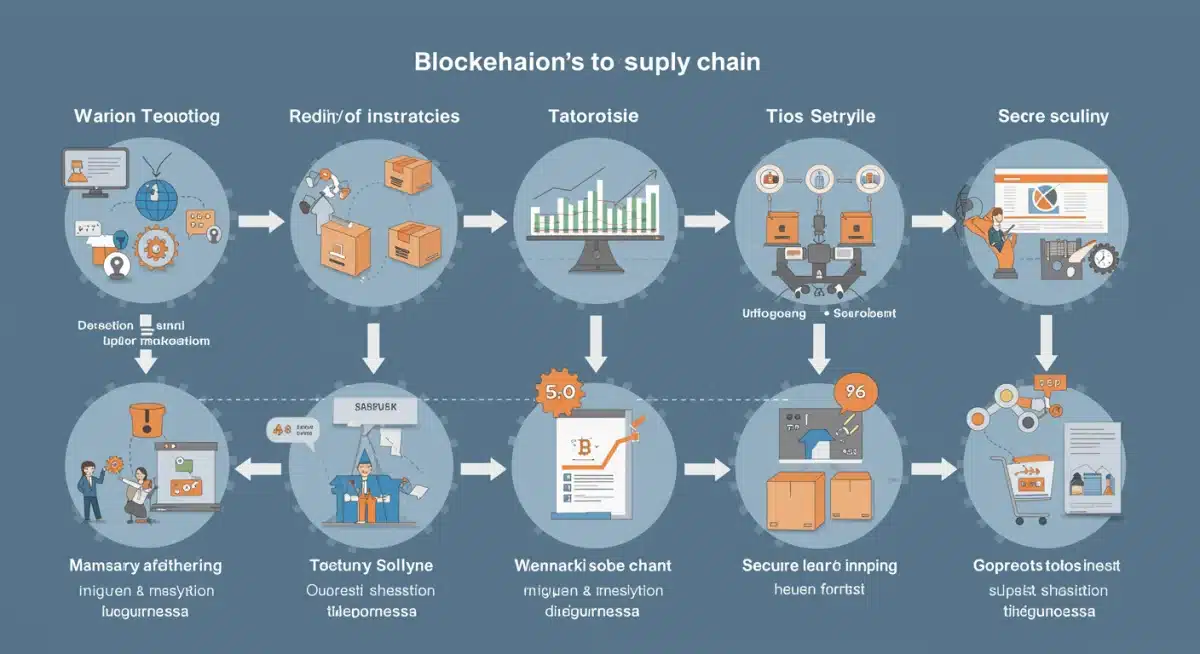
The true power of blockchain for supply chain transparency is amplified when combined with advanced data analytics and artificial intelligence (AI). While blockchain provides the immutable, verifiable data foundation, AI and analytics tools can extract meaningful insights from this data, turning raw information into actionable intelligence. This synergy enables predictive capabilities, optimized decision-making, and proactive problem-solving within the retail supply chain.
By leveraging AI to analyze blockchain data, retailers can identify patterns, predict potential disruptions, and optimize various aspects of their operations, from inventory management to demand forecasting. This integration moves beyond mere transparency, creating a truly intelligent and adaptive supply chain.
Predictive analytics for supply chain optimization
With a wealth of secure and verified data from the blockchain, AI-powered predictive analytics can forecast demand more accurately, optimize routing, and anticipate potential supply chain bottlenecks. This proactive approach minimizes risks, reduces waste, and ensures products reach consumers efficiently.
For example, AI can analyze historical blockchain data on product movement, weather patterns, and market trends to predict peak demand periods for certain products. This allows retailers to adjust inventory levels and logistics strategies in advance, avoiding stockouts or overstocking. The result is a more agile and cost-effective supply chain that responds dynamically to market conditions.
Enhanced fraud detection with AI
While blockchain makes data tamper-proof, AI significantly enhances fraud detection capabilities by analyzing patterns and anomalies within the blockchain’s transaction records. AI algorithms can identify suspicious activities or deviations from normal supply chain behavior that might indicate fraudulent attempts, even subtle ones that human review might miss.
- Anomaly detection: Identifying unusual transaction volumes or locations.
- Pattern recognition: Spotting recurring fraudulent schemes.
- Risk scoring: Assigning risk levels to suppliers or product batches.
- Real-time alerts: Notifying stakeholders of potential fraud as it happens.
This combination creates a formidable defense against fraud. Blockchain ensures data integrity, while AI acts as an intelligent watchdog, constantly monitoring for threats. This proactive detection mechanism can significantly reduce financial losses and protect brand reputation by catching fraudulent activities before they escalate.
In conclusion, integrating data analytics and AI with blockchain transforms supply chain transparency into intelligent action. This powerful synergy will enable US retailers to not only verify product journeys but also to predict, optimize, and secure their operations more effectively, driving innovation and competitive advantage.
| Key Aspect | Brief Description |
|---|---|
| Fraud Reduction Target | Aiming for a 5% reduction in fraud within US retail by 2025 through verifiable product tracking. |
| Enhanced Consumer Trust | Building confidence by providing immutable, accessible product journey data from source to shelf. |
| Key Blockchain Features | Leverages immutable ledgers, smart contracts, and secure authentication for unparalleled transparency. |
| Integration Synergy | Combines with AI and data analytics for predictive insights and advanced fraud detection. |
Frequently asked questions about blockchain in retail
It’s a system using decentralized, immutable ledgers to record every step of a product’s journey from origin to consumer. This ensures verifiable data, enhancing trust and preventing fraud by providing a transparent and tamper-proof history of goods.
By creating an unchangeable record of product movements and authenticity, blockchain makes it extremely difficult for counterfeit goods or fraudulent activities to go undetected. It enables precise traceability and provides digital authentication for every item.
Smart contracts are self-executing agreements coded onto the blockchain. In retail, they automate processes like payments upon delivery, compliance checks, and inventory management, significantly improving efficiency and reducing manual errors and delays.
By 2025, consumers will increasingly be able to verify product origins, ethical sourcing, and authenticity directly through blockchain-powered applications. This verifiable transparency builds stronger confidence in brands and fosters greater loyalty, aligning with consumer values.
Key challenges include integrating blockchain with existing legacy IT systems, addressing concerns about data privacy and scalability for large transaction volumes, and achieving industry-wide standardization. Strategic planning and collaboration are essential for successful implementation.
Conclusion
The journey towards a more transparent, secure, and trustworthy retail landscape in the US is well underway, with blockchain for supply chain transparency leading the charge. The ambitious goals of reducing fraud by 5% and significantly enhancing consumer trust by 2025 are not merely aspirational but are becoming increasingly achievable through the strategic adoption of this transformative technology. By providing an immutable and verifiable record of every product’s journey, blockchain empowers retailers to combat counterfeiting, streamline operations, and build unparalleled confidence with their customer base. While implementation presents its own set of challenges, the long-term benefits of increased efficiency, reduced costs, and a strengthened brand reputation make blockchain an indispensable tool for the future of US retail. As the industry continues to evolve, those who embrace this technological revolution will undoubtedly emerge as leaders, shaping a new era of accountability and consumer-centric commerce.