US Consumer Spending Shifts: Q1 2025 Retail Trends Decoded
Q1 2025 US consumer spending shifts will be shaped by a complex interplay of economic resilience, inflationary pressures, and evolving consumer values, presenting both challenges and opportunities for retailers navigating dynamic market conditions.
Understanding the intricate dynamics of US consumer spending shifts is paramount for retailers aiming to thrive in the competitive landscape of Q1 2025. This period is anticipated to bring forth a confluence of economic factors, technological advancements, and evolving consumer behaviors that will profoundly impact purchasing decisions and retail strategies across the nation. Staying ahead requires a keen eye on these emerging trends and a proactive approach to adaptation.
Economic indicators shaping Q1 2025 spending
The economic landscape heading into Q1 2025 will be a critical determinant of consumer behavior. Key indicators such as inflation, employment rates, and interest rates will collectively influence household budgets and discretionary spending. Retailers must closely monitor these macroeconomic forces to anticipate shifts in demand and adjust their inventory and pricing strategies accordingly.
While inflation has shown signs of moderation, its persistent presence continues to erode purchasing power. Consumers are becoming more discerning, prioritizing value and necessity over impulse purchases. The labor market, though still robust, is expected to see some adjustments, which could impact wage growth and consumer confidence. Interest rates, while potentially stabilizing, will still affect borrowing costs for major purchases, steering some spending towards more immediate needs.
Inflationary pressures and consumer resilience
- Budget-conscious choices: Consumers are likely to continue seeking promotions, discounts, and private-label alternatives to stretch their dollars.
- Prioritization of essentials: Spending on non-discretionary items such as groceries, utilities, and healthcare will remain stable, potentially at the expense of luxury goods or entertainment.
- Delayed gratification: Larger purchases, particularly those requiring financing, may be postponed as consumers assess economic stability.
The resilience of the US consumer, despite economic headwinds, is a testament to their adaptability. However, this resilience is often accompanied by a more cautious approach to spending. Retailers who can offer clear value propositions and cater to evolving budget constraints will be better positioned to capture market share.
Technological advancements influencing retail experiences
Technology continues to revolutionize the retail sector, with Q1 2025 expected to see further integration of digital tools and artificial intelligence (AI) into the shopping journey. From personalized recommendations to seamless omnichannel experiences, technology is not just enhancing efficiency but fundamentally reshaping how consumers interact with brands. Retailers who embrace these innovations will unlock new avenues for engagement and sales.
The proliferation of mobile commerce and social media platforms means that the path to purchase is no longer linear. Consumers expect instant access to product information, peer reviews, and real-time customer support. AI-powered analytics are enabling retailers to understand individual preferences at an unprecedented level, leading to highly targeted marketing campaigns and product offerings.
The rise of AI in personalized shopping
- Predictive analytics: AI algorithms will anticipate consumer needs and preferences, leading to highly relevant product suggestions.
- Virtual try-on experiences: Augmented reality (AR) and virtual reality (VR) will offer immersive shopping experiences, particularly in fashion and home goods.
- Automated customer service: Chatbots and AI assistants will provide instant support, resolving queries and guiding customers through their purchases.
The integration of these technologies creates a more personalized and efficient shopping experience, fostering greater customer loyalty and driving higher conversion rates. Retailers must invest in these areas to remain competitive and meet the evolving expectations of the modern consumer.
Evolving demographic trends and purchasing power
Demographic shifts are continuously reshaping the consumer base, and Q1 2025 will highlight the growing influence of younger generations, particularly Gen Z and Millennials. These cohorts possess distinct values, spending habits, and digital fluency that demand tailored retail approaches. Understanding their motivations and preferences is crucial for effective market penetration.
Gen Z, known for their social consciousness and digital native status, prioritizes authenticity, sustainability, and ethical brand practices. Millennials, now in their prime earning years, are focused on experiences, convenience, and technology-driven solutions. Both groups are highly influenced by social media and peer recommendations, making influencer marketing and community building essential.
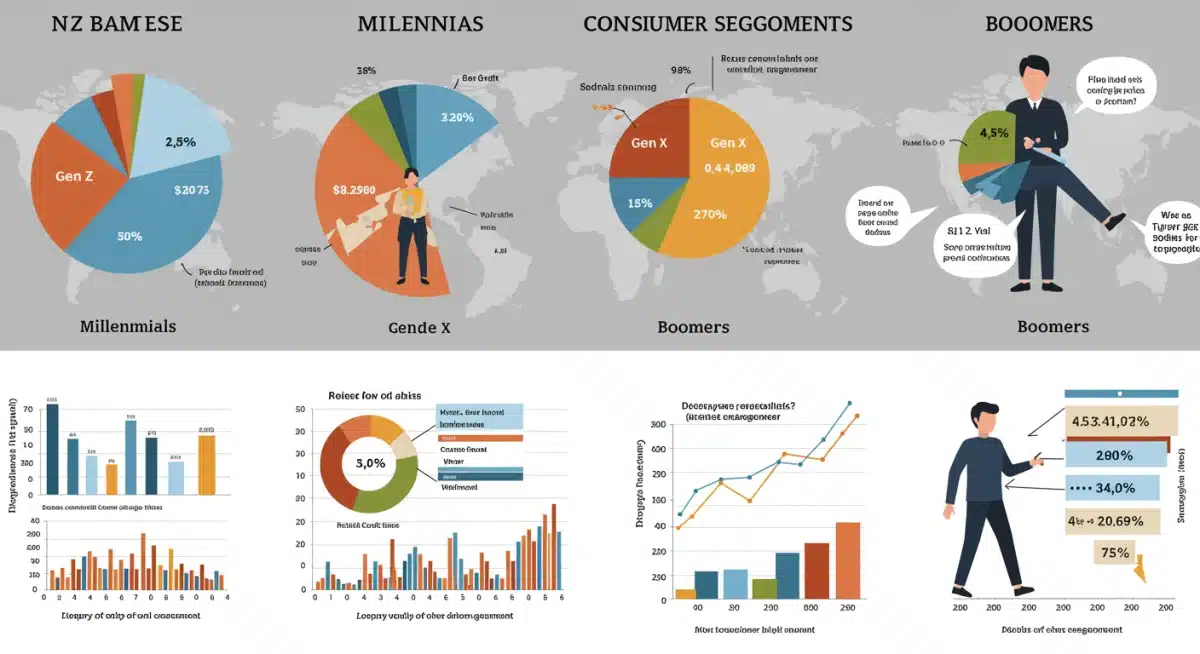
Generational spending priorities
- Gen Z: Values sustainability, brand authenticity, and digital-first shopping.
- Millennials: Prioritize experiences, convenience, and seamless omnichannel integration.
- Gen X: Seek value, quality, and trusted brands, often balancing family needs with personal indulgences.
- Baby Boomers: Focus on health, comfort, and established brand loyalty, with increasing adoption of online shopping.
Retailers must segment their marketing efforts and product development to resonate with these diverse demographic groups. A one-size-fits-all approach will likely fall short, emphasizing the need for nuanced strategies that acknowledge unique generational nuances.
Sustainability and ethical consumption on the rise
The demand for sustainable and ethically sourced products continues to grow, becoming a significant driver of consumer choice in Q1 2025. Consumers are increasingly aware of the environmental and social impact of their purchases, and they expect brands to reflect these values. Retailers who demonstrate a genuine commitment to sustainability will gain a competitive edge and foster stronger brand loyalty.
This trend extends beyond product ingredients to encompass supply chain transparency, fair labor practices, and eco-friendly packaging. Brands that can communicate their sustainability efforts clearly and authentically will resonate deeply with conscious consumers. Conversely, those that fail to address these concerns risk alienating a growing segment of the market.
Key aspects of conscious consumption
- Eco-friendly products: Demand for items made from recycled materials, with minimal environmental footprint.
- Ethical sourcing: Preference for brands that ensure fair wages and safe working conditions throughout their supply chain.
- Transparency: Consumers want to know the origin of their products and the practices of the companies they support.
Embracing sustainability is no longer just a marketing tactic; it is a fundamental shift in consumer expectations. Retailers must integrate these principles into their core business operations to meet the evolving demands of the market.
The omnichannel imperative and seamless experiences
The distinction between online and in-store shopping continues to blur, making a seamless omnichannel experience an absolute imperative for retailers in Q1 2025. Consumers expect flexibility and consistency across all touchpoints, whether they are browsing on a mobile app, picking up an order in-store, or interacting with customer service online. A disjointed experience can quickly lead to frustration and lost sales.
An effective omnichannel strategy integrates inventory management, customer data, and marketing efforts across all channels. This allows for personalized communication, efficient order fulfillment, and a cohesive brand narrative. The goal is to provide a frictionless journey that adapts to the consumer’s preferred method of interaction at any given moment.
Components of a strong omnichannel strategy
- Integrated inventory: Real-time visibility of stock across all physical and digital locations.
- Personalized customer journey: Tailored recommendations and communications based on past interactions across channels.
- Flexible fulfillment options: Offering buy online, pick up in-store (BOPIS), ship from store, and local delivery.
Retailers who excel at omnichannel integration will not only enhance customer satisfaction but also gain valuable insights into purchasing patterns and preferences, driving future strategic decisions.
Anticipating shifts in discretionary spending categories
As Q1 2025 unfolds, retailers will observe notable shifts in how consumers allocate their discretionary income. While essential spending remains relatively stable, categories like travel, entertainment, and certain luxury goods may experience fluctuations based on economic sentiment and evolving lifestyle choices. Understanding these potential shifts is crucial for optimizing product assortments and marketing campaigns.
The post-pandemic desire for experiences over material possessions could continue to influence spending patterns. However, economic pressures might lead some consumers to scale back on high-end experiences, opting for more affordable leisure activities or at-home entertainment. The home improvement sector, which saw a boom during the pandemic, may also see adjustments as priorities shift.
Consumer spending category outlook
- Travel and hospitality: Continued demand, but potentially with a focus on value and domestic destinations.
- Home goods and decor: Possible moderation after recent surges, with a focus on practical upgrades.
- Health and wellness: Sustained growth in products and services related to well-being and self-care.
- Luxury goods: Highly sensitive to economic confidence, potentially seeing polarized spending between top-tier and more accessible luxury.
Retailers must be agile in their response to these category shifts, adapting product offerings and promotional efforts to align with consumer priorities and economic realities. This flexibility will be key to navigating a dynamic market.
| Key Trend | Retailer Implication |
|---|---|
| Inflationary Pressures | Focus on value, promotions, and private label offerings to attract budget-conscious consumers. |
| Digital & AI Integration | Invest in personalized experiences, predictive analytics, and seamless online-to-offline transitions. |
| Generational Shifts | Tailor marketing and product development to Gen Z and Millennial values like sustainability and authenticity. |
| Sustainability Demand | Emphasize ethical sourcing, eco-friendly products, and transparent supply chains to build trust. |
Frequently asked questions about Q1 2025 US consumer spending
Inflation is expected to continue influencing consumer behavior, prompting a focus on value, promotions, and essential goods. Discretionary spending may be more cautious, with consumers prioritizing needs over wants and seeking out budget-friendly alternatives and brands offering clear value propositions.
Technology, particularly AI and mobile commerce, will be pivotal in enhancing personalized shopping experiences, streamlining operations, and fostering customer engagement. Retailers will leverage predictive analytics, virtual try-ons, and automated customer service to create seamless omnichannel journeys and meet evolving digital expectations.
Gen Z and Millennials are anticipated to be significant drivers of consumer spending in Q1 2025. Their purchasing decisions will be influenced by values such as sustainability, authenticity, and convenience, alongside a strong preference for digital-first interactions and technology-driven retail experiences.
Sustainability is increasingly crucial, with consumers expecting transparency and ethical practices from brands. Retailers committed to eco-friendly products, responsible sourcing, and sustainable operations will resonate more deeply with conscious consumers, boosting brand loyalty and competitive advantage in the market.
The omnichannel imperative means providing a consistent and seamless customer experience across all retail touchpoints, both online and offline. This includes integrated inventory, personalized interactions, and flexible fulfillment options like BOPIS (buy online, pick up in-store) to meet diverse consumer preferences and enhance satisfaction.
Conclusion
The landscape of US consumer spending in Q1 2025 is set to be a dynamic and complex environment, shaped by a confluence of economic indicators, technological advancements, and evolving consumer values. Retailers who proactively analyze these shifts, embrace innovation, and prioritize customer-centric strategies will be best positioned for success. Adaptability, a commitment to sustainability, and a seamless omnichannel approach will not only meet consumer expectations but also foster enduring brand loyalty in an ever-changing market.