Personalized Digital Signage: Boosting US Retail Engagement by 12% in 2025
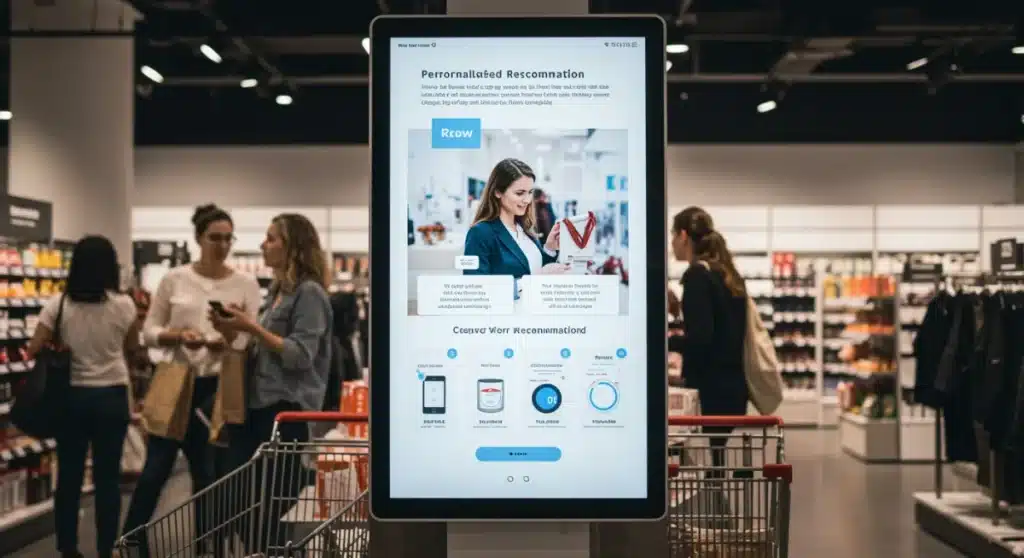
Personalized digital signage is poised to revolutionize US retail, projecting a significant 12% increase in in-store promotions engagement by 2025 by delivering tailored content directly to consumers, enhancing the overall shopping experience and driving measurable sales growth.
In the rapidly evolving landscape of modern commerce, the ability to capture and retain customer attention is paramount. Personalized digital signage is emerging as a game-changer, promising to significantly increase in-store promotions engagement by an estimated 12% for US retail in 2025. This innovative technology is not just about displaying ads; it’s about creating dynamic, relevant, and engaging experiences that resonate deeply with individual shoppers, transforming the traditional retail environment into an interactive, data-driven space.
The evolution of digital signage in retail
Digital signage has transformed significantly from static displays to dynamic, interactive platforms. Initially, these screens simply replaced printed posters, offering the convenience of remote content updates. However, the true revolution began with the integration of data analytics and artificial intelligence, enabling screens to adapt and personalize content in real-time.
This evolution is critical for retailers aiming to stay competitive in a market increasingly dominated by online experiences. Shoppers now expect a seamless, personalized journey, whether they are browsing online or walking through a physical store. Digital signage, when used strategically, can bridge this gap, bringing the best of e-commerce personalization into the brick-and-mortar space.
From static to dynamic: a paradigm shift
The early days of digital signage were marked by basic content scheduling. Retailers would program displays to show promotions at specific times, often based on general assumptions about shopper behavior. While an improvement over static signs, it lacked the agility needed to truly engage a diverse customer base.
- Scheduled content: Basic programming based on time of day or week.
- Limited interactivity: Primarily one-way communication from screen to customer.
- Generic messaging: Broad appeals rather than targeted promotions.
Today, advanced digital signage leverages sensors, cameras, and data feeds to understand who is looking at the screen and what might appeal to them. This real-time adaptation allows for a much more responsive and effective communication strategy, making every impression count.
In conclusion, the journey of digital signage from simple electronic billboards to sophisticated personalized engagement tools highlights a fundamental shift in retail strategy. This move towards dynamic and data-driven displays is not just about technology; it’s about understanding and responding to the modern consumer’s desire for relevance and individuality.
Understanding personalized digital signage
Personalized digital signage goes beyond merely displaying information; it tailors content to individual preferences, demographics, and real-time behaviors. This level of customization is achieved through a combination of advanced technologies, including AI, machine learning, and sensor-based data collection. The goal is to present messaging that feels directly relevant to the shopper, creating a stronger connection and encouraging interaction.
Imagine walking into a store and seeing a display that highlights items you’ve previously viewed online, or offers a discount on a product category you frequently purchase. This is the power of personalization, transforming passive viewing into active engagement by making the content speak directly to the customer’s needs and desires.
Key technologies enabling personalization
The backbone of effective personalized digital signage lies in its technological infrastructure. Without robust data collection and processing capabilities, true personalization would be impossible. These technologies work in concert to deliver a seamless and relevant experience.
- AI and machine learning: Analyze shopper data to predict preferences and tailor recommendations.
- Facial recognition and demographic analysis: Anonymously identify age, gender, and even mood to adjust content.
- Proximity sensors and beacons: Detect nearby smartphones to deliver location-specific promotions.
- Integration with CRM and loyalty programs: Access purchase history and loyalty data for highly targeted offers.
The integration of these technologies allows retailers to create a highly responsive environment. For example, a screen might display promotions for men’s fashion when a male shopper approaches, then switch to women’s accessories when a female shopper is detected. This dynamic adaptation ensures that the displayed content is always as relevant as possible.
Ultimately, personalized digital signage is about creating a dialogue with the customer. By understanding their implicit and explicit preferences, retailers can deliver messages that resonate, moving beyond generic advertising to create truly engaging and effective in-store promotions.
The impact on in-store promotions engagement
The shift towards personalized digital signage is projected to have a profound impact on how consumers interact with in-store promotions. By making advertisements more relevant and timely, retailers can significantly boost engagement, leading to increased foot traffic to specific departments, higher conversion rates, and ultimately, greater sales. The 12% increase projected for US retail in 2025 underscores the growing recognition of its effectiveness.
This enhanced engagement stems from the psychological principle that people are more likely to pay attention to information that pertains directly to them. Generic promotions often get lost in the noise, but a personalized offer cuts through, capturing attention and motivating action. It transforms a passive shopping trip into a series of meaningful interactions.
Driving measurable results in retail
The benefits of personalized digital signage are not merely anecdotal; they are quantifiable. Retailers are seeing concrete improvements in various key performance indicators (KPIs) when implementing these advanced systems. Measuring these impacts is crucial for demonstrating ROI and refining strategies.
- Increased dwell time: Shoppers spend more time interacting with personalized displays.
- Higher conversion rates: Relevant promotions lead to more immediate purchases.
- Enhanced brand loyalty: A personalized experience fosters a stronger connection with the brand.
- Reduced perceived wait times: Engaging content can make waiting in line feel shorter.
Consider a scenario where a digital screen in a grocery store recommends recipes based on items a customer has in their cart, or offers a discount on a complementary product. This kind of contextual, personalized promotion is far more effective than a general advertisement for a product the customer may have no interest in. It moves beyond simple advertising to become a helpful shopping assistant.
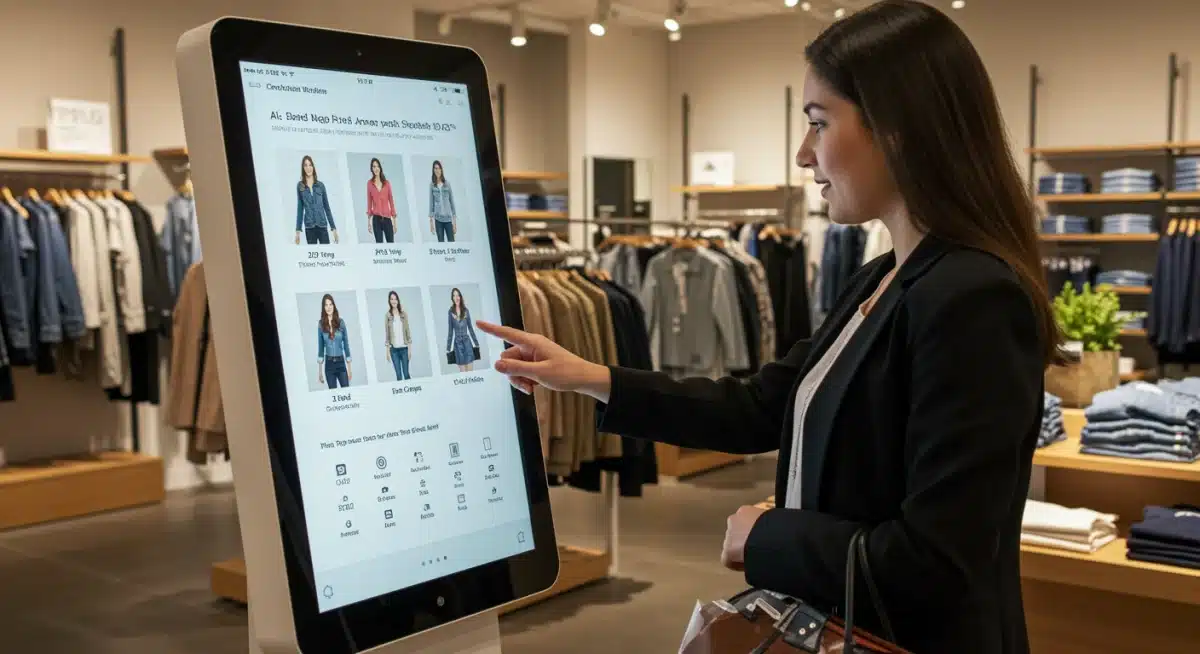
In summary, personalized digital signage is a powerful tool for elevating in-store promotions. By tapping into individual shopper data and delivering tailored content, retailers can create a more engaging, efficient, and ultimately more profitable shopping environment, directly contributing to the projected surge in engagement.
Implementation strategies for US retailers
For US retailers looking to capitalize on the benefits of personalized digital signage, successful implementation requires a strategic approach that considers technology, data integration, and customer experience. It’s not enough to simply install screens; the real value comes from how these screens are integrated into the broader retail ecosystem and how their content is managed and optimized.
Developing a clear roadmap for deployment, from pilot programs to full-scale rollout, is essential. This includes selecting the right hardware and software, ensuring seamless data flow, and training staff to understand and leverage the new technology effectively. A phased approach often allows for iterative improvements and minimizes disruption.
Key considerations for successful deployment
Implementing a personalized digital signage system involves more than just purchasing equipment. Retailers must address several critical factors to ensure the technology delivers on its promise of increased engagement and ROI. These considerations span technical, operational, and strategic domains.
- Data privacy and security: Adhering to regulations like CCPA and building customer trust is paramount.
- Content management system (CMS): A robust CMS is needed to create, schedule, and dynamically update personalized content.
- Analytics and reporting: Tools to measure campaign effectiveness and gather insights for continuous optimization.
- Scalability: Choosing a system that can grow and adapt as the retail business expands.
- Staff training: Ensuring employees understand how to interact with and troubleshoot the technology.
One effective strategy is to start with high-traffic areas or specific product categories where personalization can have the most immediate impact. Collecting feedback from both customers and staff during these initial phases can provide invaluable insights for refinement before a wider rollout. The focus should always remain on enhancing the customer journey, not just on showcasing technology.
Ultimately, successful implementation of personalized digital signage hinges on a holistic strategy that combines cutting-edge technology with a deep understanding of customer needs and business objectives. This integrated approach ensures that the investment yields significant returns in terms of engagement and sales.
Measuring success and ROI
While the promise of personalized digital signage is compelling, retailers must establish clear metrics to measure its success and justify the investment. Demonstrating a positive return on investment (ROI) is crucial for securing continued support and scaling these initiatives. This involves tracking various performance indicators and correlating them with sales data and customer behavior.
Simply installing screens is not enough; the true value lies in the actionable insights derived from their performance. Retailers need to move beyond vanity metrics and focus on indicators that directly reflect business outcomes, demonstrating how personalized content translates into tangible financial gains.
Key performance indicators for digital signage
To accurately assess the effectiveness of personalized digital signage, retailers should monitor a range of KPIs. These metrics provide a comprehensive view of how the technology is impacting customer engagement, sales, and operational efficiency. A dashboard approach can help visualize these trends.
- Engagement rates: How many shoppers interact with the screens or pause to view content.
- Conversion rates: The percentage of viewers who make a purchase related to the displayed promotion.
- Average transaction value (ATV): Impact on the size of customer purchases due to personalized upsells/cross-sells.
- Foot traffic patterns: Changes in movement within the store influenced by signage.
- Customer feedback: Surveys or direct input on the perceived relevance and usefulness of the displays.
For example, A/B testing different personalized messages on screens in similar store layouts can provide valuable data on which content strategies are most effective. By tracking sales of promoted items before and after implementation, retailers can quantify the direct impact of personalized promotions. This data-driven approach allows for continuous optimization, ensuring that the digital signage system is always delivering maximum value.
In essence, measuring the success of personalized digital signage is about connecting the dots between technology, customer behavior, and financial results. By rigorously tracking relevant KPIs, US retailers can not only validate their investment but also refine their strategies to achieve even greater engagement and profitability.
Future trends and outlook for 2025
Looking ahead to 2025, the landscape of personalized digital signage is set for even greater innovation and integration. The projected 12% increase in in-store promotions engagement is just the beginning; advancements in AI, IoT, and augmented reality (AR) will further enhance the capabilities and impact of these dynamic displays. Retailers will increasingly leverage these technologies to create hyper-personalized, immersive shopping experiences that blur the lines between the physical and digital worlds.
The future will see digital signage becoming an even more integral part of the smart store ecosystem, working in concert with other technologies to anticipate customer needs and deliver unparalleled convenience and relevance. This evolution signifies a move towards truly intelligent retail environments.
Emerging technologies shaping the future
Several cutting-edge technologies are poised to transform personalized digital signage, pushing the boundaries of what’s possible in retail engagement. These innovations will enable more sophisticated interactions and richer content delivery, making in-store promotions more compelling than ever before.
- Generative AI for content creation: Automatically generating tailored ad copy and visuals in real-time based on customer data.
- Augmented reality (AR) integration: Allowing customers to virtually try on clothes or see products in their home environment via digital screens.
- Voice and gesture control: Enabling hands-free interaction with displays for a more intuitive experience.
- Predictive analytics: Using advanced algorithms to anticipate future purchasing behaviors and proactively display relevant promotions.
Imagine a digital sign that not only knows your preferences but can also engage you in a conversation, or project a virtual representation of a product directly onto a real shelf. These advancements are not distant sci-fi concepts but are rapidly becoming commercial realities, promising to redefine the retail experience. The ongoing convergence of online and offline data will also play a crucial role, allowing for a truly omnichannel personalized journey.
In conclusion, the future of personalized digital signage in US retail is bright and dynamic. By embracing emerging technologies and continuously innovating, retailers can look forward to not only meeting but exceeding consumer expectations, driving engagement and sales well beyond the 2025 projection.
| Key Aspect | Description |
|---|---|
| Personalization Power | Tailoring content to individual shopper preferences using AI and data analytics. |
| Engagement Boost | Projected 12% increase in in-store promotion engagement for US retail by 2025. |
| Key Technologies | AI, machine learning, sensors, and CRM integration drive dynamic content. |
| Future Outlook | Integration with AR, generative AI, and voice control for immersive experiences. |
Frequently asked questions about personalized digital signage
Personalized digital signage uses data, AI, and sensors to display highly relevant content and promotions to individual shoppers in real-time. It moves beyond generic ads to offer tailored messages that resonate with specific customer preferences and behaviors, enhancing the in-store experience.
By delivering content that is specific to a shopper’s interests or past purchases, personalized digital signage captures more attention. This relevance fosters a stronger connection, making promotions more appealing and increasing the likelihood of interaction and purchase, leading to higher engagement.
It’s powered by a combination of technologies including artificial intelligence (AI) for data analysis, machine learning for pattern recognition, proximity sensors, facial recognition (often anonymized), and integration with customer relationship management (CRM) systems and loyalty programs.
US retailers can expect benefits such as a projected 12% increase in in-store promotion engagement, higher conversion rates, improved average transaction value, better customer loyalty, and a more dynamic and responsive retail environment that adapts to shopper needs.
Yes, data privacy is a critical consideration. Retailers must ensure compliance with regulations like CCPA and be transparent with customers about data collection. Many systems use anonymized data and focus on aggregate trends rather than individual identification to mitigate privacy risks.
Conclusion
The journey of personalized digital signage from a nascent technology to a pivotal driver of retail engagement is undeniable. As US retailers navigate the complexities of the modern marketplace, the ability to deliver hyper-relevant, dynamic content directly to customers in-store represents a significant competitive advantage. The projected 12% increase in in-store promotions engagement by 2025 is not merely an optimistic forecast; it reflects a strategic imperative for businesses seeking to thrive. By embracing advanced AI, sophisticated data analytics, and seamless integration, retailers can transform their physical spaces into intelligent, responsive environments that not only capture attention but also foster deeper customer connections and drive substantial sales growth. The future of retail is personal, and digital signage stands at the forefront of this transformative wave.