2025 US Consumer Confidence Index: Commerce Implications

The 2025 US Consumer Confidence Index is a vital economic barometer reflecting household financial health and spending intentions, directly impacting commercial strategies and market stability across the United States.
Understanding the 2025 US Consumer Confidence Index: Implications for Commerce is paramount for businesses, policymakers, and consumers alike. This crucial economic indicator offers a snapshot of the nation’s economic health from the perspective of its citizens, influencing everything from daily purchasing decisions to long-term investment strategies. What does this index truly reveal about the year ahead, and how should commercial entities adapt?
Decoding the 2025 US Consumer Confidence Index
The Consumer Confidence Index (CCI) serves as a critical barometer, measuring how optimistic or pessimistic consumers are regarding the state of the economy, their personal financial situations, and their spending intentions. For 2025, several factors are anticipated to shape this index, offering both opportunities and challenges for the commercial landscape. Understanding these underlying components is the first step toward strategic planning.
Economists and market analysts meticulously track the CCI because it often foreshadows future consumer spending, which is a significant driver of economic growth. A high index suggests consumers are confident about their income and job prospects, making them more likely to spend on goods and services. Conversely, a low index indicates caution, leading to reduced spending and potential economic contraction. The 2025 projections are particularly interesting as they navigate the lingering effects of global events and emerging economic trends.
Key Components Influencing 2025 Confidence
- Employment Outlook: The stability and growth of the job market remain a primary determinant of consumer sentiment. Low unemployment rates and rising wages typically bolster confidence.
- Inflationary Pressures: The purchasing power of consumers is directly affected by inflation. If prices for essential goods and services continue to rise disproportionately to wages, confidence may wane.
- Interest Rates: Changes in interest rates by the Federal Reserve influence borrowing costs for everything from mortgages to credit cards, impacting consumer spending and investment.
- Geopolitical Stability: Global events and political uncertainties can significantly sway consumer perceptions of economic stability and future prospects.
In conclusion, the 2025 US Consumer Confidence Index is a complex indicator, influenced by a confluence of economic and geopolitical factors. Businesses must pay close attention to these components to anticipate shifts in consumer behavior and adjust their strategies accordingly. A nuanced understanding allows for proactive measures rather than reactive responses in a dynamic market.
Projected Economic Landscape and Consumer Sentiment in 2025
As we look ahead to 2025, the economic landscape is expected to be characterized by a mix of growth and ongoing adjustments. Consumer sentiment will undoubtedly reflect these broader economic conditions, shaping purchasing patterns and overall market activity. Forecasters are evaluating various scenarios, from continued moderate growth to potential slowdowns, each with distinct implications for the average American household.
The resilience of the US economy has been tested repeatedly in recent years, and 2025 will likely see a continuation of adaptive strategies from both consumers and businesses. Data suggests a potential stabilization of interest rates, which could alleviate some financial pressure on households. However, the labor market’s ability to maintain its strength will be crucial in sustaining positive consumer outlooks.
Anticipated Economic Trends
- Steady Wage Growth: Continued, albeit perhaps slower, wage growth is expected to support consumer purchasing power.
- Moderating Inflation: While still a concern, inflation is projected to moderate, potentially bringing relief to household budgets.
- Technological Advancements: Rapid technological adoption could lead to increased productivity and new job opportunities, positively impacting long-term confidence.
The interplay between these trends will define the economic environment in which consumers operate. Businesses should prepare for a scenario where consumers remain value-conscious but are also willing to spend on products and services that genuinely enhance their lives or offer significant convenience. This means an emphasis on quality, efficiency, and perceived value will be more important than ever.
In summary, 2025’s economic landscape is poised to influence consumer sentiment significantly. Businesses need to monitor these trends closely to understand the context in which their customers are making financial decisions, allowing for more targeted and effective commercial strategies.
Direct Impact on Retail and E-commerce
The 2025 US Consumer Confidence Index holds significant sway over the retail and e-commerce sectors. When confidence is high, consumers are more inclined to make discretionary purchases, including big-ticket items and luxury goods. Conversely, a dip in confidence often leads to a tightening of belts, with consumers prioritizing essential spending and seeking out value. This directly translates into shifts in sales volumes, inventory management, and marketing strategies for retailers.
For e-commerce, the implications are particularly pronounced. Online retailers benefit from the ease of comparison shopping and the ability to reach a broader audience, but they are also highly susceptible to changes in consumer spending habits. A confident consumer might be more open to trying new online brands or making impulse purchases, while a cautious consumer will meticulously research and compare prices before committing.
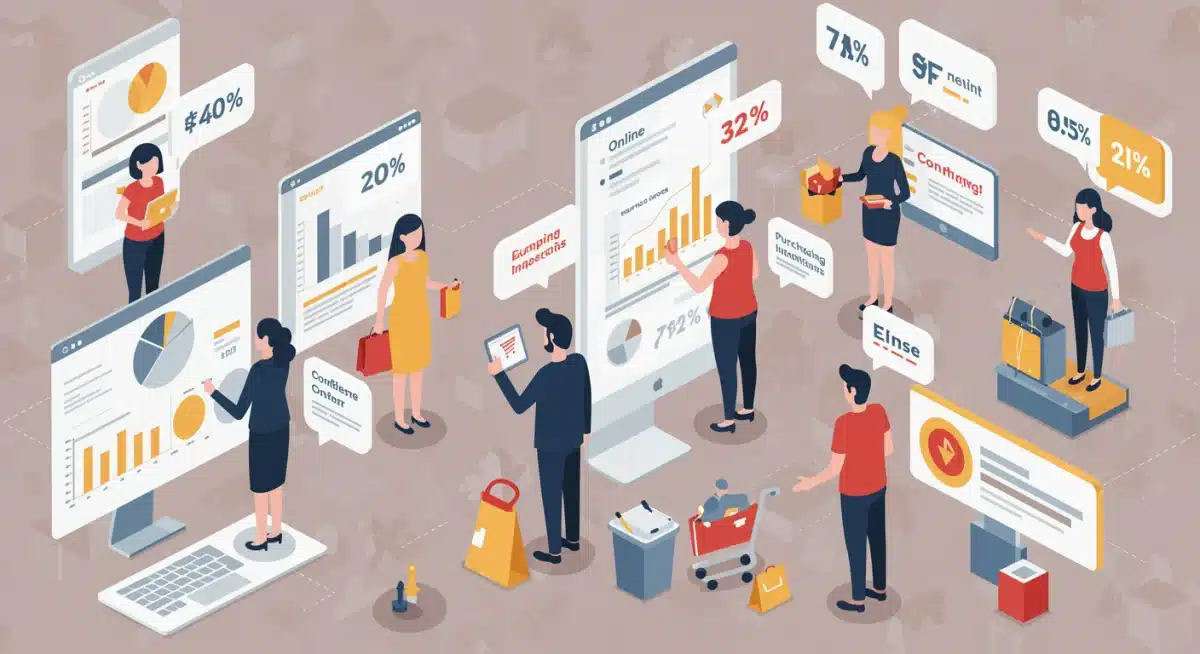
Retail Strategies for Varying Confidence Levels
- High Confidence: Focus on premium products, experiential shopping, brand loyalty programs, and innovative marketing campaigns.
- Moderate Confidence: Emphasize value propositions, promotions, flexible payment options, and customer retention efforts.
- Low Confidence: Prioritize essential goods, cost-saving solutions, clear messaging on affordability, and efficient supply chains.
Retailers, both brick-and-mortar and online, must develop agile strategies that can quickly adapt to fluctuations in consumer sentiment. This includes leveraging data analytics to predict spending shifts, optimizing inventory to meet demand, and personalizing marketing messages to resonate with consumers’ current financial outlooks. The ability to pivot quickly will be a key differentiator in 2025.
Ultimately, the retail and e-commerce sectors are on the front lines of consumer confidence. Their success in 2025 will hinge on their ability to interpret the CCI accurately and respond with flexible, customer-centric approaches that align with prevailing consumer attitudes towards spending.
Implications for the Service and Hospitality Industries
Beyond traditional retail, the service and hospitality industries are also profoundly affected by the 2025 US Consumer Confidence Index: Implications for Commerce. These sectors, encompassing everything from travel and tourism to dining and entertainment, rely heavily on discretionary spending. When consumers feel financially secure, they are more likely to spend on experiences, leisure activities, and services that improve their quality of life.
Conversely, during periods of low confidence, these industries often experience a significant downturn as consumers cut back on non-essential expenditures. For 2025, the outlook for these sectors will be closely tied to the perceived stability of personal finances and the broader economic environment. Businesses in these areas need to understand how to attract and retain customers regardless of the prevailing sentiment.
The travel industry, for instance, often sees bookings fluctuate based on consumer comfort with their financial future. Airlines, hotels, and tour operators must be prepared to adjust pricing, offer flexible booking options, and highlight unique value propositions to appeal to varying levels of consumer confidence. Similarly, restaurants and entertainment venues will need to tailor their offerings to match consumer willingness to spend on leisure.
Strategies for Service and Hospitality in 2025
- Value-Added Services: Offer bundled packages, loyalty rewards, and exclusive experiences to enhance perceived value.
- Flexible Offerings: Provide options for different budget levels, from premium to more economical choices, to capture a wider audience.
- Health and Safety Assurance: Continue to prioritize and communicate robust health and safety protocols to build trust and encourage patronage.
- Personalized Experiences: Leverage data to offer tailored recommendations and services, fostering a sense of individual attention.
The ability to innovate and adapt will be crucial for service and hospitality businesses in 2025. By understanding the nuances of consumer confidence, these industries can develop more resilient business models and continue to thrive, even if economic winds shift. Focus on creating memorable experiences that justify consumer spending.
Financial Services and Investment Strategies in a Confident Market
The 2025 US Consumer Confidence Index also casts a long shadow over the financial services sector and individual investment strategies. A confident consumer is often a more active participant in financial markets, more inclined to save, invest, and take on new financial products. This impacts everything from banking and lending to wealth management and insurance.
When confidence is high, consumers may be more willing to take out loans for major purchases like homes or cars, contributing to growth in the lending sector. They might also be more inclined to invest in stocks, bonds, or retirement accounts, benefiting wealth management firms. Conversely, a lack of confidence can lead to a more conservative approach, with consumers prioritizing debt reduction and liquid savings over investments.
Financial institutions need to be acutely aware of these shifts to tailor their product offerings and advisory services effectively. For example, if consumers are feeling optimistic about their long-term financial prospects, there might be increased demand for complex investment products or long-term financial planning. If caution prevails, simpler, more secure savings options might gain popularity.
Adapting Financial Strategies for 2025
In 2025, financial advisors will need to focus on personalized guidance, helping clients navigate their financial goals within the context of prevailing consumer sentiment. This includes:
- Risk Assessment: Adjusting investment recommendations based on individual risk tolerance and the broader economic outlook.
- Debt Management: Providing solutions for debt consolidation or reduction, especially if consumers are feeling financially stressed.
- Savings Optimization: Guiding clients towards savings vehicles that align with their confidence levels and future spending plans.
- Digital Engagement: Enhancing digital platforms for easy access to financial information and services, catering to tech-savvy consumers.
The financial services industry’s success in 2025 will depend on its ability to understand and respond to the evolving financial behaviors driven by consumer confidence. By offering relevant products and empathetic advice, financial institutions can build trust and support their clients through various economic climates.
Navigating Future Trends: Marketing and Brand Strategy
For commerce, understanding the 2025 US Consumer Confidence Index: Implications for Commerce extends directly to marketing and brand strategy. How consumers feel about their economic future dictates not only what they buy but also how they respond to advertising and brand messaging. In a confident market, brands can afford to be more aspirational and emphasize innovation. In a cautious market, messaging must pivot towards value, reliability, and essential benefits.
Successful marketing in 2025 will require a deep dive into consumer psychology, leveraging data to understand evolving preferences, anxieties, and aspirations. Brands that can effectively tap into these sentiments will be better positioned to connect with their target audiences and drive sales. This means moving beyond generic campaigns to highly personalized and contextually relevant communications.
Evolving Marketing Approaches for 2025
As consumer confidence shifts, so too must the approach to marketing. Key areas of focus will include:
- Personalized Messaging: Utilizing AI and data analytics to deliver highly targeted content that resonates with individual consumer needs and confidence levels.
- Authenticity and Trust: Building strong brand narratives that emphasize transparency, ethical practices, and genuine customer care, especially when consumers are more discerning.
- Digital Experience Optimization: Ensuring seamless and engaging customer journeys across all digital touchpoints, from social media to e-commerce platforms.
- Value Communication: Clearly articulating the benefits and return on investment for products and services, whether through cost savings, enhanced experiences, or long-term durability.
Brands that demonstrate agility in their marketing strategies, adapting to the subtle shifts in consumer confidence, will be the ones that thrive. This involves continuous monitoring of the CCI, coupled with a willingness to experiment with different messaging and channels to find what resonates best with the 2025 consumer. The ultimate goal is to build enduring relationships that transcend economic cycles.
| Key Point | Brief Description |
|---|---|
| CCI as Economic Barometer | Measures consumer optimism, impacting future spending and economic growth. |
| Retail & E-commerce | Directly influences discretionary purchases; requires agile inventory and marketing. |
| Service & Hospitality | Highly dependent on discretionary spending; needs flexible offerings and value. |
| Financial Services | Impacts lending, investment, and savings decisions; requires tailored product advice. |
Frequently asked questions about the 2025 US Consumer Confidence Index
The US Consumer Confidence Index is an economic indicator that measures the optimism of consumers regarding the economy, their personal financial situations, and their spending intentions. It’s a key predictor of future consumer spending and overall economic health in the United States.
A high CCI often leads to increased discretionary spending, boosting retail sales, particularly for non-essential goods. Conversely, a low CCI can cause consumers to reduce spending, impacting revenue and requiring retailers to adjust inventory and marketing strategies to focus on value.
Key factors include the employment rate, wage growth, inflation levels, interest rates set by the Federal Reserve, and global geopolitical stability. These elements collectively shape consumers’ perceptions of their financial future and the broader economic outlook.
The hospitality sector, including travel, dining, and entertainment, relies heavily on discretionary spending. When consumer confidence is strong, people are more likely to spend on leisure and experiences, directly benefiting hotels, restaurants, and tourism-related businesses.
Businesses can adapt by monitoring the CCI, adjusting pricing strategies, optimizing inventory, personalizing marketing messages, and focusing on value propositions. Agility and a deep understanding of consumer psychology are crucial for sustained success in varying economic climates.
Conclusion
The 2025 US Consumer Confidence Index: Implications for Commerce is an indispensable tool for understanding the trajectory of the American economy and its profound effects on businesses across all sectors. From retail and e-commerce to hospitality and financial services, the collective sentiment of consumers about their financial well-being and future prospects dictates spending patterns, investment decisions, and ultimately, market growth. Businesses that closely monitor this index and adapt their strategies with agility, focusing on value, personalization, and trust, will be best positioned to thrive in the dynamic landscape of 2025. Proactive engagement with these insights will not only foster resilience but also unlock new opportunities for innovation and sustained success in a highly competitive commercial environment.