In-Store Navigation Beacons: Boosting US Retail Efficiency by 22%
In-store navigation with beacons is projected to significantly enhance customer journey efficiency by 22% in US retail by 2025, transforming how shoppers interact with physical stores.
Imagine stepping into a retail store and instantly knowing the fastest route to that specific item you need, receiving personalized recommendations along the way. This isn’t a futuristic fantasy; it’s the imminent reality driven by in-store navigation with beacons, poised to improve customer journey efficiency by 22% in US retail by 2025. This technological leap promises to redefine the shopping experience, making it more intuitive, efficient, and engaging for consumers across the United States.
The rise of in-store navigation beacons in retail
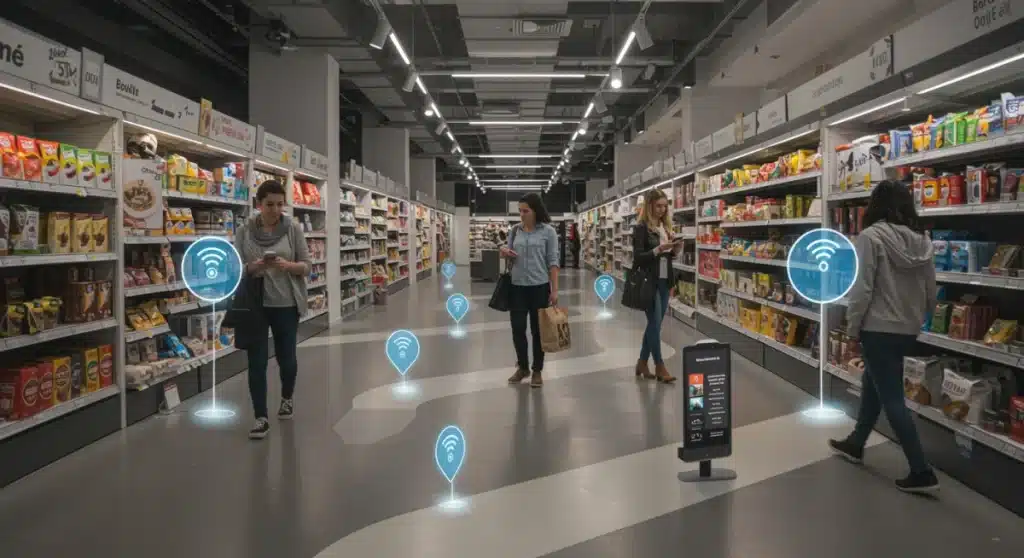
The retail landscape is constantly evolving, with technology playing a pivotal role in shaping consumer expectations and operational strategies. Among the most impactful innovations emerging is the widespread adoption of in-store navigation beacons. These small, low-cost hardware transmitters leverage Bluetooth Low Energy (BLE) to broadcast signals that can be detected by smartphones and other smart devices, enabling precise indoor positioning.
The integration of beacons into physical retail spaces is driven by a clear objective: to bridge the gap between the seamless digital shopping experience and the often-fragmented physical store journey. As consumers grow accustomed to instant gratification and personalized content online, their expectations for brick-and-mortar stores are rising. Beacons offer a powerful solution to meet these demands, providing a digital layer over the physical environment.
Understanding beacon technology
Beacons operate by sending out small, regular radio signals that contain a unique identifier. A smartphone app, equipped with the right software and permissions, can detect these signals and determine its proximity to a specific beacon. This proximity data is then used to pinpoint the user’s location within the store, often with remarkable accuracy, down to a few feet.
- Bluetooth Low Energy (BLE): Beacons utilize BLE for energy efficiency, allowing them to operate for extended periods on small batteries.
- Proximity marketing: Beyond navigation, beacons enable targeted marketing messages, sending promotions or information relevant to a customer’s exact location.
- Data collection: They can gather valuable anonymized data on customer movement patterns, dwell times, and popular store areas.
This foundational understanding is crucial for retailers looking to implement beacon technology effectively. It’s not just about guiding customers; it’s about understanding their behavior and delivering value in real-time. By providing precise location data, beacons unlock a new dimension of personalized engagement and operational insight.
In essence, in-store navigation beacons are transforming how retailers perceive and utilize their physical spaces. They are no longer just static environments but dynamic, data-rich ecosystems capable of interacting intelligently with shoppers. This shift is fundamental to achieving the projected efficiency gains and enhancing the overall customer journey in US retail.
Enhancing customer journey efficiency: a 22% projection
The projected 22% improvement in customer journey efficiency in US retail by 2025 is a significant figure, underscoring the transformative potential of in-store navigation with beacons. This efficiency gain isn’t merely about faster shopping; it encompasses a broader spectrum of benefits that streamline the entire customer experience from entry to checkout.
Efficiency in this context means reducing friction points, minimizing wasted time, and optimizing the path to purchase. For customers, this translates into less frustration, quicker product discovery, and a more satisfying shopping trip. For retailers, it means higher conversion rates, increased average transaction values, and improved customer loyalty.
Streamlined product discovery and navigation
One of the primary ways beacons boost efficiency is by simplifying product discovery. Instead of wandering aisles, customers can use a store’s app to locate specific items, receiving turn-by-turn directions directly to their desired product. This is particularly valuable in large stores or those with frequently changing layouts.
- Reduced search time: Customers spend less time looking for products, leading to quicker purchases.
- Optimized routes: Apps can suggest the most efficient path through the store, even incorporating shopping list items.
- Real-time inventory checks: Some systems can integrate with inventory, guiding customers only to items currently in stock.
This level of guidance not only saves time but also reduces the cognitive load on shoppers, making the experience more pleasant. The ability to find exactly what you need without hassle is a powerful differentiator in today’s competitive retail market.
Beyond simple navigation, beacons also facilitate personalized recommendations. As a customer moves through different departments, the system can push relevant offers or complementary product suggestions, subtly influencing purchasing decisions and increasing basket size. This intelligent interaction makes the shopping experience feel tailored and intuitive, directly contributing to the predicted efficiency improvements across US retail.
Personalization and engagement through beacon technology
The true power of in-store navigation with beacons extends far beyond mere directional assistance; it lies in its capacity for deep personalization and enhanced customer engagement. In an era where consumers expect tailored experiences, beacons provide retailers with the tools to deliver just that, transforming a generic shopping trip into a unique, responsive interaction.
By understanding a customer’s real-time location within the store, retailers can deploy hyper-targeted messages, offers, and content. This level of personalization makes shoppers feel understood and valued, fostering a stronger connection with the brand. It moves beyond generic promotions to delivering information that is genuinely relevant at that specific moment and place.
Tailored offers and dynamic content
Imagine a customer browsing the electronics section and receiving a notification about a discount on a specific brand of headphones they’ve previously searched for online, or perhaps a suggestion for a compatible accessory. This is the promise of beacon-powered personalization. The content delivered is dynamic, adapting to the customer’s immediate context and known preferences.
- Location-specific promotions: Discounts or special offers are triggered when a customer enters a specific department or passes a particular product.
- Product information on demand: Scanning a product with a beacon-enabled app can bring up detailed specifications, reviews, or even video demonstrations.
- Loyalty program integration: Beacons can automatically check customers into loyalty programs or remind them of accumulated points as they shop.
This seamless integration of digital information into the physical shopping experience creates a richer, more informative journey. It empowers customers with knowledge and incentives at precisely the right moment, reducing decision fatigue and encouraging purchases.

Furthermore, beacons allow for a more interactive engagement. Retailers can set up interactive displays that respond to a customer’s presence, offering games, quizzes, or augmented reality experiences that enhance product understanding and brand recall. This blend of utility and entertainment elevates the in-store experience, making it more memorable and enjoyable for the customer, directly contributing to the efficiency gains by minimizing time spent in indecision and maximizing satisfaction.
Operational benefits for US retailers
While the customer experience is a primary driver for beacon adoption, the operational benefits for US retailers are equally compelling. Beyond simply guiding shoppers, these devices provide a wealth of data and opportunities to optimize store layouts, staff allocation, and inventory management, all contributing to the projected 22% efficiency improvement.
By understanding how customers move through a store, where they dwell, and which areas they avoid, retailers can make data-driven decisions to enhance operational effectiveness. This shifts store management from guesswork to a strategic, informed approach, directly impacting the bottom line.
Optimized store layouts and staff deployment
Beacons collect anonymized data on traffic flow and hot spots within a store. This information is invaluable for optimizing store layouts, placing high-demand products in easily accessible areas, and designing more intuitive pathways. It also helps in identifying areas of congestion or underutilization.
- Heat mapping: Visualizing customer density helps identify popular zones and bottlenecks.
- Staff allocation: Deploying staff to high-traffic areas or zones where customers typically require assistance improves service efficiency.
- Merchandising effectiveness: A/B testing different product placements and promotions can be analyzed based on customer interaction data.
This data-driven approach to store design ensures that the physical space is working as hard as possible to facilitate sales and improve the customer journey. It minimizes wasted effort and maximizes the potential of every square foot of retail space.
Moreover, beacons can assist in inventory management by tracking the movement of goods within the store, from the backroom to the sales floor. This real-time visibility helps prevent stockouts, reduces the need for manual checks, and streamlines restocking processes. The overarching result is a more agile and responsive retail operation, capable of adapting quickly to customer demand and market trends, further solidifying the 22% efficiency gains.
Implementation challenges and strategic considerations
While the benefits of in-store navigation with beacons are clear, successful implementation in US retail requires careful planning and strategic consideration. Retailers must navigate a series of challenges, from technical integration to ensuring customer adoption and data privacy. Addressing these factors proactively is crucial for achieving the projected efficiency improvements.
One of the primary hurdles is the technical complexity involved in deploying and maintaining a robust beacon network. This includes not only the hardware installation but also the development or integration of a reliable mobile application that can interpret beacon signals and deliver a seamless user experience. Without a well-executed technical foundation, the potential of beacons cannot be fully realized.
Ensuring data privacy and consumer trust
A significant concern for consumers is data privacy. Retailers must be transparent about the data they collect through beacons and how it will be used. Building and maintaining customer trust is paramount for the widespread adoption of beacon-enabled apps.
- Opt-in policies: Ensure customers explicitly consent to location tracking and data usage.
- Anonymization: Prioritize the collection of anonymized data to protect individual privacy.
- Clear communication: Educate customers on the benefits of using the app and how their data is secured.
Failing to address privacy concerns can lead to low app adoption rates, negating the investment in beacon technology. Retailers must demonstrate a commitment to ethical data practices to foster a positive relationship with their customers.
Furthermore, the success of in-store navigation beacons heavily relies on the quality and usability of the accompanying mobile application. A clunky or unreliable app will deter users, regardless of the underlying beacon technology. Investing in intuitive UI/UX design and continuous app improvement is essential. Retailers must also consider the ongoing maintenance and calibration of beacons to ensure accuracy and consistent performance, ensuring the 22% efficiency target remains within reach.
The future outlook for beacon technology in US retail
Looking ahead, the future of in-store navigation with beacons in US retail appears incredibly promising, with ongoing advancements poised to further amplify their impact. The projected 22% improvement in customer journey efficiency by 2025 is just the beginning, as retailers continue to innovate and integrate these technologies into more sophisticated ecosystems.
The evolution of beacon technology itself, alongside advancements in artificial intelligence and machine learning, will unlock new possibilities for personalized experiences and operational insights. These synergies will allow for even more predictive and responsive retail environments, where the store truly anticipates and caters to individual shopper needs.
Integration with emerging technologies
Beacons are increasingly being integrated with other cutting-edge retail technologies, creating a more holistic and intelligent shopping environment. This convergence enhances their utility and expands their application beyond simple navigation.
- Augmented Reality (AR): Beacons can trigger AR experiences, allowing customers to visualize products in their own space or view interactive product details.
- Internet of Things (IoT): Integration with IoT devices can enable smart shelves that detect when products are low or interactive displays that react to customer presence.
- AI-driven analytics: Advanced AI can process beacon data to identify complex customer behavior patterns and predict future trends, optimizing marketing and inventory strategies.
This multi-faceted approach transforms the physical store into a dynamic data hub, capable of learning and adapting. The insights gained from these integrated systems will empower retailers to make more informed decisions, refine their strategies, and continuously improve the customer experience.
The continued investment in beacon infrastructure and the development of sophisticated analytical tools will solidify their role as a cornerstone of modern retail. As competition intensifies and consumer expectations rise, retailers who effectively leverage in-store navigation with beacons will be best positioned to thrive, delivering unparalleled efficiency and engagement in the evolving landscape of US retail.
| Key Point | Brief Description |
|---|---|
| Projected Efficiency Gain | In-store navigation with beacons is expected to improve customer journey efficiency by 22% in US retail by 2025. |
| Personalized Engagement | Beacons enable tailored offers and dynamic content based on real-time customer location and preferences. |
| Operational Optimization | Data from beacons helps optimize store layouts, staff allocation, and inventory management for retailers. |
| Key Challenges | Successful implementation requires addressing technical integration, app development, and crucial data privacy concerns. |
Frequently asked questions about in-store navigation beacons
In-store navigation beacons are small, wireless transmitters that use Bluetooth Low Energy (BLE) to send signals to nearby smartphones. These signals allow mobile apps to determine a user’s precise location within a physical store, enabling features like turn-by-turn navigation and location-specific offers.
Beacons enhance efficiency by reducing product search time, providing optimized routes, and delivering personalized information or promotions. This streamlines the shopping process, making it quicker and more enjoyable for customers, ultimately leading to a more efficient and satisfying retail experience.
For US retailers, beacons offer optimized store layouts based on customer traffic data, improved staff allocation, and enhanced inventory management. They also enable targeted marketing, leading to higher conversion rates and increased customer loyalty, driving significant operational improvements.
Yes, privacy is a key consideration. Retailers must implement clear opt-in policies for location tracking, prioritize data anonymization, and transparently communicate how customer data is collected and used. Building trust is essential for successful adoption and long-term customer engagement.
The future is bright, with beacons increasingly integrating with AR, IoT, and AI. This will lead to more sophisticated, predictive, and personalized shopping experiences. Ongoing advancements promise to further enhance customer journey efficiency and provide deeper operational insights for retailers.
Conclusion
The advent of in-store navigation with beacons marks a pivotal moment for US retail. By promising a 22% improvement in customer journey efficiency by 2025, this technology is not just an incremental upgrade but a fundamental shift in how physical stores operate and engage with shoppers. From personalized product discovery to optimized store management, beacons offer a comprehensive solution to the evolving demands of modern commerce. While challenges in implementation and data privacy remain, the strategic integration of beacons with other emerging technologies will undoubtedly cement their role as an indispensable tool for retailers striving to deliver superior, efficient, and highly engaging shopping experiences in the years to come.