2025 Workforce Evolution: Talent Acquisition & Retention Strategies

The 2025 workforce evolution necessitates a strategic, data-driven approach to talent acquisition and retention, aiming for a 30% optimization through adaptive policies, advanced technology, and a focus on employee well-being.
The year 2025 is rapidly approaching, bringing with it a dynamic shift in how businesses approach talent. To thrive in this evolving landscape, organizations must embrace the 2025 workforce evolution through strategic planning aimed at optimizing talent acquisition and retention by a significant 30%. This article delves into recent updates and practical solutions to navigate these changes effectively.
Understanding the Shifting Landscape of Work
The global workforce is undergoing a profound transformation, driven by technological advancements, changing demographics, and evolving employee expectations. Companies that fail to recognize and adapt to these shifts risk falling behind in the race for top talent.
This evolution is not merely incremental; it represents a fundamental redefinition of work, demanding new strategies for how we attract, develop, and keep our people. From the rise of AI to the increasing demand for flexibility, understanding these foundational changes is the first step toward building a resilient and competitive workforce.
Key Drivers of Change
Several critical factors are reshaping the employment landscape. These drivers create both challenges and opportunities for organizations looking to optimize their human capital.
- Technological Acceleration: Automation, artificial intelligence, and machine learning are fundamentally altering job roles and skill requirements, necessitating continuous upskilling.
- Generational Diversity: A multi-generational workforce brings varied expectations regarding work-life balance, career progression, and communication styles.
- Remote and Hybrid Work Models: The pandemic normalized flexible work, making it a key expectation for many employees and requiring revised management and engagement strategies.
- Emphasis on Skills over Roles: A growing focus on transferable skills rather than rigid job titles allows for greater agility and adaptability within organizations.
To successfully navigate these changes, businesses must adopt a forward-looking perspective, anticipating future needs rather than merely reacting to present challenges. This proactive stance is crucial for securing a competitive edge in the talent market.
Strategic Talent Acquisition in a Competitive Market
Acquiring top talent in 2025 demands more than just posting job ads; it requires a sophisticated, data-driven strategy that highlights employer brand, leverages technology, and focuses on candidate experience. The goal is not just to fill vacancies, but to attract individuals who are a strong cultural and skills fit for the evolving organization.
Companies must think beyond traditional recruitment channels and consider innovative approaches to reach diverse talent pools. This involves understanding what motivates different groups of candidates and tailoring engagement strategies accordingly.
Leveraging Employer Branding and Candidate Experience
A strong employer brand is paramount. It communicates a company’s values, culture, and commitment to its employees, making it an attractive destination for prospective hires. A positive candidate experience, from initial contact to onboarding, reinforces this brand and significantly impacts acceptance rates and early retention.
- Authentic Storytelling: Share employee testimonials, success stories, and company culture insights across various platforms to showcase what it’s truly like to work there.
- Streamlined Application Processes: Simplify application forms and provide clear, consistent communication throughout the hiring journey to reduce candidate drop-off.
- Personalized Engagement: Utilize AI-powered tools to personalize interactions with candidates, answering questions and providing relevant information efficiently.
By investing in a compelling employer brand and an exceptional candidate experience, organizations can significantly improve their acquisition rates and attract individuals who are genuinely excited to join their team.
Innovative Approaches to Employee Retention
Retaining valuable employees is equally, if not more, critical than acquisition. High turnover rates are costly, impacting productivity, morale, and institutional knowledge. In 2025, retention strategies must be holistic, addressing not just compensation but also growth, well-being, and a sense of purpose.
The modern workforce seeks more than just a paycheck; they desire meaningful work, opportunities for development, and an environment that supports their overall well-being. Companies that prioritize these aspects will see a significant return on investment in their retention efforts.
Fostering a Culture of Growth and Well-being
Employees are more likely to stay with organizations that invest in their professional development and genuinely care about their personal well-being. This requires a shift from a purely transactional relationship to one built on mutual growth and support.
- Continuous Learning and Development: Offer robust training programs, mentorship opportunities, and pathways for skill development to keep employees engaged and future-ready.
- Flexible Work Arrangements: Provide options for remote work, flexible hours, and compressed workweeks to support work-life integration and autonomy.
- Mental Health Support: Implement comprehensive wellness programs, including access to mental health resources, stress management tools, and a culture that destigmatizes seeking help.
By creating an environment where employees feel valued, supported, and have clear opportunities for advancement, companies can significantly reduce voluntary turnover and build a loyal, committed workforce.
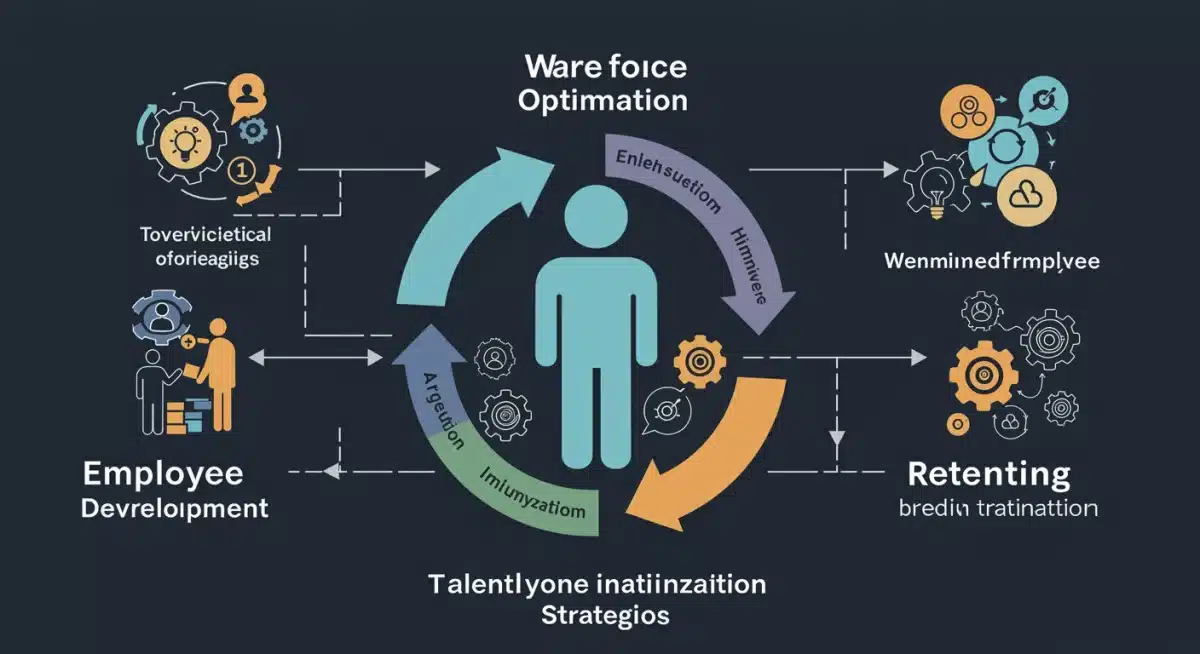
Leveraging Technology for Workforce Optimization
Technology is no longer just a support function; it is a strategic enabler for optimizing talent acquisition and retention. From AI-powered analytics to sophisticated HR platforms, the right tools can provide invaluable insights and streamline processes, helping organizations make data-driven decisions.
Embracing digital transformation in HR allows companies to automate routine tasks, focus on strategic initiatives, and provide a more personalized and efficient experience for both candidates and employees. The intelligent use of technology can be a game-changer.
AI and Data Analytics in HR
Artificial intelligence and advanced data analytics are revolutionizing human resources. These technologies can predict hiring needs, identify flight risks, personalize learning paths, and optimize workforce planning, leading to more efficient and effective talent management.
- Predictive Analytics for Turnover: Utilize data to identify patterns and predict which employees might be at risk of leaving, allowing for proactive intervention.
- AI-Powered Recruitment: Automate resume screening, candidate matching, and initial communication to accelerate the hiring process and improve candidate quality.
- Personalized Learning Platforms: Deliver tailored training content and career development resources based on individual employee needs and career aspirations.
Integrating these technological solutions into HR practices can significantly enhance efficiency, provide deeper insights into workforce dynamics, and ultimately contribute to a 30% optimization in talent management.
Cultivating a Skills-Based Organization
The traditional focus on job titles and degrees is giving way to a more dynamic, skills-based approach. In the 2025 workforce, an organization’s agility and adaptability will largely depend on its ability to identify, develop, and deploy the right skills across its talent pool. This paradigm shift requires a fundamental rethinking of how talent is managed.
Moving towards a skills-based model allows companies to respond more quickly to market demands, foster internal mobility, and make better use of their existing talent. It also empowers employees to develop new competencies and pursue diverse career paths within the organization.
From Job Roles to Skill Sets
Instead of rigid job descriptions, organizations are increasingly defining work by the skills required to perform tasks. This allows for greater flexibility in staffing projects, identifying skill gaps, and cross-training employees for future roles.
- Skill Mapping and Inventory: Develop a comprehensive understanding of the skills present within the organization and the skills needed for future strategic objectives.
- Internal Talent Marketplaces: Create platforms that allow employees to discover new projects, roles, and learning opportunities based on their skills and interests.
- Upskilling and Reskilling Initiatives: Invest heavily in programs that help employees acquire new skills or adapt existing ones to meet evolving business needs.
By prioritizing skills over fixed roles, businesses can build a more adaptable and future-proof workforce, capable of navigating rapid changes and seizing new opportunities.
Measuring Impact and Continuous Improvement
Achieving a 30% optimization in talent acquisition and retention is not a one-time event; it’s an ongoing process of measurement, analysis, and continuous improvement. Organizations must establish clear metrics, regularly evaluate their strategies, and be prepared to adapt based on performance data and feedback.
Without robust measurement systems, it’s impossible to truly understand what’s working and what isn’t. Data-driven insights are essential for refining strategies and ensuring that investments in talent management yield the desired outcomes.
Key Performance Indicators for Talent Optimization
To effectively track progress, organizations need to define specific KPIs for both acquisition and retention. These metrics provide tangible proof of impact and guide future strategic adjustments.
- Time-to-Hire and Cost-per-Hire: Measure the efficiency of recruitment processes.
- Offer Acceptance Rate: Indicates the attractiveness of the employer brand and compensation packages.
- Voluntary Turnover Rate: A direct measure of retention success, often segmented by department or tenure.
- Employee Engagement Scores: Reflects overall satisfaction and commitment, which correlates strongly with retention.
- Internal Mobility Rate: Shows the organization’s ability to develop and redeploy talent internally.
Regularly reviewing these KPIs, gathering employee feedback, and staying abreast of industry best practices are crucial for maintaining momentum and achieving sustained improvements in workforce optimization.
| Key Strategy | Brief Description |
|---|---|
| Enhanced Employer Branding | Develop a compelling brand narrative to attract top talent and improve candidate perception. |
| Flexible Work Models | Implement hybrid or remote options to meet evolving employee expectations and broaden talent pools. |
| Skills-Based Development | Focus on upskilling and reskilling initiatives to build an adaptable, future-ready workforce. |
| AI-Powered HR Analytics | Utilize AI and data to predict turnover, personalize learning, and streamline recruitment processes. |
Frequently Asked Questions About 2025 Workforce Evolution
The biggest challenges include intense competition for specialized skills, adapting to hybrid work models, managing generational expectations, and effectively leveraging technology to identify and engage top candidates in a rapidly changing market.
Improving retention by 30% requires a multi-faceted approach: fostering a culture of continuous learning, offering flexible work options, prioritizing employee well-being, providing clear career paths, and ensuring competitive compensation and benefits packages.
AI plays a crucial role by automating recruitment tasks, providing predictive analytics for turnover, personalizing employee development, and streamlining HR operations, enabling more data-driven and efficient talent management strategies for the future.
A skills-based approach is essential because it fosters organizational agility, allowing companies to quickly adapt to market changes by identifying, developing, and deploying specific competencies rather than relying on rigid job titles, enhancing internal mobility and innovation.
A strong employer brand significantly impacts both. It attracts higher-quality candidates by showcasing a positive culture and values, leading to better acquisition. For retention, it reinforces employee pride and commitment, reducing the likelihood of them seeking opportunities elsewhere.
Conclusion
The 2025 workforce evolution presents both significant challenges and unparalleled opportunities for organizations willing to strategically adapt. By proactively focusing on robust talent acquisition and retention strategies, leveraging advanced technology, cultivating a skills-based culture, and prioritizing employee well-being, businesses can not only meet but exceed their talent optimization goals. Achieving a 30% improvement in these critical areas is an ambitious yet attainable target for companies committed to building a resilient, engaged, and future-ready workforce.